
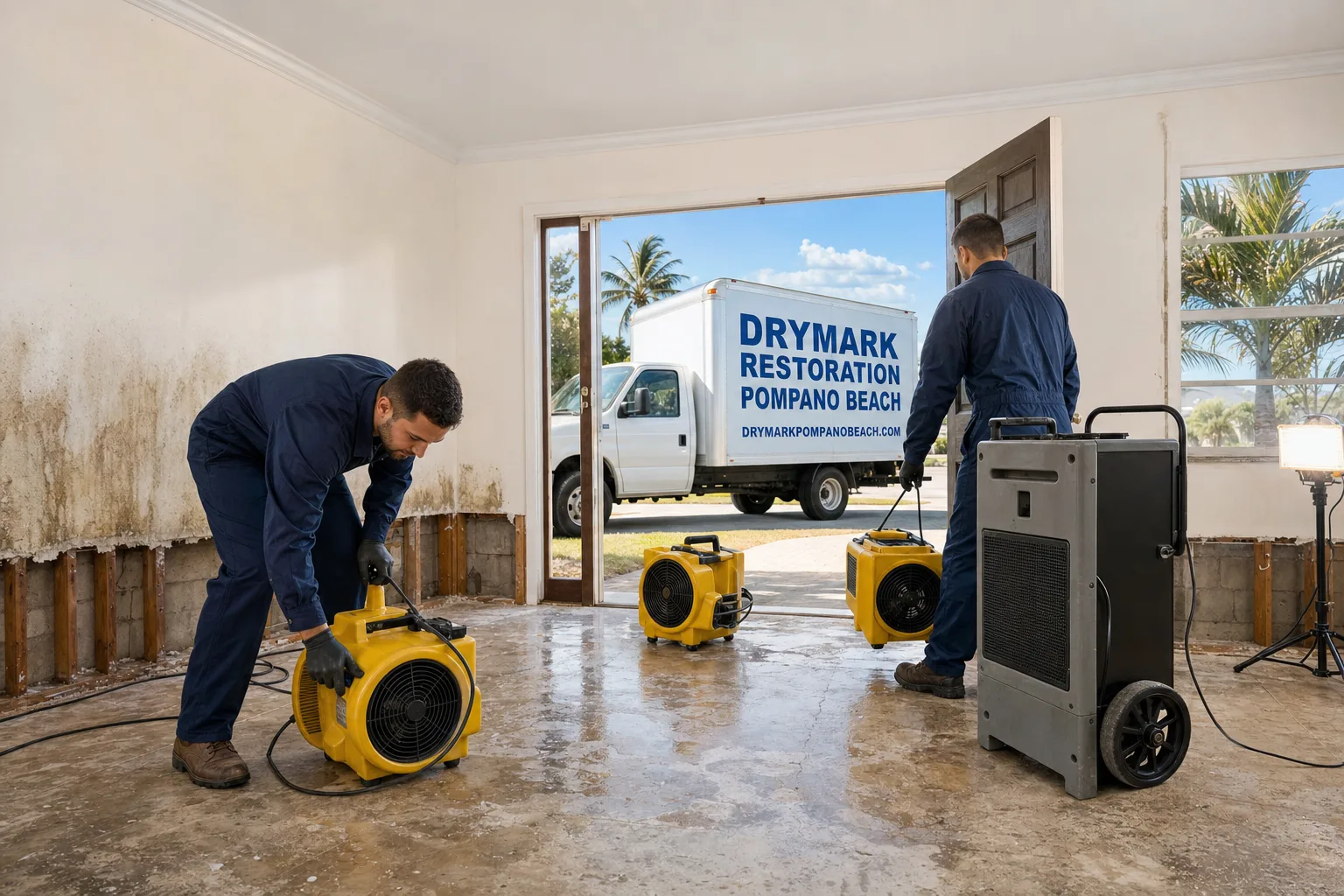
Free visual inspection and a written scope of work before any mitigation begins - photos, moisture readings, and drying logs go in your claim file
The scope we write is the scope we bill. Anything new gets shown to you, in writing, before we touch it.
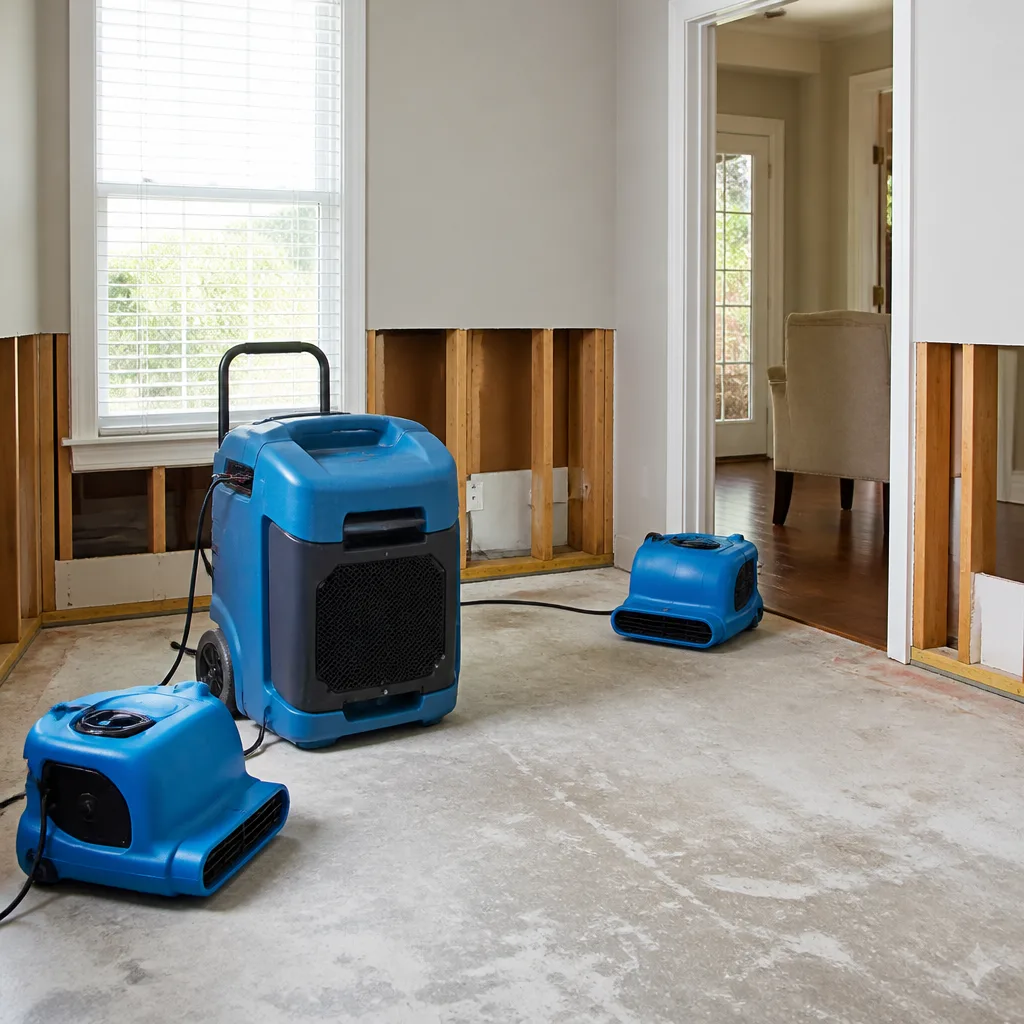
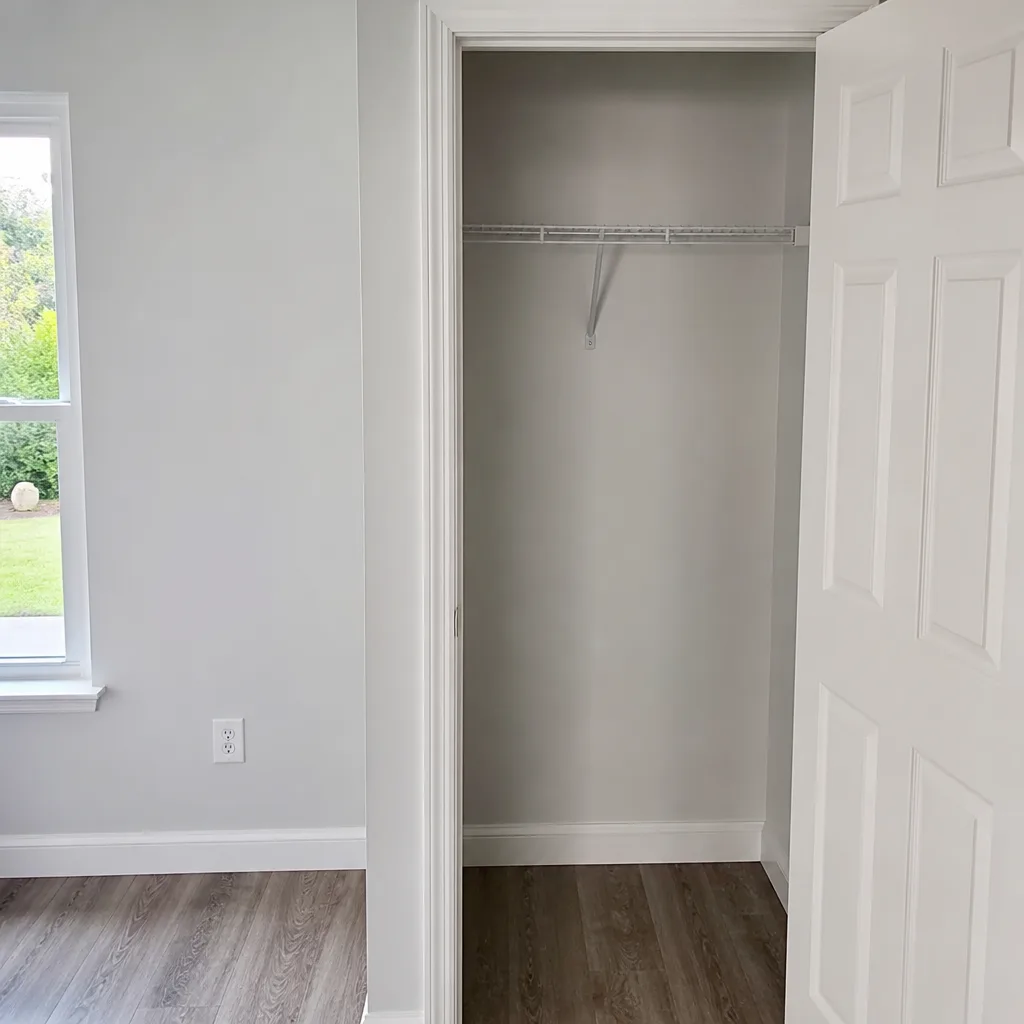

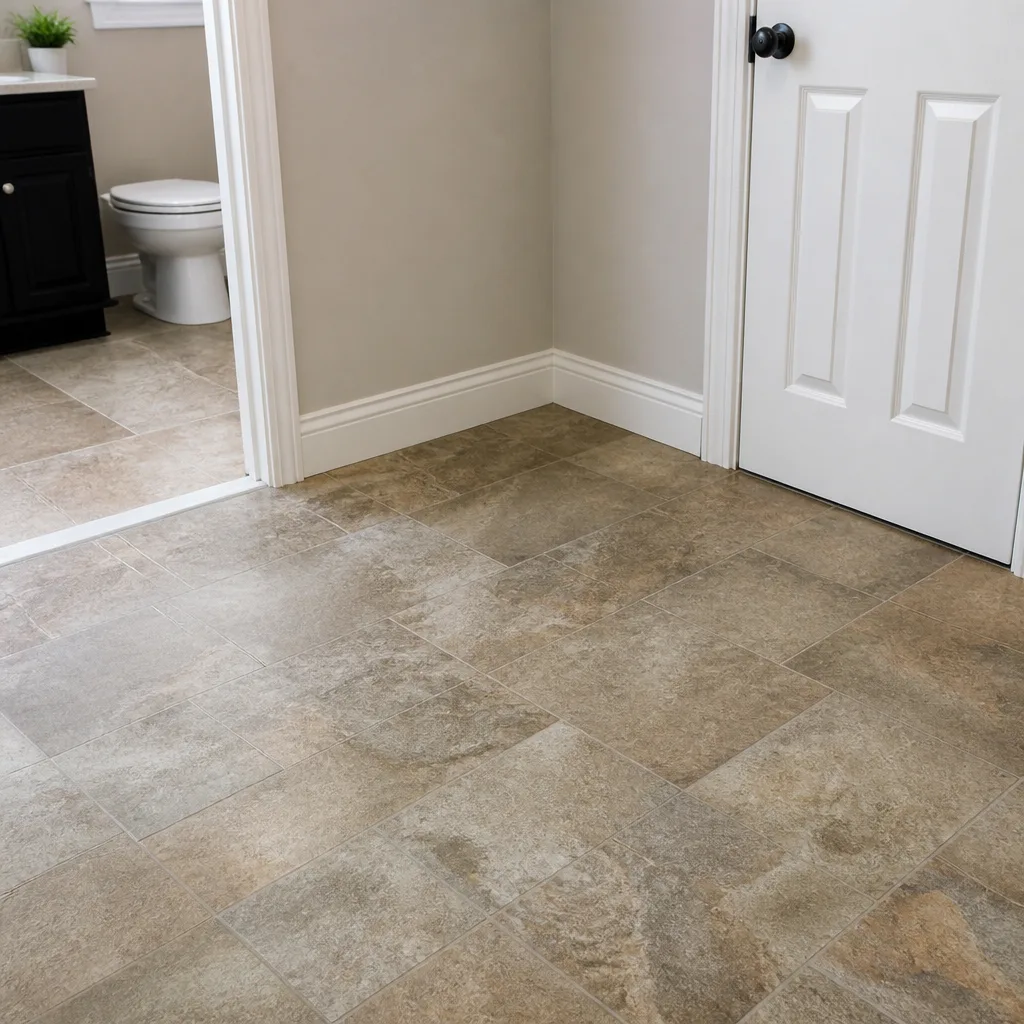
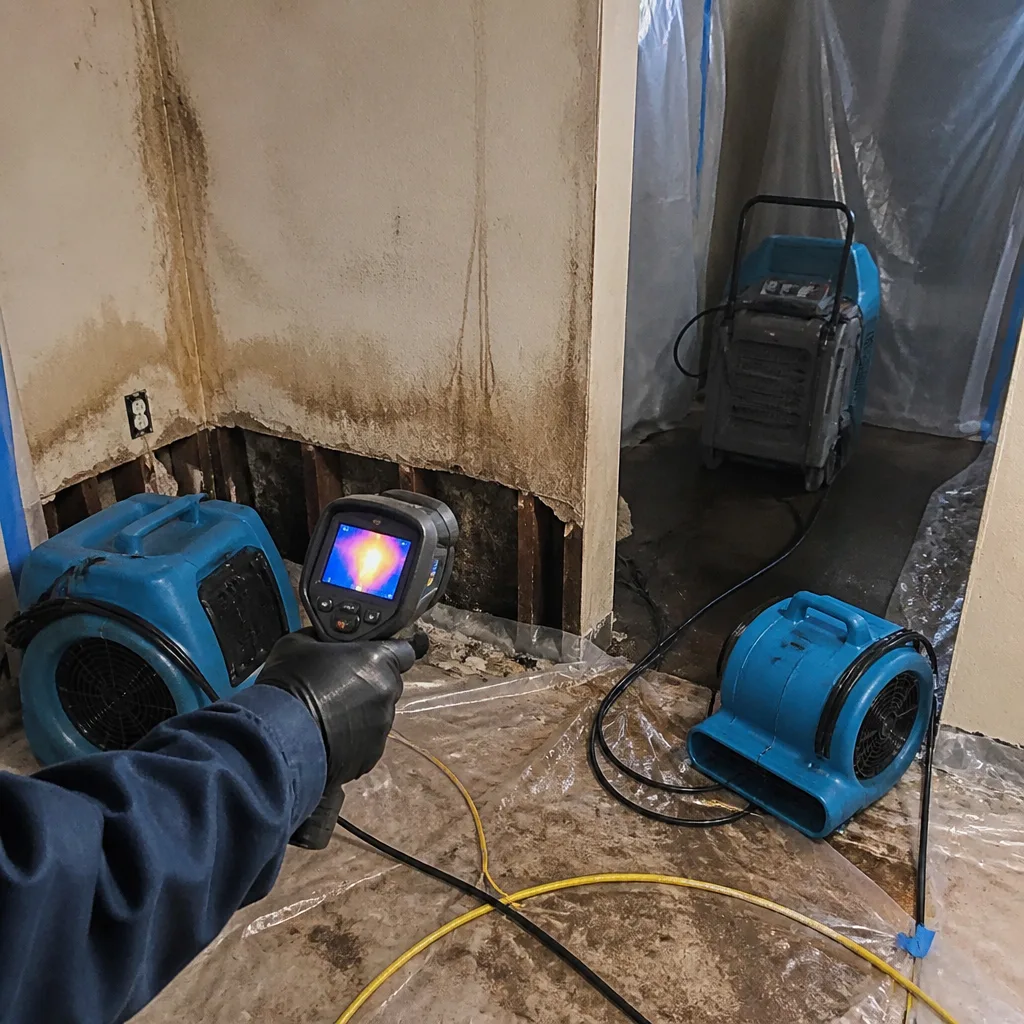 Before
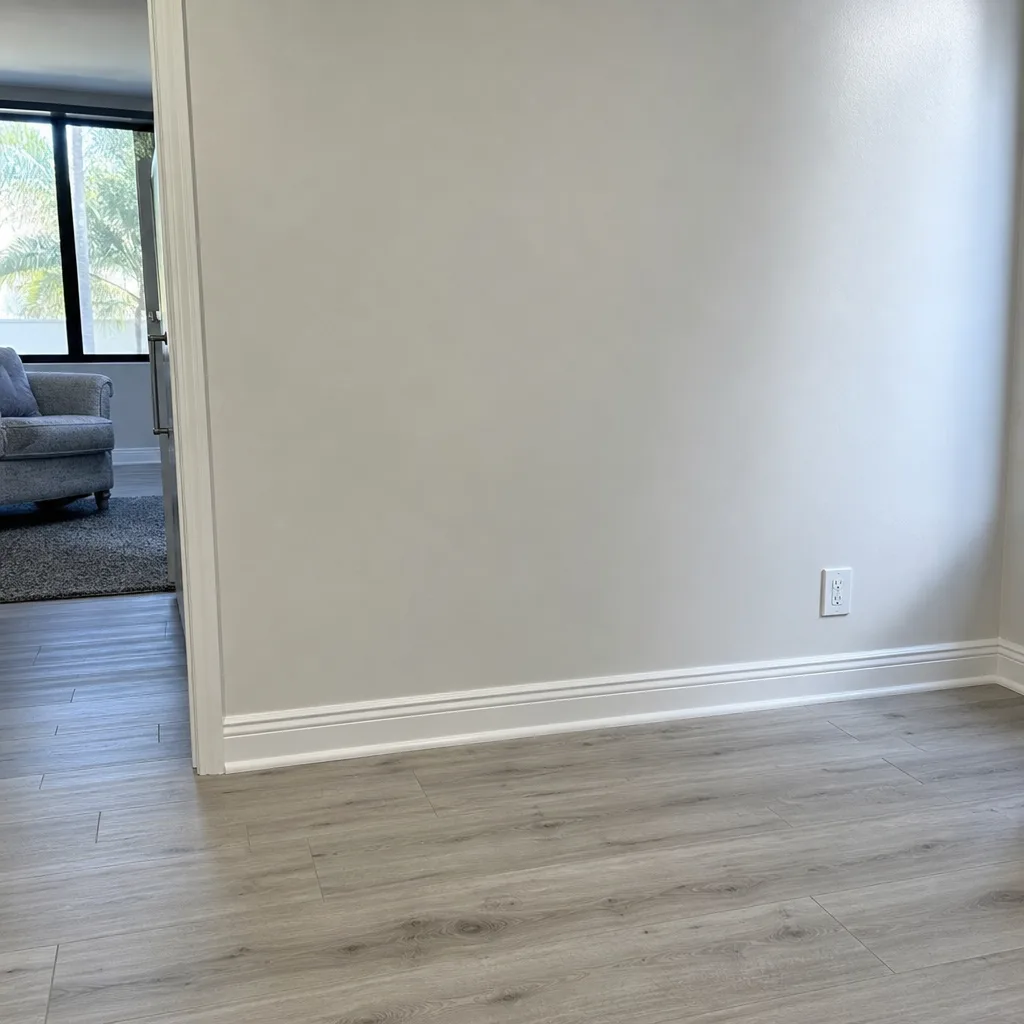 After
After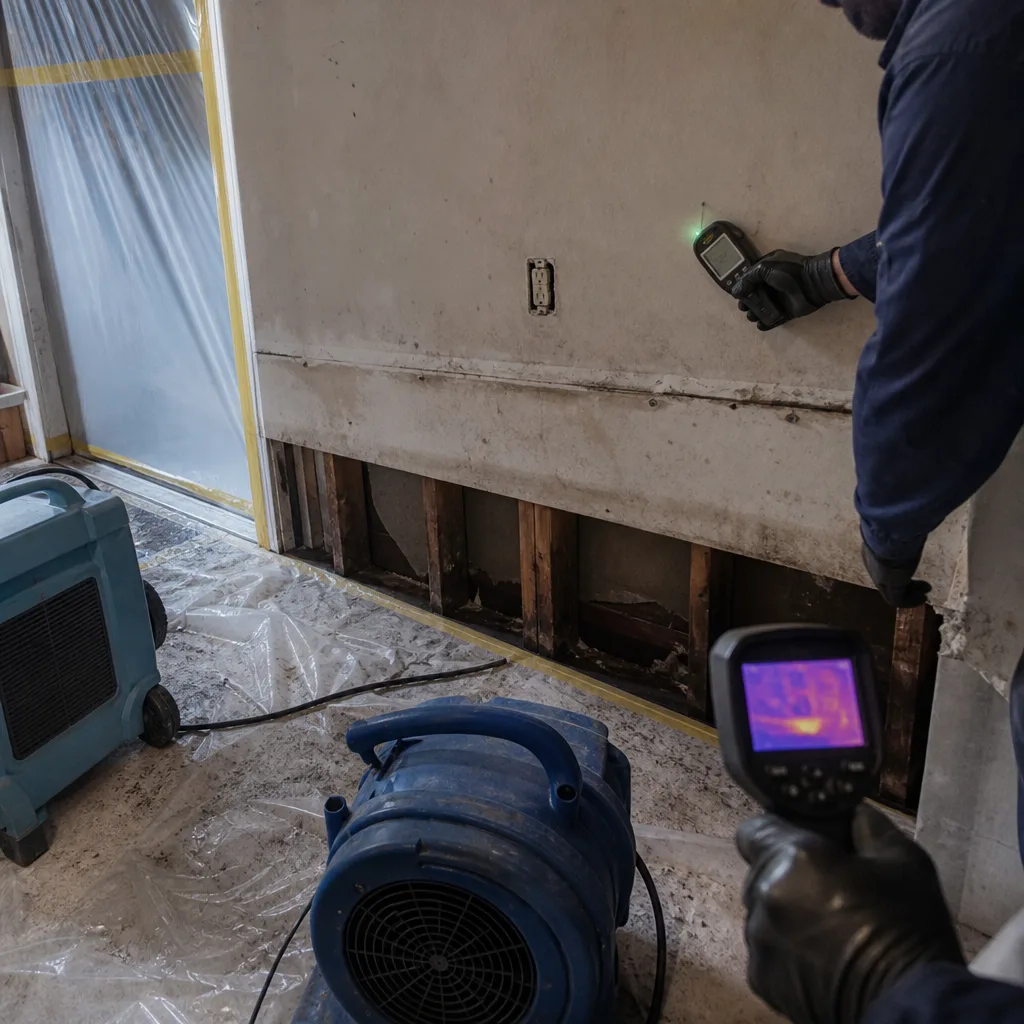 Before
 After
After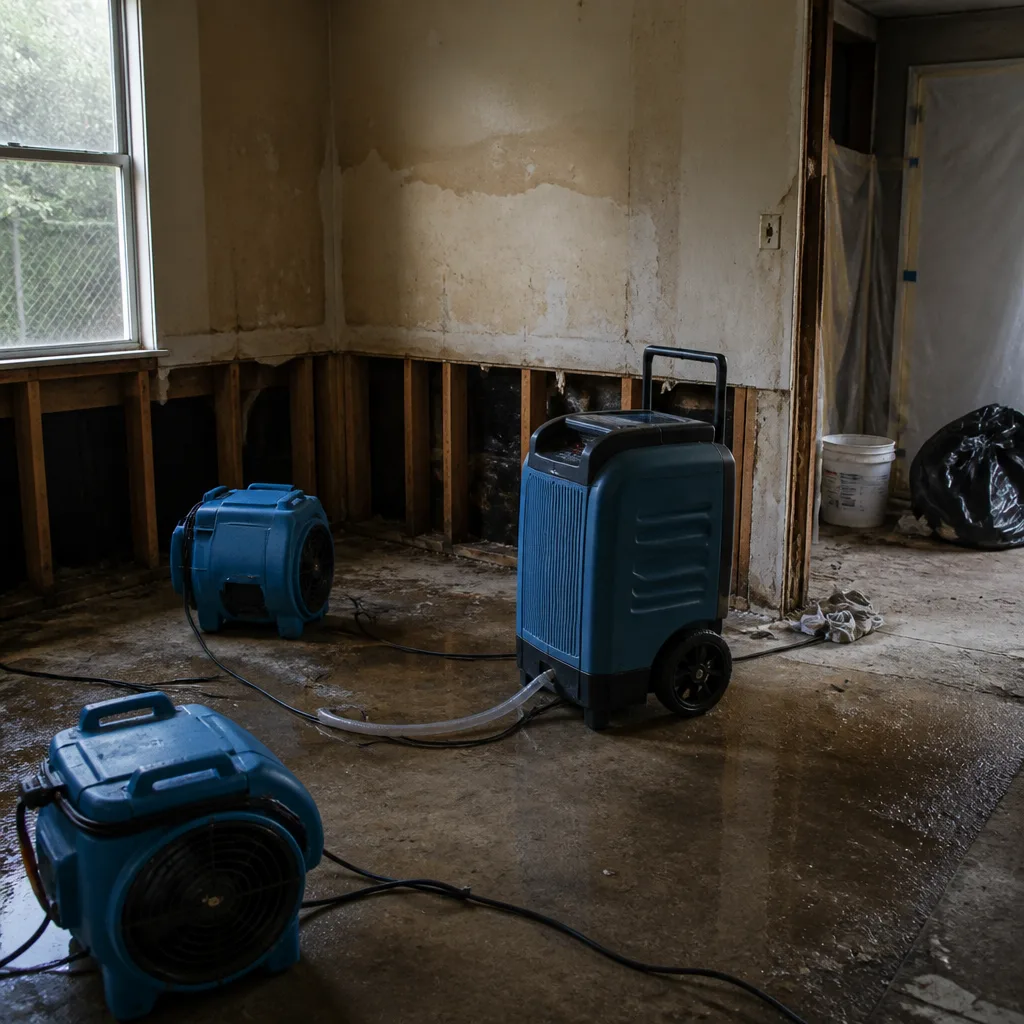 Before
 After
AfterFast, Reliable Water Damage Restoration Across Opa-locka
Water damage restoration in Opa-locka typically costs $2,800-$6,500 for a standard residential drying job, with emergency extraction running $180-$340 per hour and full structural drying averaging $1,200-$3,200 depending on square footage and contamination class. Most Opa-locka homes need 4-7 days of active drying, not the 2-3 days quoted in higher-ground markets, because the shallow water table here wicks moisture upward through slab foundations long after surface water is gone. Our crews are dispatched from our Miami office and can be on-site anywhere in Opa-locka within 45-60 minutes of your call to (754) 238-0219. We know the difference between a quick pump-out and a proper dry-down because we’ve documented both, and we’ve seen what happens when contractors confuse the two in this city.
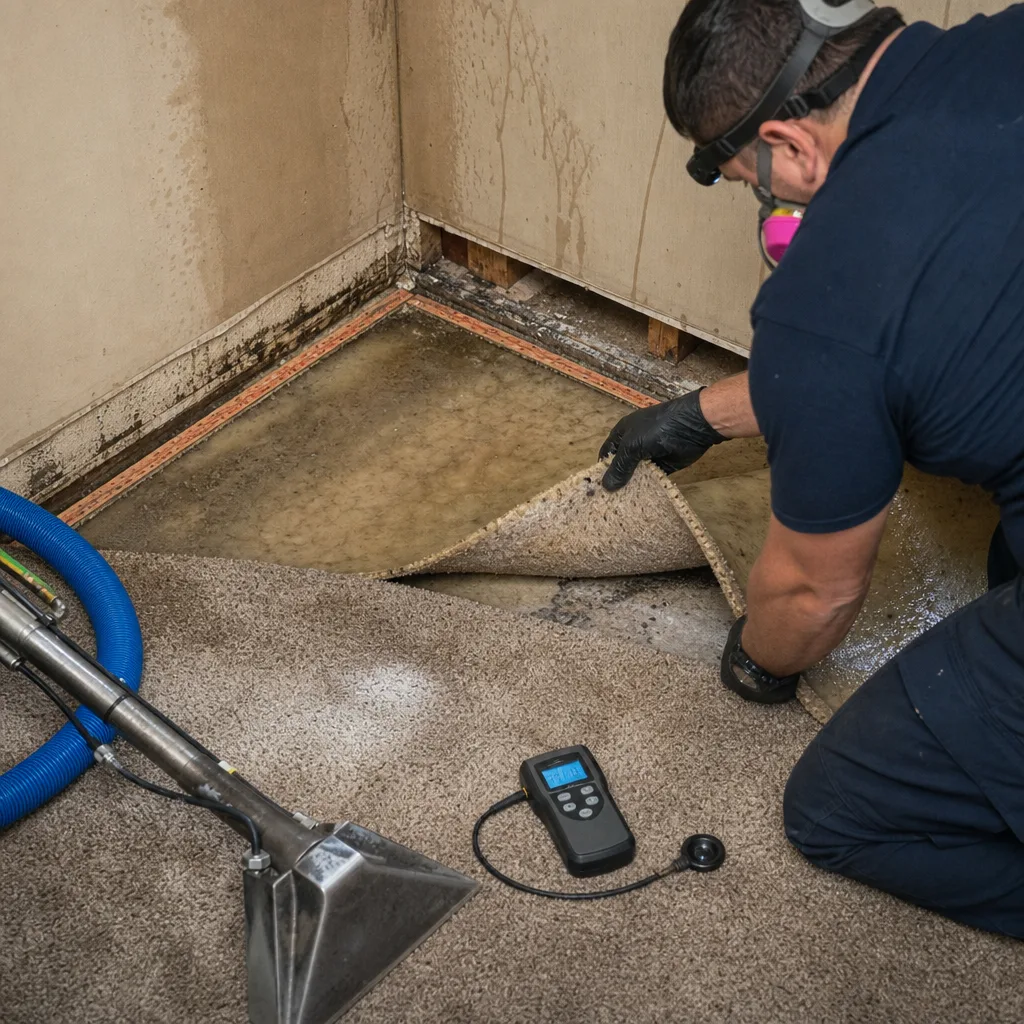
Opa-locka’s near-sea-level elevation, its position alongside the Opa-locka Canal (C-8), and a regional water table that sits just inches below grade create a moisture pathway you won’t find in Hialeah or Miami Gardens. After any significant rain or hurricane event, groundwater doesn’t just enter through walls and roofs, it pushes straight up through aging concrete slab foundations. That means a dry-looking floor can still be feeding vapor into base plates and drywall for weeks. Our Water Damage Restoration team accounts for this on every Opa-locka job, extending drying timelines and moisture-mapping protocols so your documentation holds up when the adjuster reviews it.
Why Back to Dry Restoration Is Opa-locka’s Preferred Water Damage Restoration Company
We’ve restored water damage in Opa-locka since 2011, and the pattern is consistent: contractors who dry to the wall base and leave, then get called back three weeks later when mold has colonized the same walls they “finished.” That cycle ends with us because we document sub-slab vapor readings, not just surface moisture, and we write the scope before anyone starts work.
Our reputation in Opa-locka is built on the files we’ve produced, not the slogans we’ve repeated. Homeowners here research before they call, and they find our three-star reviews mention the same things our five-star reviews do: we show up with moisture meters, we photograph everything, and we deliver a written price before the first air mover plugs in. Haven Standard, Clause 1. No exceptions.
Live phone coverage runs 24 hours a day, 7 days a week on our emergency line. No voicemail trees. When water is still moving through your structure at 2 a.m., you reach a person who can dispatch a crew to Opa-locka, not a callback promise for the next business day.
Our Miami office coordinates scheduling and dispatch for Opa-locka directly. Crews arrive with Dri-Eaz and Phoenix drying systems, background-checked and uniformed, with license documentation available on request. Every visit produces a photo record, every job gets a written scope, and every invoice is backed by the daily drying logs that turn restoration bills into payable claims.
Our Water Damage Restoration Services in Opa-locka
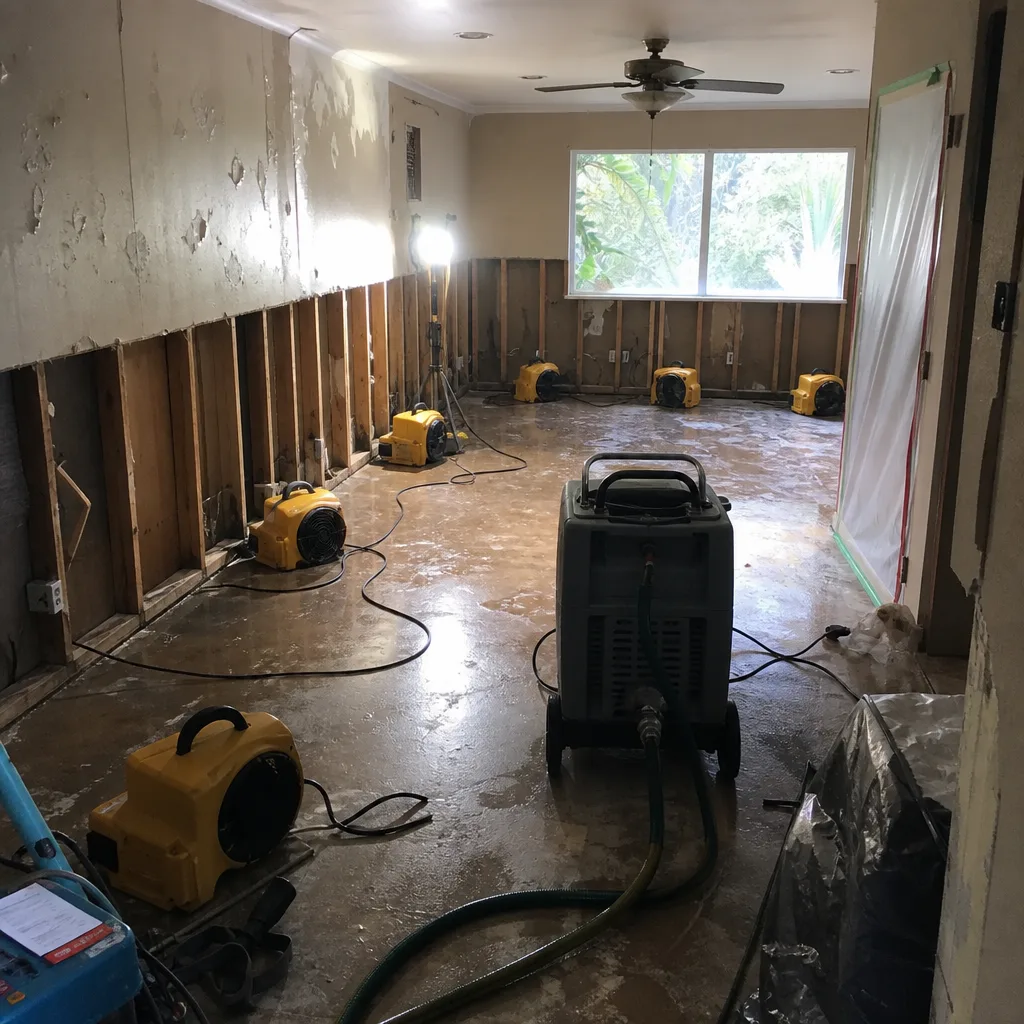
Emergency Water Extraction
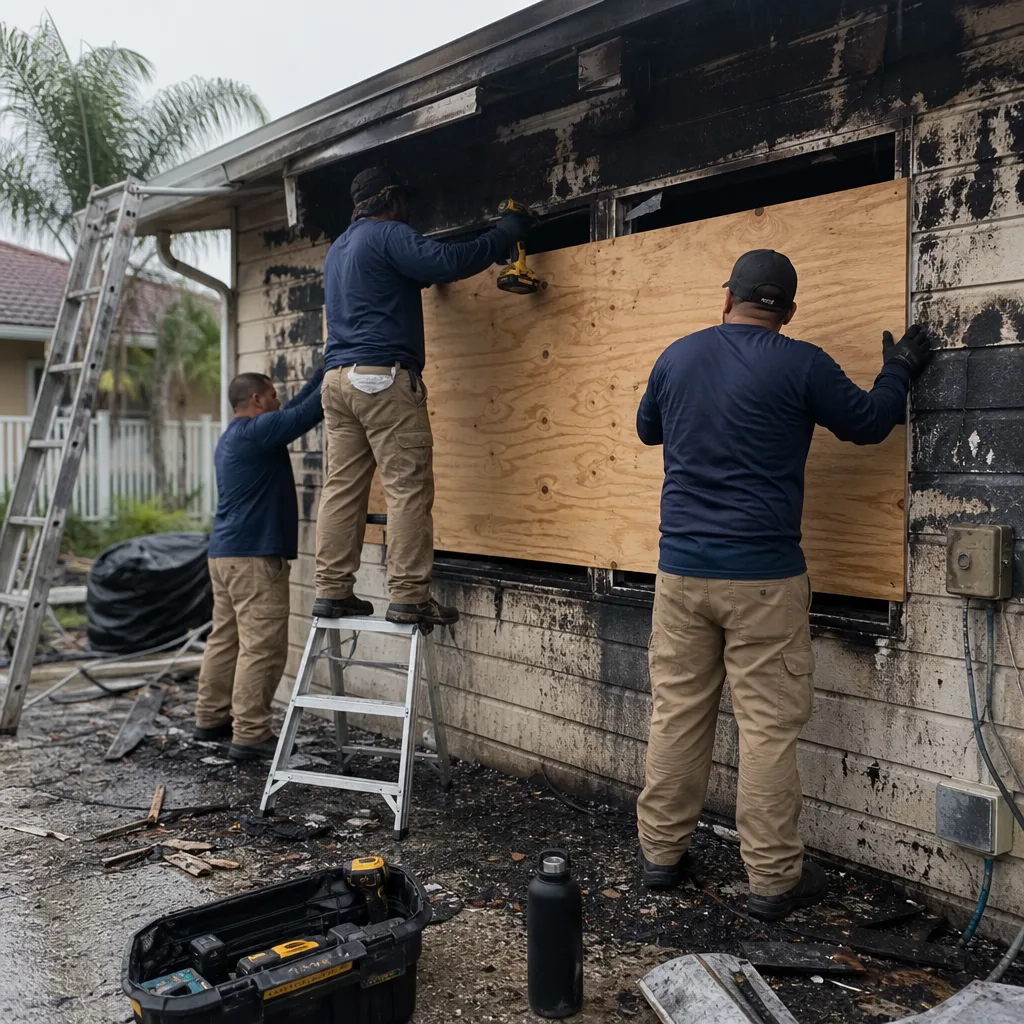
After a June storm cell dumped 8 inches on the city, we ran Emergency Water Extraction and structural drying at a 1950s CBS rental near Sharazad Boulevard, where the impact-rated front door had been sprung at the hinge side. With air movers and a Phoenix dehumidifier running, we moisture-mapped the slab and found readings climbing 20 feet from the door, the sound slab was wicking off the shallow water table, so we opened a containment and treated the base of the walls with antimicrobial treatment before we could write clean drying logs. The door was re-secured and the jamb reinforcement repaired so the next wind event didn’t start the same cycle. Extraction in Opa-locka isn’t just about standing water. It’s about knowing where the water is coming from after the visible flood is gone.
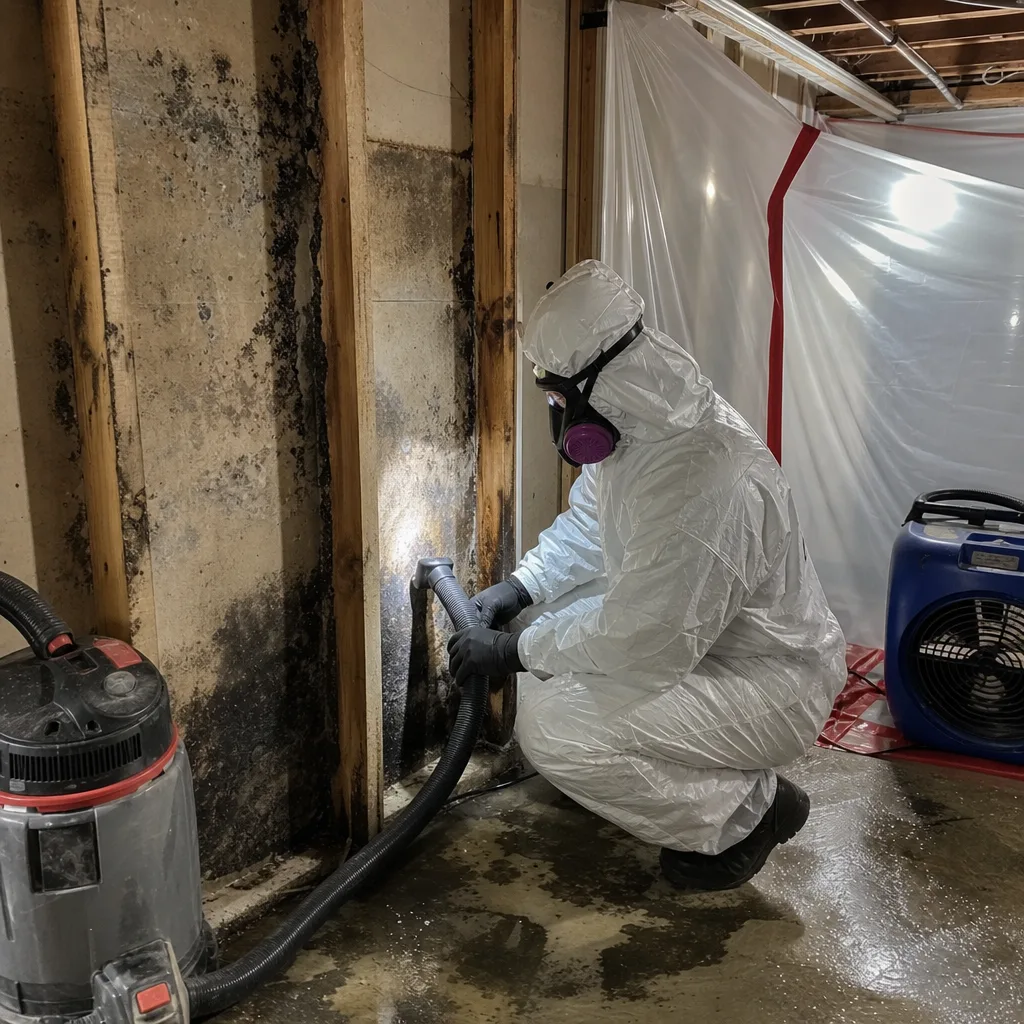
Structural Drying & Dehumidification
Structural drying in Opa-locka requires equipment runs that would be excessive in higher-ground cities. We deploy Dri-Eaz Revolution LGR dehumidifiers and Phoenix 200 MAX units sized to the vapor pressure differential, the measurable force that drives moisture from wet materials into dry air. In a typical 1,200-square-foot Opa-locka CBS home with slab wicking, we expect 5-7 days of active drying to reach IICRC-dry standards (below 16% moisture content in wood framing, equilibrium relative humidity below 60%). Contractors who quote 2-3 days are drying to the surface and creating the conditions for secondary damage. Our daily drying logs document psychrometric data, temperature, relative humidity, and specific humidity at multiple points, producing the paper trail your adjuster needs to approve the invoice without dispute.
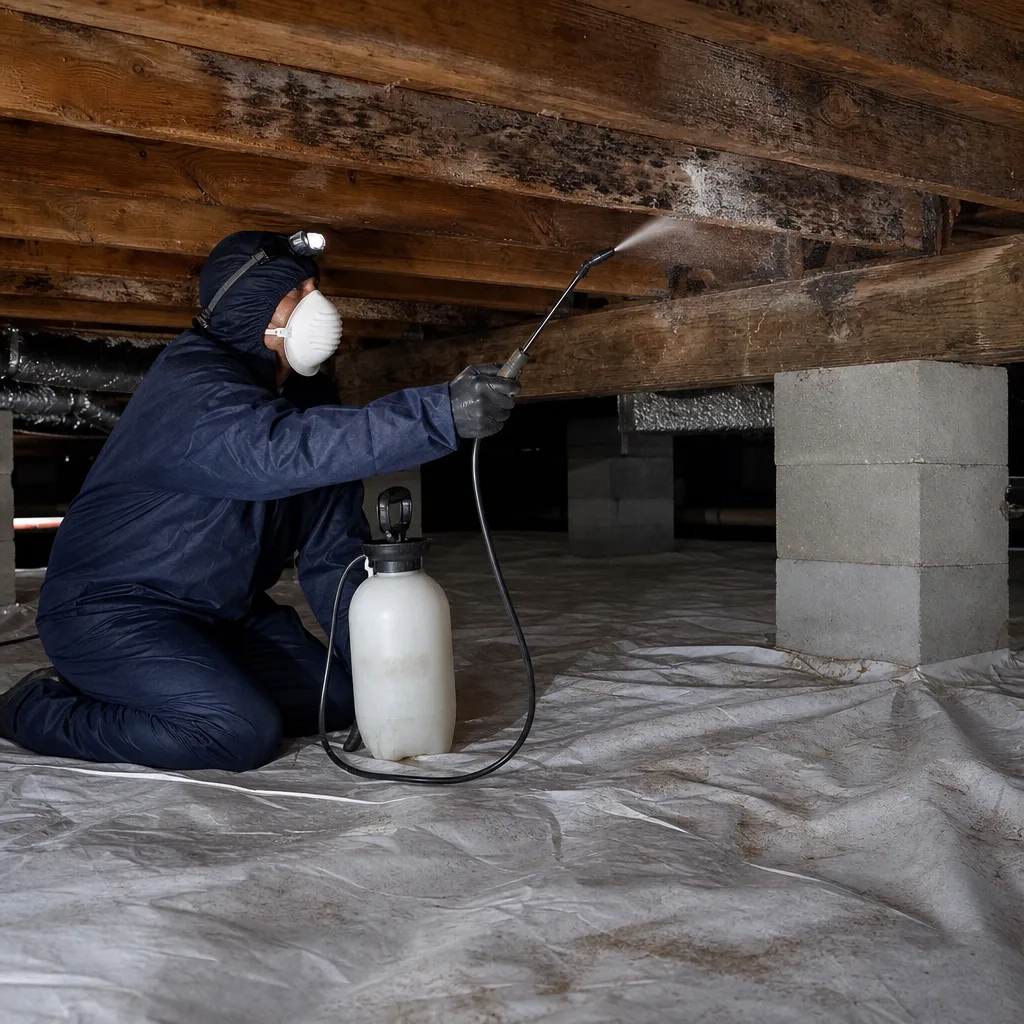
Flood Cleanup
Opa-locka’s flat topography and the C-8 Canal system mean that flood events here often involve Category 2 or 3 water, gray or black water with elevated contamination risk. Flood cleanup isn’t extraction followed by hope. It’s controlled demolition of unsalvageable materials, antimicrobial treatment of exposed framing, and HEPA air scrubbing before reconstruction begins. In the 1940s-1960s rental stock that dominates Opa-locka, we routinely find layered loss: fresh flood damage sitting on top of an unremediated prior event that an absentee owner never disclosed. Our photo documentation separates the two damage timelines, protecting your claim from the scope reductions that happen when insurers suspect pre-existing conditions.
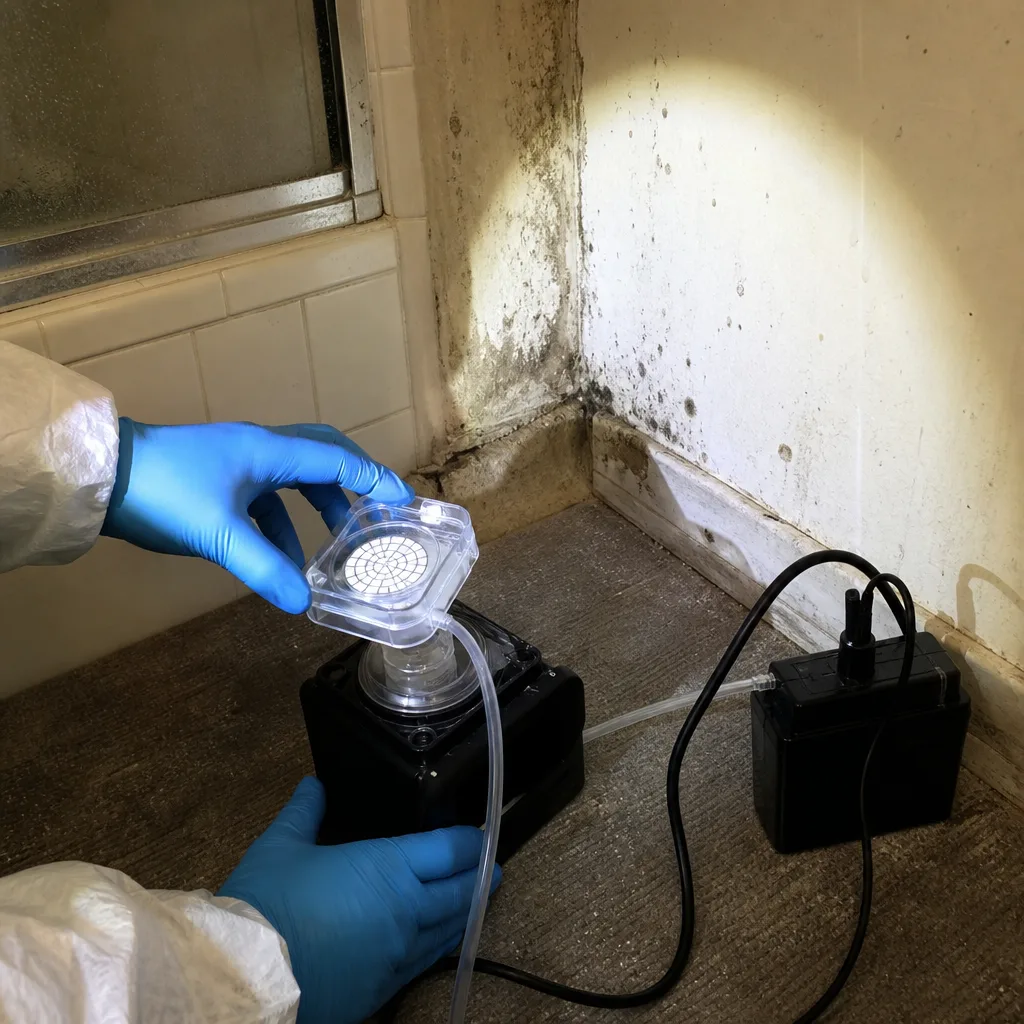
Burst Pipe Restoration
Plumbing failures in Opa-locka’s aging CBS homes often occur in walls with no vapor barrier and original galvanized or early copper lines. A burst pipe on a slab-on-grade structure doesn’t just flood the floor, it saturates the wall base where slab wicking is already occurring. We locate the break, document the water migration pattern with thermal imaging, and write a scope that addresses both the plumbing repair and the structural drying before any walls are closed. Our written price covers the full restoration, not just the extraction.
What happens when you call
- 1
A real person answersNo phone trees - you reach a local pro.
- 2
You get an upfront price rangeHonest numbers before anyone is dispatched.
- 3
A background-checked tech heads outLicensed & insured, dispatched right away.
- 4
You approve before work beginsNothing starts until you say go.
 Before
 After
AfterTrusted Equipment and Documentation Standards
We deploy professional-grade drying systems from Dri-Eaz, Phoenix, and XPOWER, documented to IICRC, RIA, and IFA standards. The equipment matters less than what we do with it: daily moisture readings, photo-documented equipment placement, and written scope adjustments when conditions change. In Opa-locka, conditions change often. A slab that reads dry on day three can show elevated moisture at the perimeter on day five as groundwater re-equilibrates. We catch that because we keep measuring, and we document it because your claim depends on it.
Common Water Damage Restoration Problems We See in Opa-locka Homes
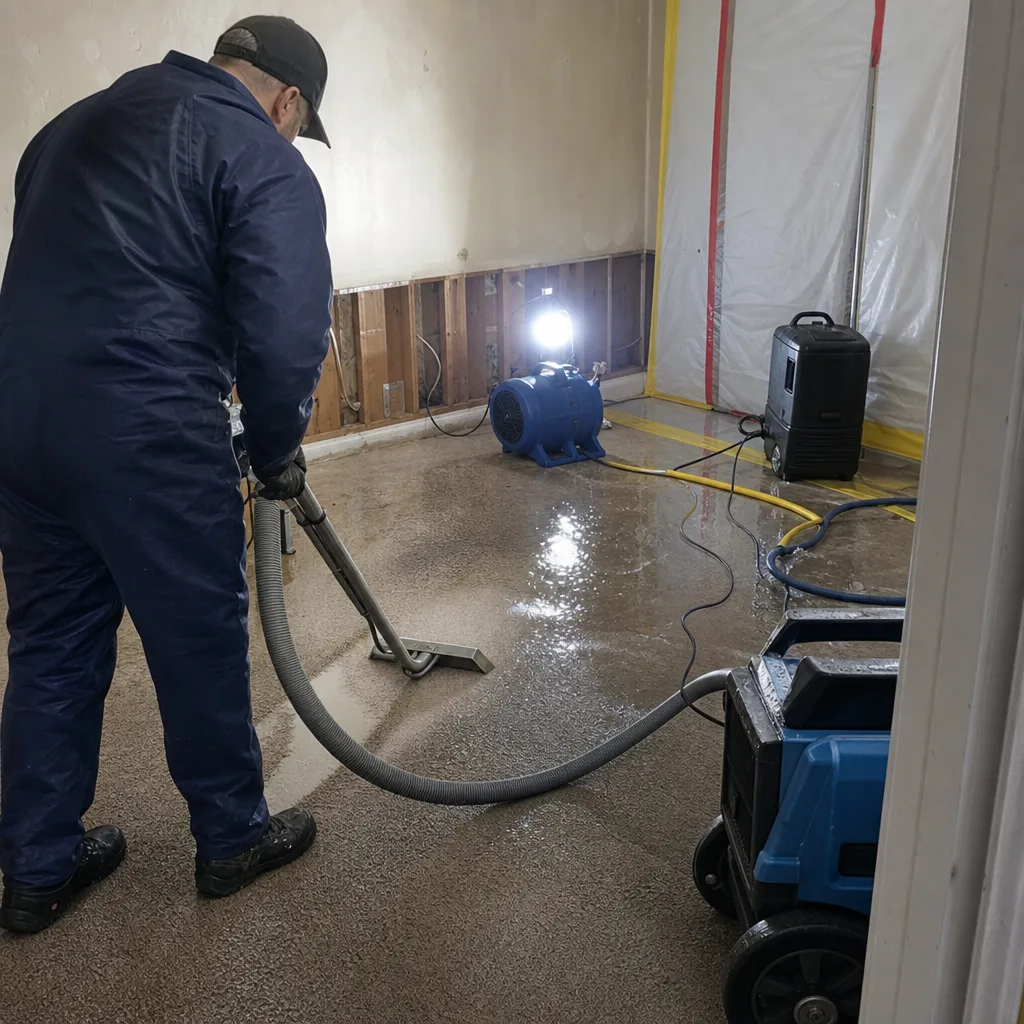
- Sub-slab wicking after surface water clears. Contractors dry to the wall base and call it done, ignoring the sub-slab moisture that keeps readings high on every slab in Opa-locka. The loss comes right back, usually with mold, and the second restoration is rarely covered by insurance because the first was “completed.”
- Impact-rated doors reinstalled without reinforced jambs. Wind-rated and impact-rated entry doors get reinstalled after storm damage without the reinforced jamb and header fastening current code expects, so the next squall line blows the same opening and starts the same water intrusion cycle.
- Layered loss in absentee-owned rental stock. Absentee rental owners push to skip containment and antimicrobial treatment on “small” water jobs, hiding the layered loss of an unremediated prior event under fresh panel repair. Our photo documentation catches what the fresh drywall hides.
- Original roofing and no hurricane strapping on 1950s CBS. The dominant housing stock in Opa-locka is aging concrete block construction with original roofing and no hurricane strapping. A minor wind event that would cause no damage in a code-compliant structure opens enough envelope failure to trigger whole-structure moisture events that linger for weeks.
Pricing for Water Damage Restoration in Opa-locka, FL
Water damage restoration pricing in Opa-locka runs higher than in neighboring cities for one structural reason: the extended drying timeline required by sub-slab moisture wicking. Here’s what we typically see in this market:
| Service | Typical Range in Opa-locka |
|---|---|
| Emergency water extraction (per hour) | $180 - $340 |
| Structural drying & dehumidification (per day) | $380 - $720 |
| Flood cleanup (Category 2, per sq ft) | $4.50 - $8.20 |
| Burst pipe restoration (typical job total) | $2,200 - $5,800 |
| Full residential drying job (typical total) | $2,800 - $6,500 |
| Containment & antimicrobial treatment | $650 - $1,400 |
What moves you within these ranges: square footage affected, contamination class (Category 1 clean water vs. Category 2 gray or Category 3 black water), whether demolition is required, and the number of drying days dictated by slab conditions. We deliver a written price before work begins, every time, with no scope-creep additions once the crew is inside. Haven Standard, Clause 1. Bring a competitor’s written estimate and we’ll review it at no charge. Our Free Second Opinion is designed to catch the scope gaps that cost homeowners thousands in uncovered secondary damage.
We Also Serve Cities Near Opa-locka
Our crews respond throughout northwest Miami-Dade and northeast Broward, including Opa-locka, Pompano Beach, Coconut Creek, Deerfield Beach, and Margate. Each city’s geography drives different drying protocols, coastal flood exposure in Pompano Beach, higher groundwater variability in Coconut Creek, and we adjust our scopes accordingly rather than applying a single template.
Serving Opa-locka, FL - Our Local Coverage Area
We’re based in the Opa-locka area and know this community well. Use the map below to see our service coverage - if you’re nearby, we can almost certainly help.
FAQs - Water Damage Restoration in Opa-locka
The near-sea-level ground next to the Opa-locka Canal (C-8) and a water table sitting just inches below grade means groundwater wicks upward through slab foundations long after surface water is gone. Hialeah and Miami Gardens sit on slightly higher ground with better drainage, so their slabs stabilize faster. In Opa-locka, we routinely extend drying 2-3 days beyond what those markets require, and we document the sub-slab readings that justify the timeline to your adjuster. Call (754) 238-0219 for a written scope that accounts for your specific slab conditions.
It depends on what the door failure allowed inside. If wind-driven rain entered through the compromised frame and saturated walls or flooring, the water damage restoration is covered under most policies as a secondary loss from the storm event, while the door repair itself may fall under a separate coverage limit. We document both: the moisture migration pattern from the door failure, and the structural drying required to prevent mold. Our photo record separates the water damage scope from the door repair scope so your adjuster can apply the correct coverage. Call (754) 238-0219 and we’ll write both timelines.
In Opa-locka’s climate, with June-October temperatures in the 80s and humidity routinely above 75%, mold colonization on wet organic material can begin in 48-72 hours. In 1950s CBS rentals with no vapor barrier and chronic deferred maintenance, we often find pre-existing mold colonies that predate the current water event by months or years. Our antimicrobial treatment and containment protocols start on day one, not after visible mold appears, because by then the scope has doubled and your claim is at risk of denial for late reporting. Call (754) 238-0219 for same-day assessment.
We do both, and in Opa-locka they are often the same job. Water intrusion through a failed impact-rated door creates the moisture problem we’re called to dry; reinstalling that door without reinforced jamb and header fastening, per current wind-load code, guarantees the next storm starts the same cycle. Our scopes include door re-securing and jamb reinforcement when the failure mode demands it, documented with photos and written into the drying log so your file shows proactive mitigation, not just reactive cleanup. Call (754) 238-0219 for a scope that addresses the cause, not just the symptom.
Yes, and we do it routinely. In Opa-locka’s absentee-owned rental market, we document what locals call “layered loss” - fresh storm damage sitting on top of an unremediated prior event. Thermal imaging, moisture mapping, and material sampling reveal multiple moisture fronts with different saturation patterns and mold growth stages. We write separate damage timelines for each event, with photo documentation, so your insurer can distinguish covered storm damage from excluded pre-existing conditions. This protects your claim from the scope reductions that happen when adjusters suspect undisclosed history. Call (754) 238-0219 for documentation that holds up under review.
Call Back to Dry Restoration at (754) 238-0219 for water damage restoration in Opa-locka. A live person answers 24 hours a day, 7 days a week. We’ll deliver a written price before work begins, document every visit with photos, and back the result with our 365-Day Done Right Promise under The Haven Standard. Free Second Opinion available on any competitor’s written estimate.
Written by Alicia Brennan, Owner at Back to Dry Restoration, serving Opa-locka and South Florida since 2011.