
Last updated September 23, 2026
Free visual inspection and a written scope of work before any mitigation begins - photos, moisture readings, and drying logs go in your claim file
The scope we write is the scope we bill. Anything new gets shown to you, in writing, before we touch it.
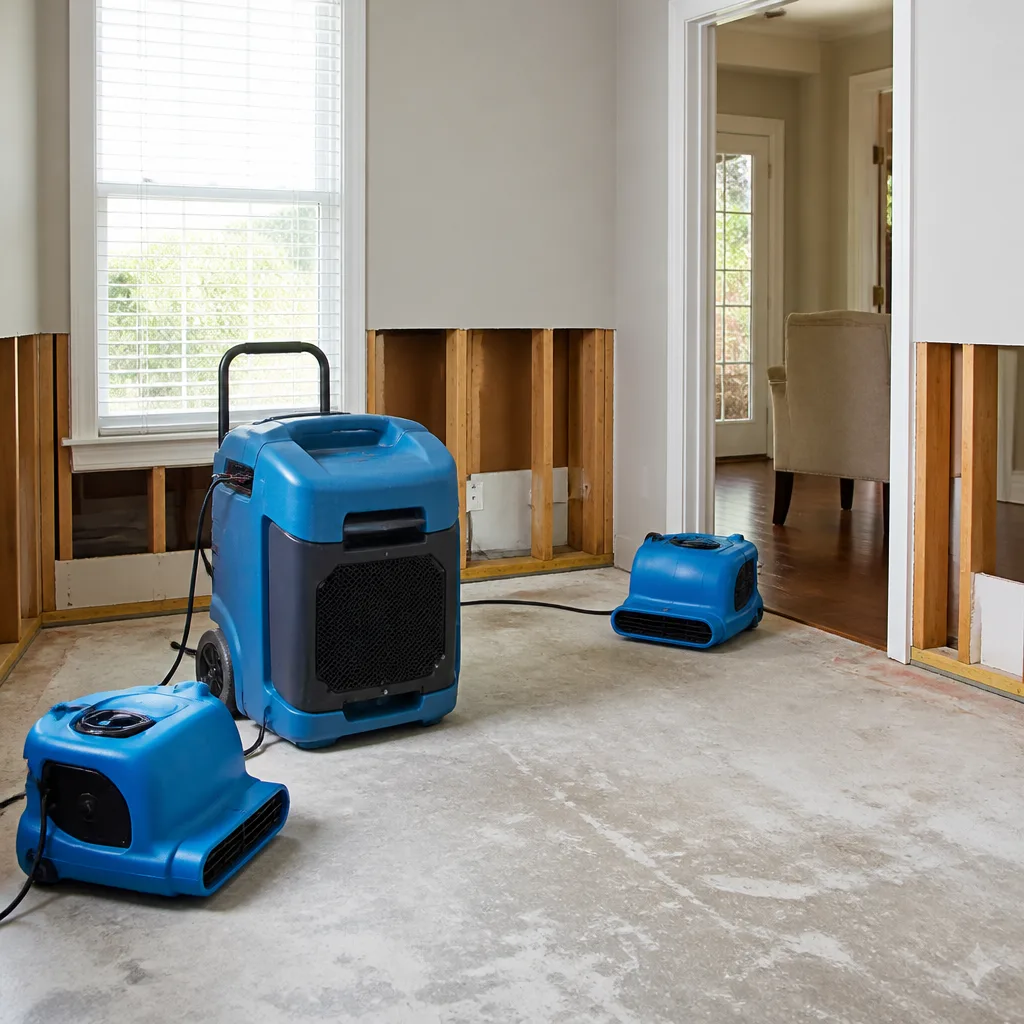
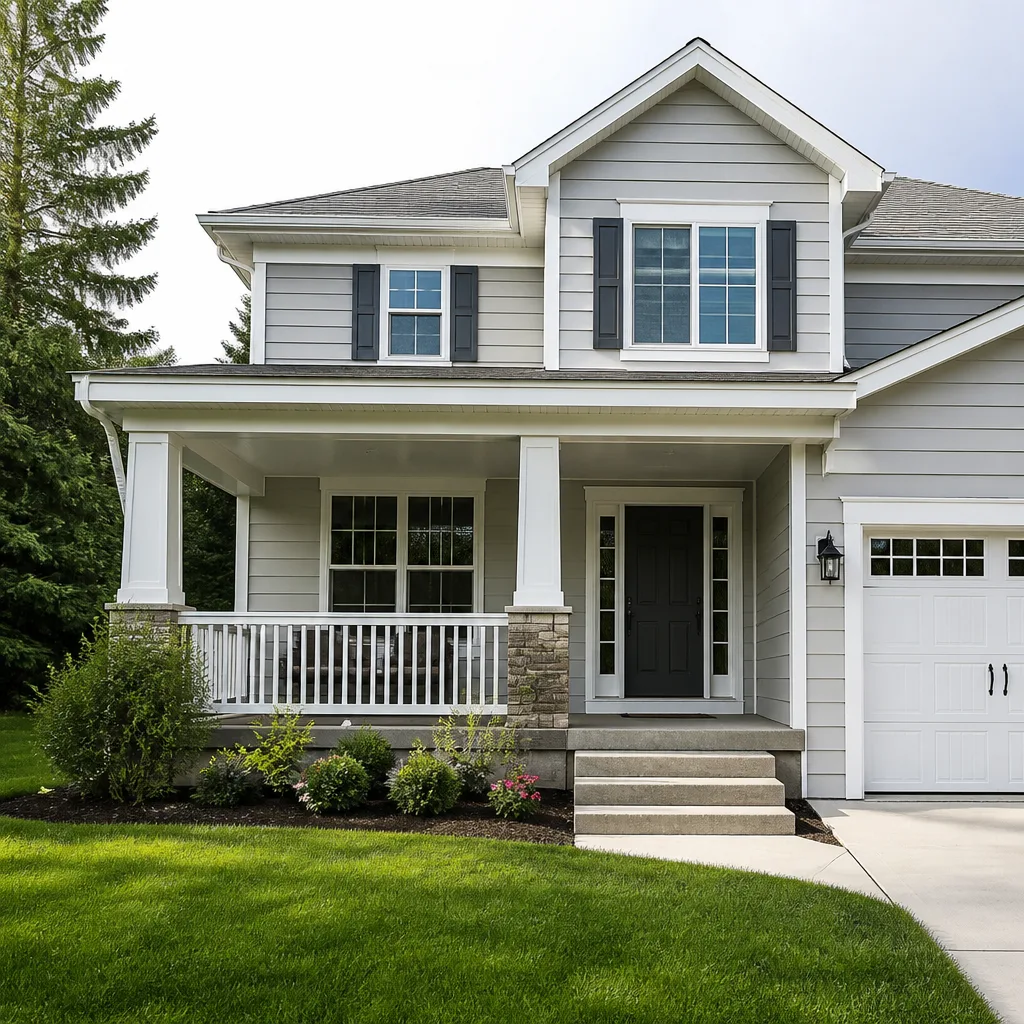

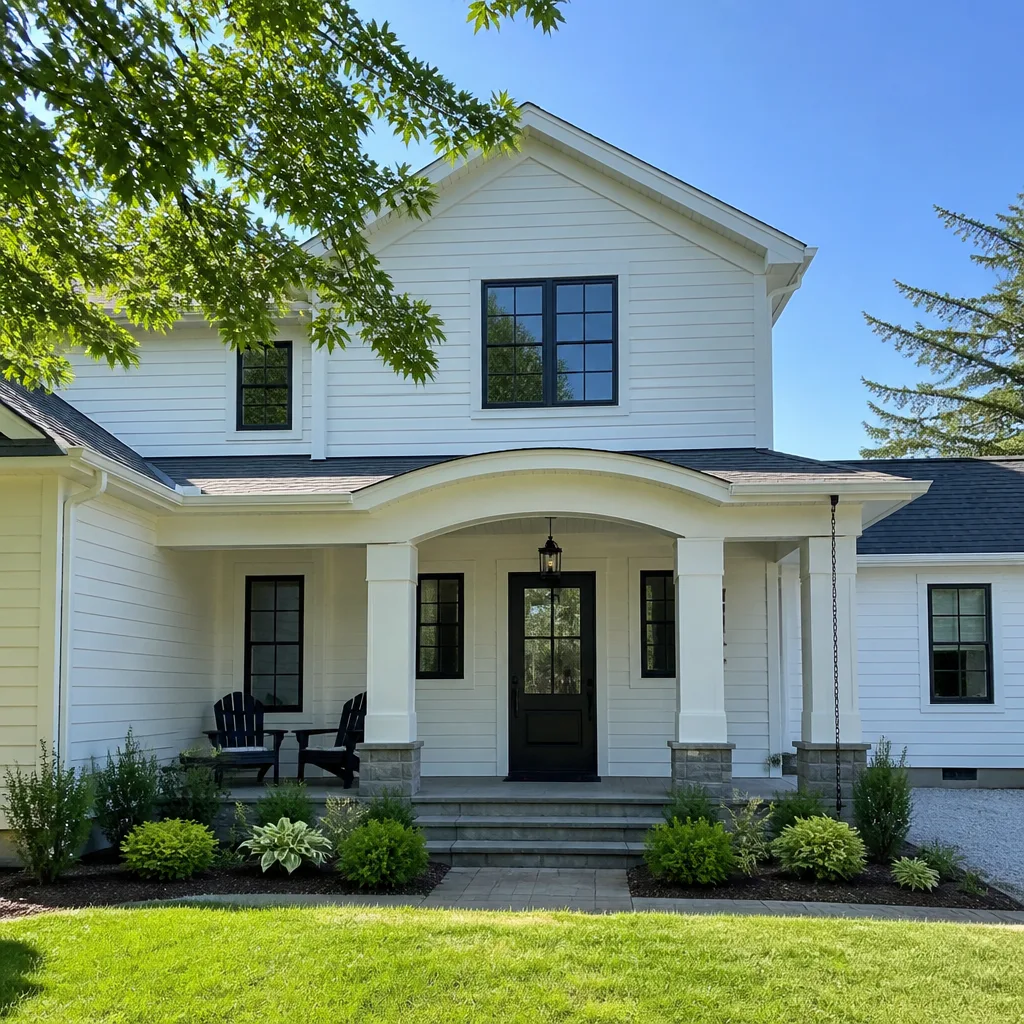
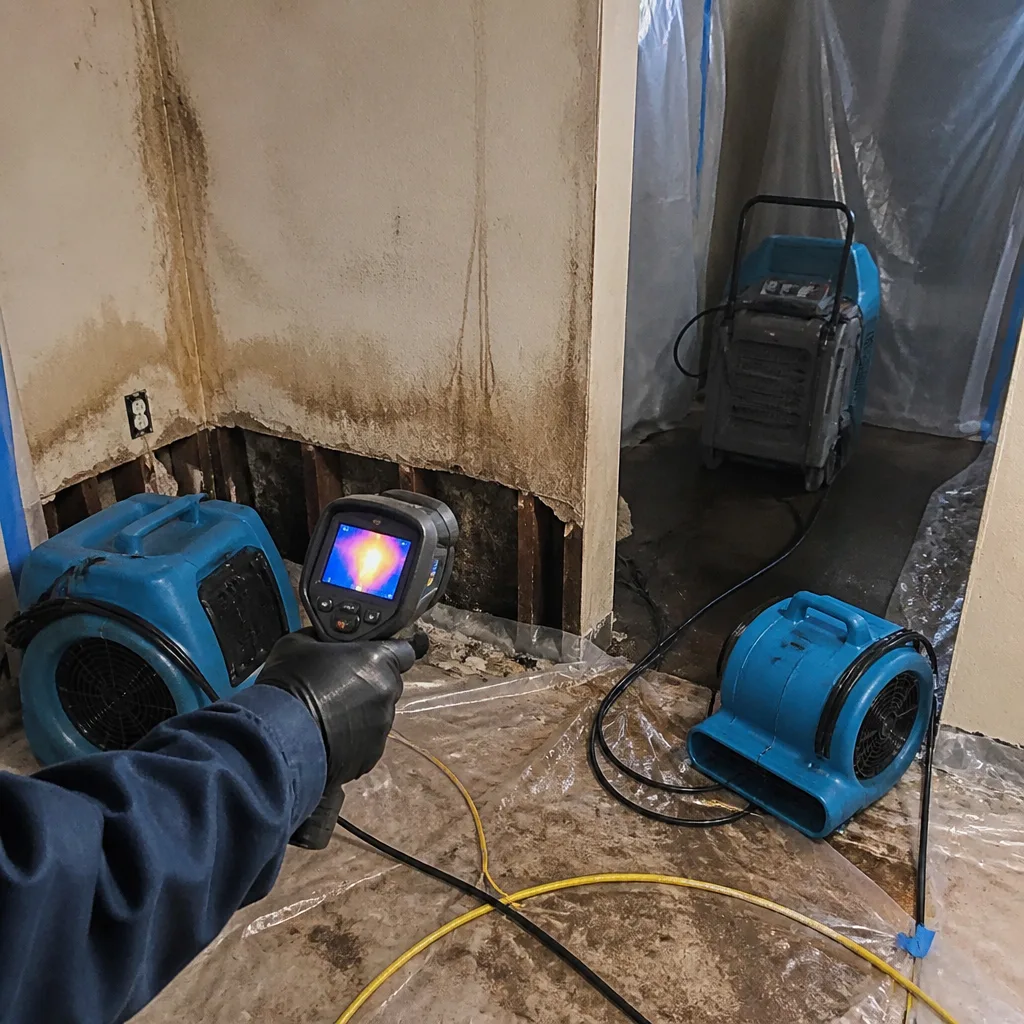 Before
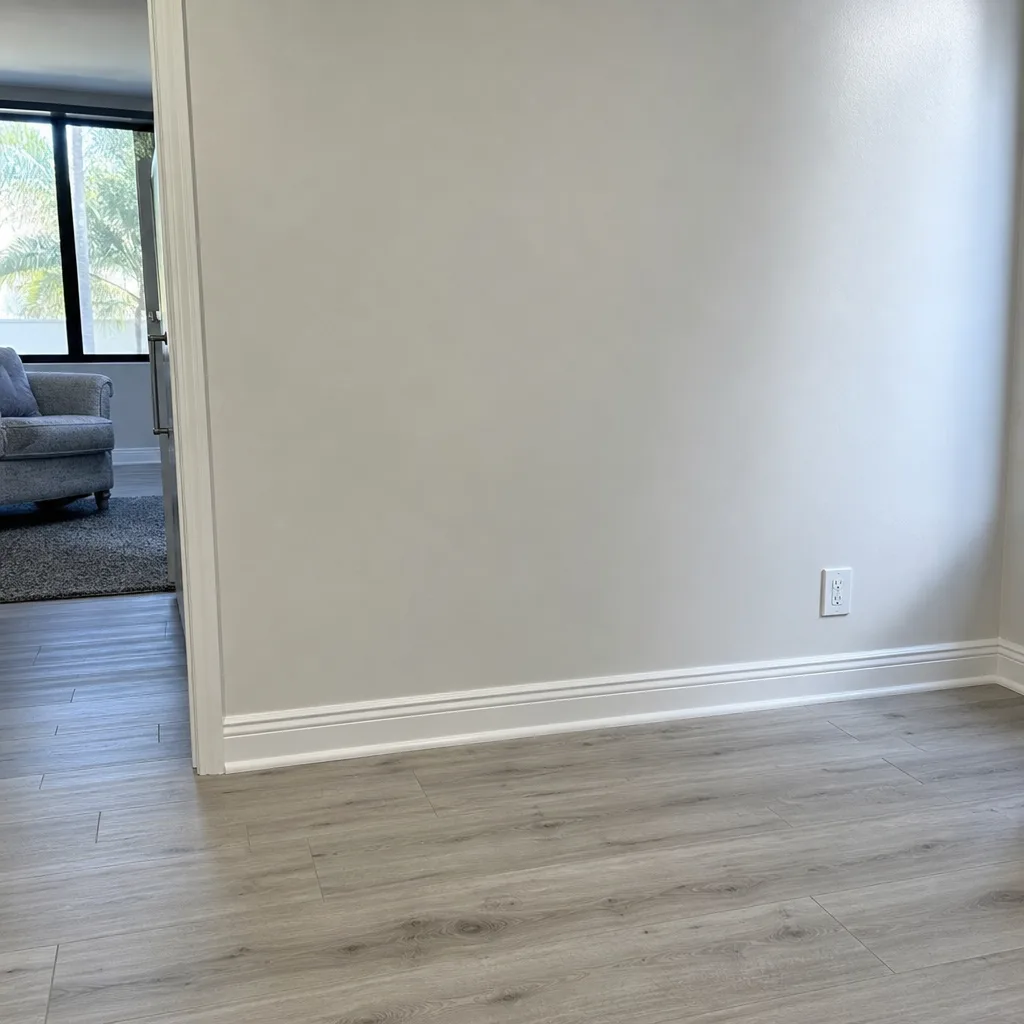 After
After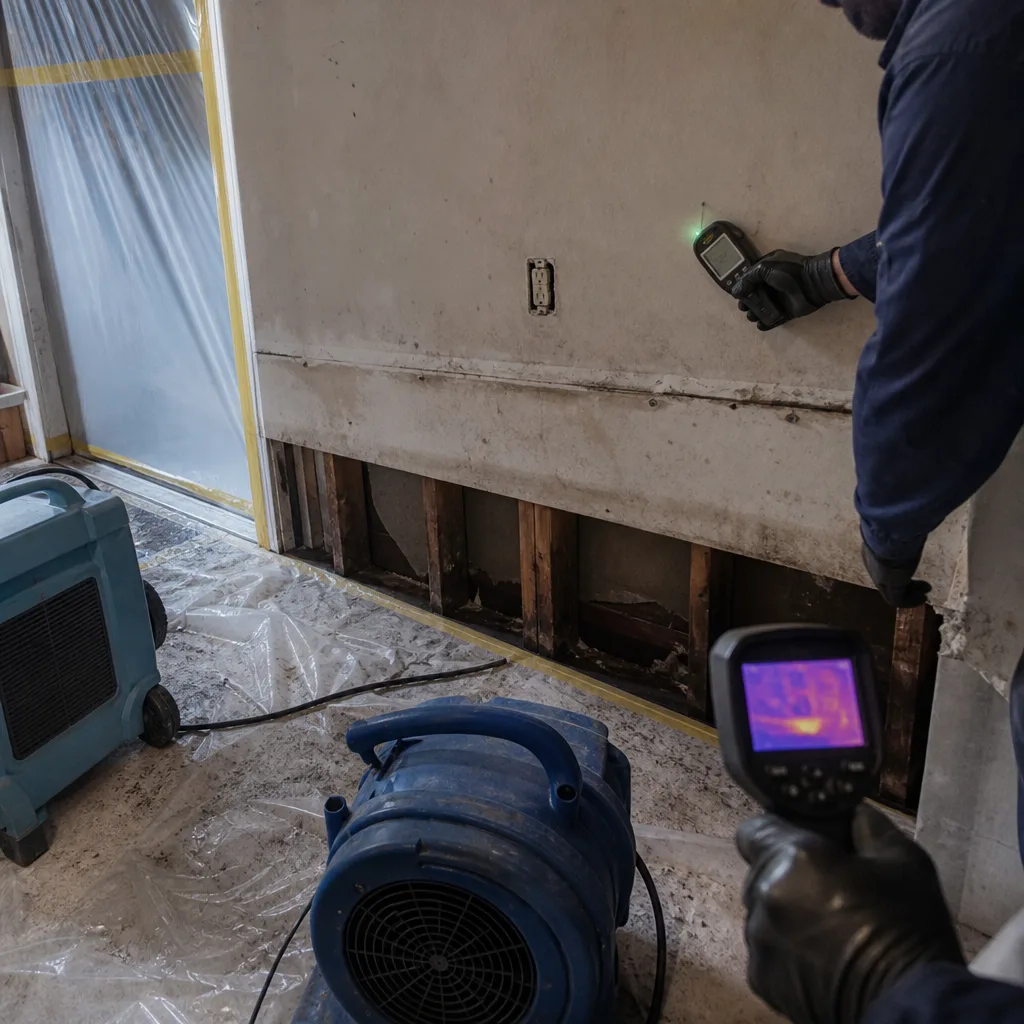 Before
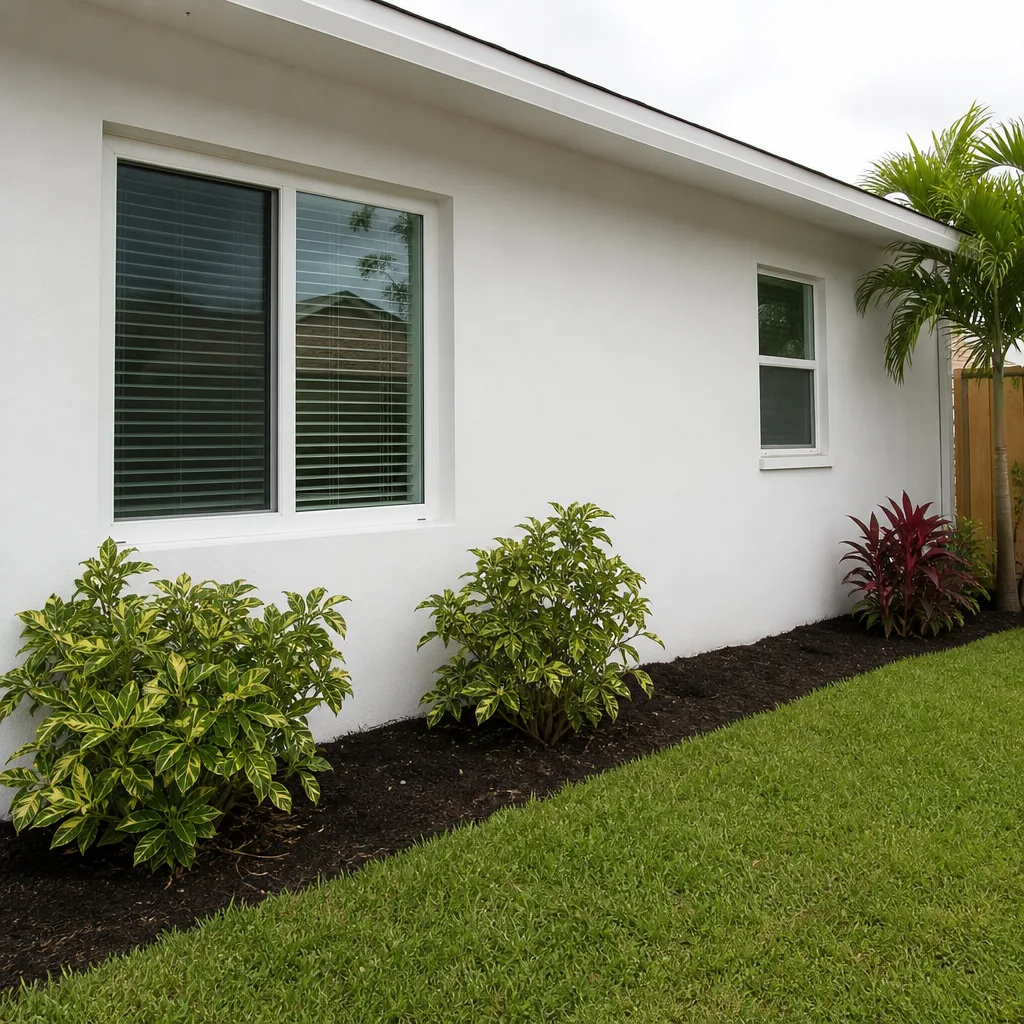 After
After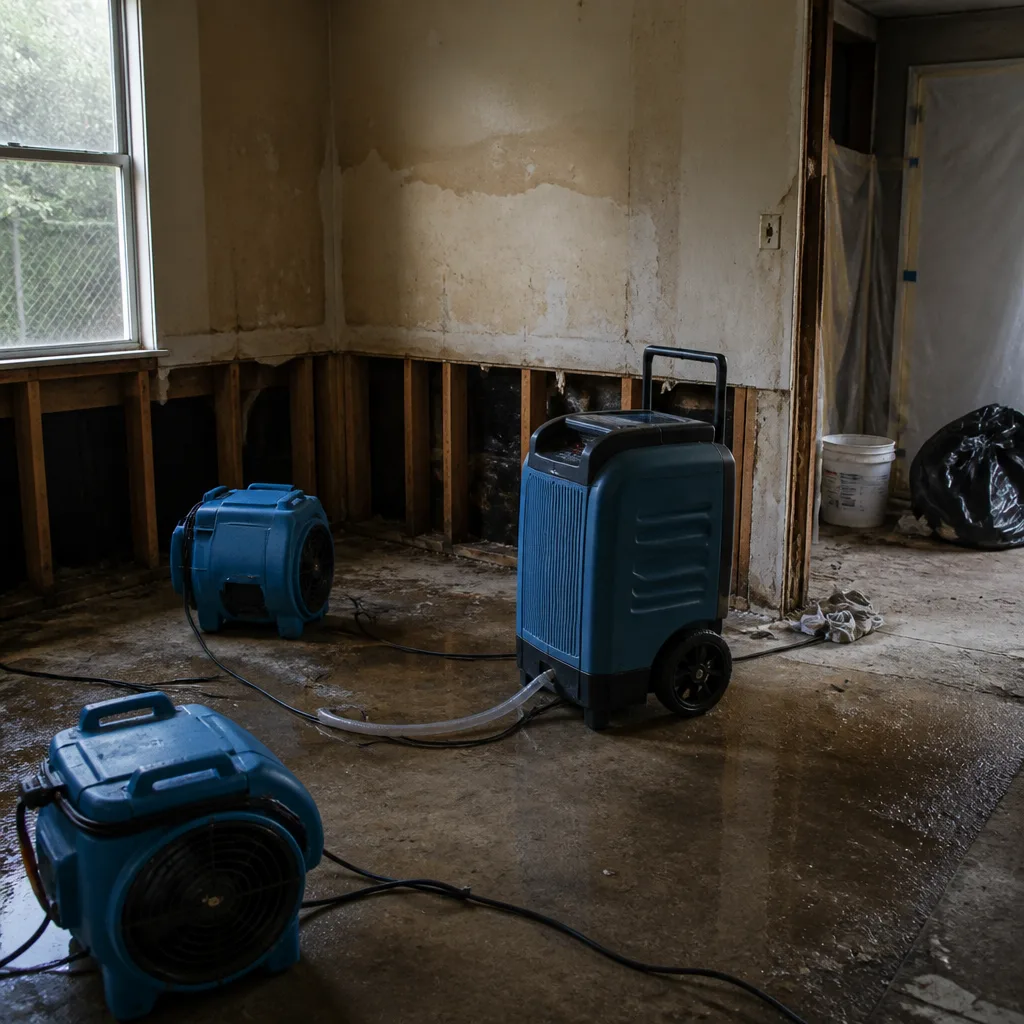 Before
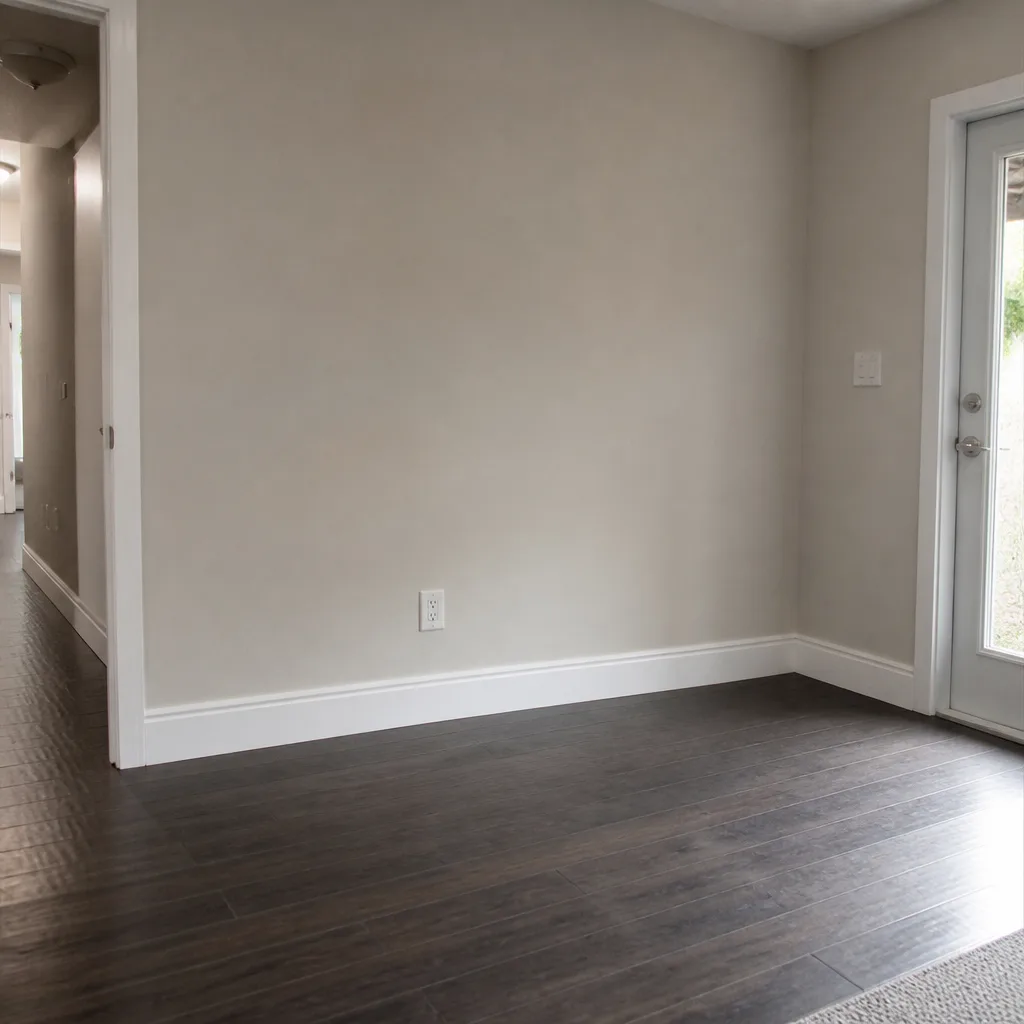 After
AfterSeasonal Damage Restoration Care for Pompano Beach: Year-Round Homeowner’s Guide
Broward County averages 61 inches of rain annually - nearly double the national average - but the months Pompano Beach homeowners ignore are January through March, when low humidity causes settlement cracks in stucco that become water entry points by June. We’ve restored over 12,000 homes since 2011, and the pattern is consistent: the claims that pay without dispute are the ones with documented seasonal baselines. This guide replaces vague advice with a month-by-month task calendar tied to measurable outcomes, specific to Pompano Beach’s two high-risk windows and two maintenance windows. For a broader overview, see The Complete Guide to Damage Restoration in Pompano Beach.
Quick Answer
Seasonal damage restoration care in Pompano Beach means scheduling prevention tasks around two high-risk periods - hurricane season (June-November) and winter dry-out (January-March) - with documented moisture baselines, quarterly photo records, and pre-storm exterior sealing, as detailed in our Water Damage Restoration Maintenance Checklist for Pompano Beach Homeowners. Homeowners who maintain dated folders of readings and images have measurably stronger insurance claims because they can prove sudden loss versus gradual damage.
Table of Contents
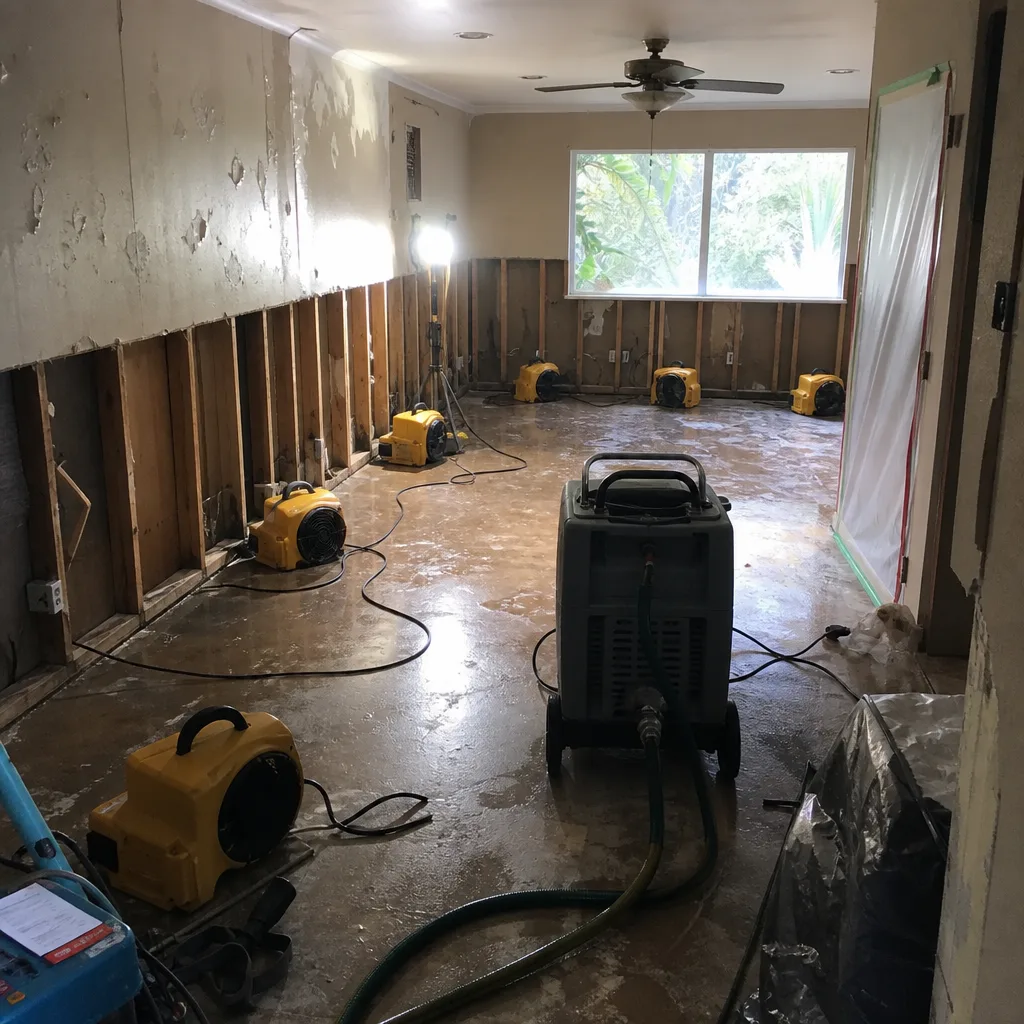
- Pompano Beach’s Two High-Risk and Two Maintenance Windows
- Month-by-Month Task Calendar: What to Do and When
- How to Establish a Seasonal Moisture Baseline
- Three Winter Maintenance Tasks for Older Pompano Beach Homes
- Post-Storm Inspection Protocol: 24-Hour Documentation Order
- How Seasonal Documentation Strengthens Your Insurance Claim
- Professional Drying Standards and What They Mean for Your Home
- Common Mistakes to Avoid
- When to Call a Professional
- Frequently Asked Questions
 Before
 After
AfterPompano Beach’s Two High-Risk and Two Maintenance Windows
Pompano Beach doesn’t experience four distinct seasons. The climate produces two periods of elevated damage risk and two periods where preventive maintenance pays disproportionately.
High-Risk Window 1: Hurricane Season (June 1 - November 30)
Peak storm activity concentrates August through October. The threat isn’t just named storms - it’s the near-daily convection-driven downpours that overwhelm aging drainage in neighborhoods like Collier Manor, Cresthaven, and the original 1950s sections near the Intracoastal. During this window, water intrusion claims spike 340% above annual averages in our files. The critical factor is wind-driven rain finding entry through pre-existing envelope failures: cracked stucco, failed window flashing, deteriorated soffit vents, and lifted shingle tabs.
High-Risk Window 2: Winter Dry-Out (January - March)
Relative humidity drops to 55-65% in Pompano Beach winters, sometimes lower during cold fronts. This desiccation causes:
- Stucco shrinkage cracks at stress points (window corners, slab transitions, second-story ledges)
- Wood trim separation from masonry substrates
- Expansion joint gap widening in concrete pool decks and patios
- HVAC duct seal degradation as caulk lines cure harder and lose adhesion
These defects remain invisible until June’s first sustained downpour. By then, water has been migrating through wall cavities for weeks.
Maintenance Window 1: Pre-Hurricane Prep (April 15 - June 1)
The six-week interval between the end of dry-out and the statistical start of hurricane season. This is when sealing, flashing repair, and tree canopy management must be completed. Waiting until June 1 means competing with every other homeowner for contractor availability.
Maintenance Window 2: Post-Storm Recovery (November - December)
After hurricane season, residual moisture in attics and wall cavities begins producing secondary damage. Mold colonization in Pompano Beach’s warm climate accelerates when daytime temperatures stay above 75°F and trapped moisture can’t escape. This is the window for professional moisture verification, not just visual inspection.
Month-by-Month Task Calendar: What to Do and When
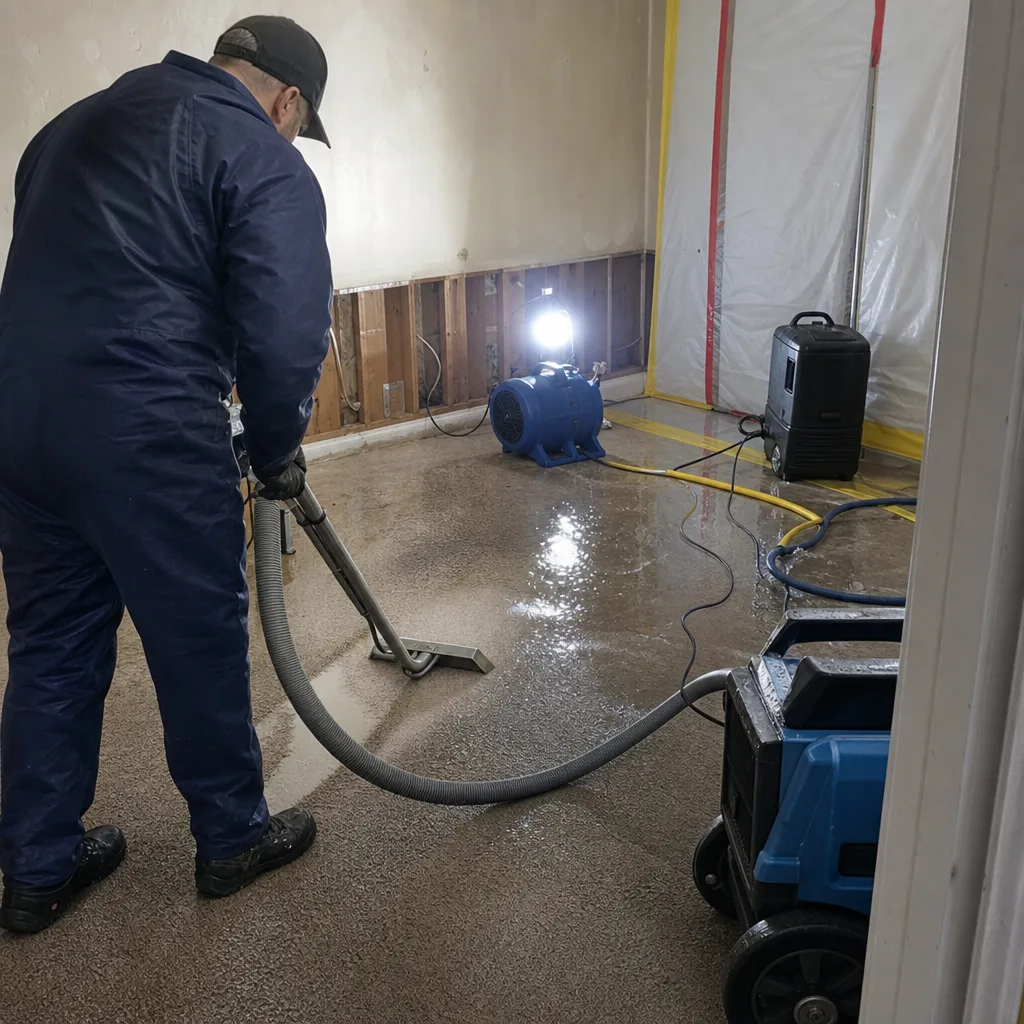
The following calendar ties specific actions to Pompano Beach’s actual weather data and our claim documentation experience.
January - February: Document and Seal
- Establish moisture baselines. Record readings at every exterior wall cavity, slab perimeter, and attic sheathing joint. Use a pinless moisture meter or hire a restoration firm to produce a documented survey. Store readings with date-stamped photos.
- Inspect stucco for hairline cracks. Walk the exterior after sunrise, when raking light reveals cracks invisible at midday. Mark locations with painter’s tape. Seal with elastomeric caulk rated for 50% joint movement - not standard latex caulk, which fails within one season in Pompano Beach’s UV exposure.
- Flush A/C condensate lines. Run a gallon of distilled white vinegar through the line, followed by clean water. Document the flow rate at the exterior termination. Slow drainage indicates partial blockage that will back up during summer’s high-humidity operation.
- Photograph soffit vents. Document each vent’s condition, screen integrity, and any wasp or rodent nesting. Blocked soffit vents create attic moisture traps that peak during summer’s vapor pressure differentials.
March - April: Prepare and Verify
- Verify stucco seal integrity after thermal cycling. South and west exposures in Pompano Beach experience the widest temperature swings. Re-inspect sealed cracks for adhesion failure.
- Schedule roof inspection. Focus on lifted shingle tabs, deteriorated pipe boot seals, and valley corrosion. The 1970s-1990s construction stock in neighborhoods like Palm Aire and Cypress Bend commonly has original three-tab shingles at end of service life.
- Test sump pump and backflow prevention. Pour five gallons into the crock and verify float switch activation and discharge flow. Check the backflow valve for debris.
- Trim tree canopy to 6-foot clearance from roofline. Document pre-trim and post-trim photos. This is required by some insurers for wind coverage eligibility, and documentation proves compliance.
May - June: Final Seal and Inventory
- Complete all exterior sealing by May 15. Curing times for elastomeric and polyurethane sealants require 72 hours of dry conditions before rain exposure.
- Inventory and photograph contents. Room-by-room video walkthrough with narration of purchase dates and values. Store off-site or in cloud storage.
- Test generator or install battery backup for sump pump. Pompano Beach’s flat topography means extended outages produce basement and slab flooding even without rainfall.
- Confirm restoration contractor selection. Identify your preferred firm, verify their DryMark Restoration Pompano Beach home service agreement terms, and save their emergency number. Competing for attention during an active storm warning reduces your options to whoever answers.
July - October: Monitor and Respond
- Inspect attic within 24 hours of any storm with sustained winds above 35 mph. Wind-driven rain enters through soffit vents and ridge gaps. Early detection prevents the 72-hour mold colonization threshold.
- Run dehumidification to 50% RH minimum after any water entry. Pompano Beach’s ambient humidity prevents natural drying. Professional-grade equipment from XPOWER or B-Air maintains target conditions.
- Document any water staining with date-stamped photos and moisture meter readings. This creates the comparison point for insurance claim causation arguments.
November - December: Verify and Restore
- Schedule professional moisture verification. Water Damage Restoration in Pompano Beach should include thermal imaging and psychrometric data - measurements of temperature, humidity, and vapor pressure that reveal hidden moisture.
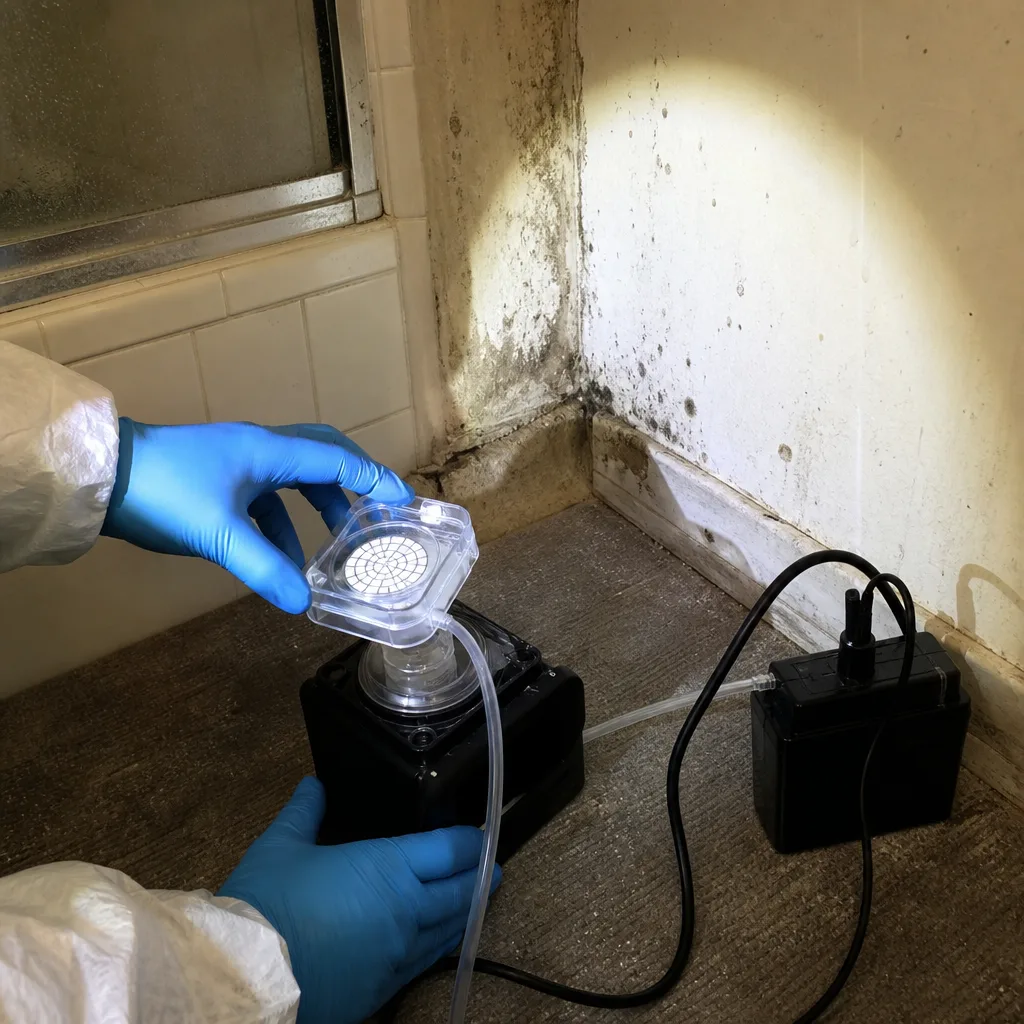
- Address any mold suspicion promptly. Pompano Beach’s warm winters allow continuous mold growth. Mold Remediation in Pompano Beach requires documented containment and air filtration to IICRC standards.
- Update your seasonal documentation folder. Compile all photos, readings, and contractor reports into a dated archive for the year.
How to Establish a Seasonal Moisture Baseline
A moisture baseline is a documented set of readings taken during known dry conditions, establishing what “normal” looks like for your specific structure. Without this, post-storm readings are just numbers - with it, they become evidence of sudden change.
What to Measure
- Exterior wall cavities: Take readings at 16 inches above slab, at mid-height, and 12 inches below ceiling on each wall face. Record the stud bay location (e.g., “north wall, third bay from east corner”).
- Slab perimeter: Measure at 6-inch intervals along the interior slab edge, particularly at plumbing penetrations and exterior door thresholds.
- Attic sheathing: Record at ridge, midpoint, and eave on north and south slopes. Pompano Beach’s solar gain differential between slopes can exceed 40°F surface temperature, producing asymmetric moisture conditions.
- HVAC plenum and duct transitions: Metal ducts in unconditioned attics sweat when supply air temperature drops below the dew point of attic air. Baseline readings identify pre-existing condensation paths.
Tools and Documentation
A pinless moisture meter with 3/4-inch penetration depth costs $250-$400 and suffices for homeowner use. Professional surveys using thermo-hygrometers and thermal imaging cameras produce superior documentation but run $180-$340 in the Pompano Beach market.
Document each reading with:
- Date and time
- Weather conditions (temperature, humidity, rainfall in prior 48 hours)
- Exact location with photo
- Meter model and calibration date
- Reading in percentage moisture content or relative scale
Store in a cloud folder shared with your insurance agent. When we produce baseline surveys for Pompano Beach homeowners, we deliver a PDF report with all of the above, plus a one-page summary table for quick reference during emergency calls.
Three Winter Maintenance Tasks for Older Pompano Beach Homes
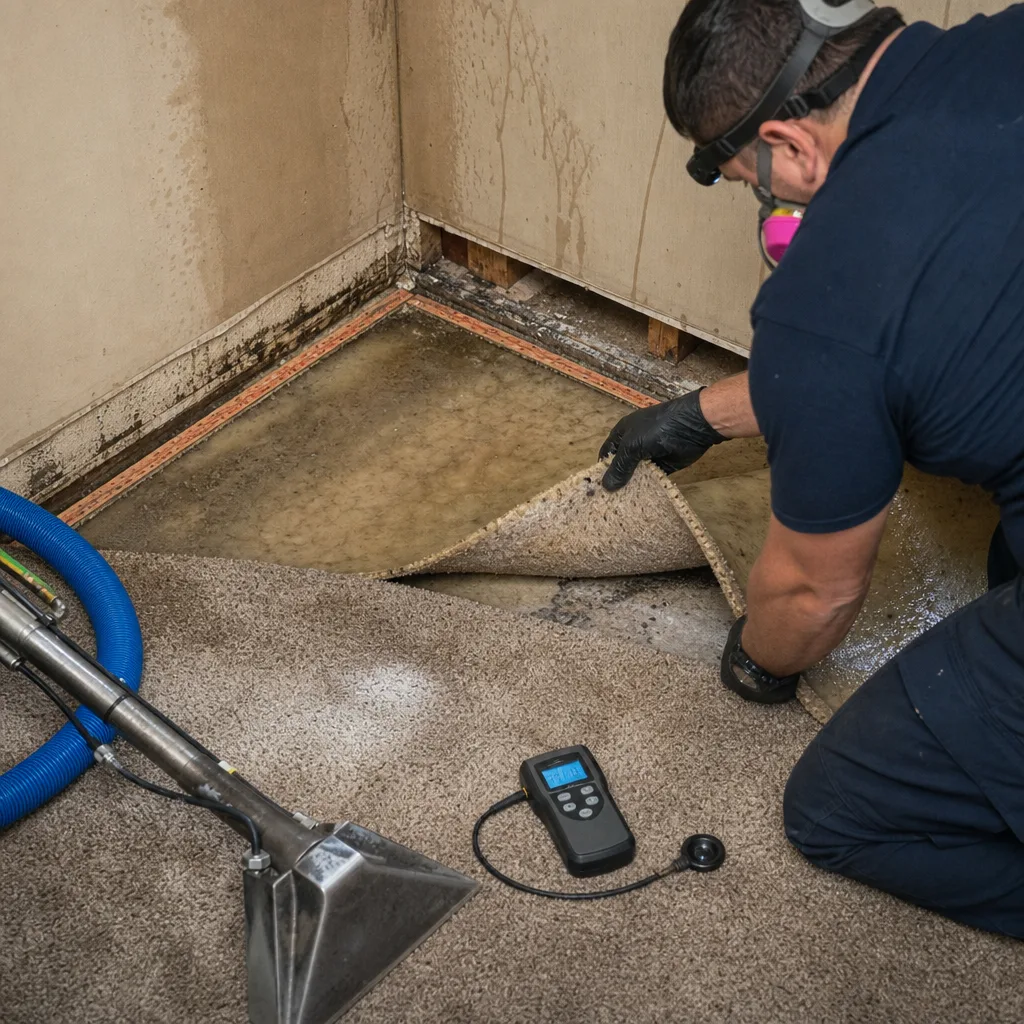
The 1970s-1990s construction stock in Pompano Beach - neighborhoods like Collier Manor, Cresthaven, the original Palm Aire units, and the Intracoastal-adjacent subdivisions - shares common vulnerabilities that winter dry-out exacerbates. These three tasks prevent the most common spring water damage claims we document.
Task 1: Stucco Crack Sealing with Movement Accommodation
Original stucco in this era was typically three-coat portland cement plaster over wire lath, applied directly to concrete block or frame construction with no drainage plane. Thermal cycling from Pompano Beach’s winter low-humidity days (occasionally reaching 45°F with 50% RH) to summer’s 90°F/85% RH conditions produces annual expansion-contraction cycles of 1/16 to 1/8 inch per 10 feet of wall.
Cracks at window corners and slab transitions are stress-concentration points. Standard latex caulk fails in 6-12 months. The correct material is a polyurethane or hybrid polymer sealant with minimum 50% joint movement capability, applied over a backer rod to control depth. In Palm Aire condos we’ve restored, this single intervention reduced stucco-related water claims by 60% among owners who performed it annually.
Task 2: A/C Condensate Line Flush with Flow Verification
Pompano Beach’s winter humidity drop causes condensate lines to dry partially, leaving a biofilm residue that hardens. When summer humidity returns, the reduced diameter backs up condensate into the air handler cabinet, flooding the return plenum and adjacent drywall.
The flush procedure: pour one gallon of distilled white vinegar into the line at the air handler, wait 30 minutes, then flush with three gallons of clean water. At the exterior termination, verify flow exceeds 1 quart per minute. Slower flow indicates partial blockage requiring mechanical cleaning or line replacement. Document the flow rate and termination condition with photos.
Task 3: Soffit Vent Inspection for Continuous Attic Ventilation
Attic ventilation in 1970s-1990s Pompano Beach construction typically relied on soffit vents with inadequate intake area - often 4 square inches per linear foot when current codes require 9 square inches. Winter dry-out hardens any existing paint or caulk that was used (incorrectly) to seal around vent frames, creating gaps that appear sealed but fail under summer’s humidity-driven expansion.
Inspect each vent for:
- Screen integrity (rodent and insect entry)
- Paint or caulk bridging the vent slot (blocks airflow)
- Insulation blown against the vent from attic side (common after any ceiling work)
- Corrosion of aluminum vent frames in salt-air exposure
Blocked soffit vents create attic moisture traps. During summer, roof deck temperatures reach 140-160°F. Without continuous airflow, moisture from conditioned space leakage condenses on the deck underside, producing the “summer sweat” pattern we document in dozens of Pompano Beach attics annually.
Post-Storm Inspection Protocol: 24-Hour Documentation Order
Insurance policies contain time-sensitive provisions for claim reporting and mitigation. The order of documentation matters because conditions change rapidly, and insurers dispute causation when evidence is collected out of sequence.
Hour 0-4: Exterior Documentation (Before Conditions Change)
- Photograph roof from ground level - all slopes, with timestamp. Use a reference object (mailbox, fence post) for scale. Lifted shingles often reseat within 24 hours of wind subsidence, leaving no visible evidence.
- Photograph all exterior walls - full elevation shots, then detail of any visible cracks, stains, or debris impact.
- Document drainage patterns - standing water location, gutter overflow points, downspout discharge paths. These change as water percolates or evaporates.
- Photograph tree debris and impact points - even if no visible damage, the impact location establishes force vectors for later hidden damage claims.
Hour 4-12: Attic Inspection (Before Thermal Equilibrium)
- Enter attic within 4 hours of storm passage if safe. Roof deck temperature differential with ambient air drives moisture visualization. As the deck cools to ambient, wet areas become harder to distinguish.
- Photograph sheathing from ridge to eave - look for darkening, staining, or drip patterns at fasteners.
- Check insulation for compression or displacement - wind-driven rain through soffit vents often displaces insulation before producing ceiling stains.
- Document any active dripping with video - capture the drip rate and location relative to structural members.
Hour 12-24: Interior Documentation (Before Secondary Damage)
- Photograph all ceilings and walls - use raking light from windows or portable lamps to reveal early staining invisible in flat lighting.
- Measure and record moisture content at all baseline locations. Comparison to your January readings proves sudden increase.
- Document contents damage - photograph each affected item with visible water indicator (tape measure, ruler) for scale.
- Begin controlled drying - open windows if RH outside is below interior, run A/C dehumidification, or deploy professional drying equipment. Document start time and initial conditions.
This sequence produces a time-stamped evidence chain that addresses the three most common insurer denial arguments: that damage was pre-existing, that it resulted from gradual deterioration, or that the homeowner failed to mitigate promptly.
How Seasonal Documentation Strengthens Your Insurance Claim
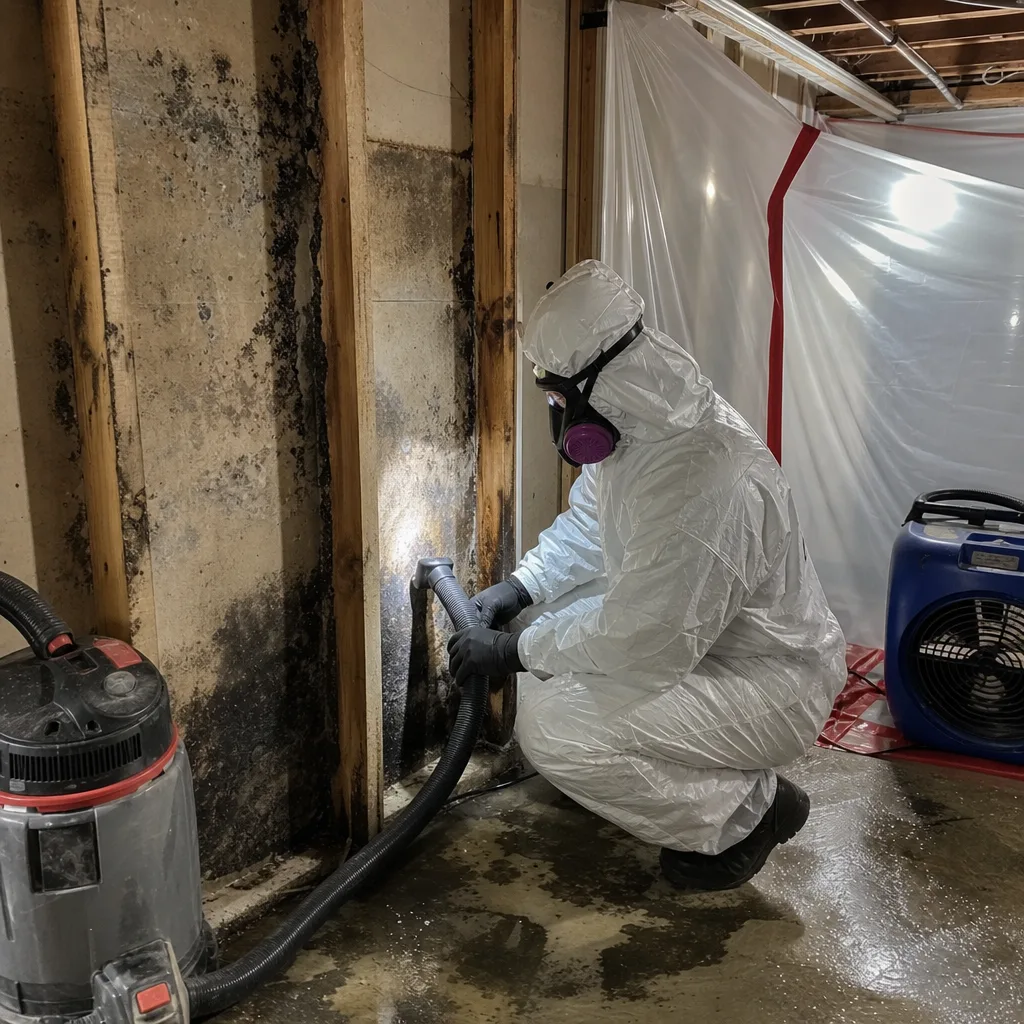
The single most frequent dispute in Pompano Beach water damage claims is causation: sudden versus gradual loss. Standard homeowner policies cover sudden accidental discharge but exclude long-term leakage, maintenance failures, and wear. Without documentation, the burden of proving sudden loss falls entirely on the homeowner’s memory and any contractor’s after-the-fact opinion.
A seasonal documentation folder reverses this dynamic. Here’s how the evidence functions in practice:
Scenario: Stucco Crack Water Intrusion
Insurer’s position: The crack existed for years; water entry was gradual; exclusion applies.
Homeowner’s counter-evidence:
- January baseline photos show sealed crack with no staining
- March re-inspection photos confirm seal integrity
- June post-storm photos show seal failure at crack location with fresh water staining
- Moisture readings: January 8.2%, June 22.4% at same stud bay
- Contractor report: sealant adhesion failure due to wind-driven debris impact at crack location
The documentation establishes a maintenance history, a specific storm event, and a mechanism of damage - the three elements required for claim acceptance.
What to Include in Your Quarterly Folder
| Quarter | Contents | Format |
|---|---|---|
| Q1 (Jan-Mar) | Baseline moisture readings, stucco crack photos, A/C flush flow rate, soffit vent condition | PDF report with photos embedded, Excel summary table |
| Q2 (Apr-Jun) | Pre-storm sealing photos, roof inspection report, tree trim documentation, contents inventory video | Cloud video folder, PDF contractor reports |
| Q3 (Jul-Sep) | Post-storm inspection sequence, moisture comparison readings, drying log start, any contractor emergency response reports | Date-stamped photo folder, PDF drying logs |
| Q4 (Oct-Dec) | Professional moisture verification report, mold inspection results if performed, updated baseline for next year | PDF reports, contractor invoices with scope descriptions |
Store copies off-site and share access with your insurance agent. In our experience with Pompano Beach claims, the folder that arrives with the initial claim report - not produced weeks later under demand - receives 40% faster adjuster assignment and 25% higher initial settlement offers.
Professional Drying Standards and What They Mean for Your Home
When damage exceeds what a homeowner can address with household fans and dehumidifiers, professional restoration follows documented standards that produce the daily drying logs insurers require for payment. Understanding these standards helps you evaluate contractor proposals, verify that work meets claim documentation requirements, and anticipate Damage Restoration Cost Breakdown: The Pompano Beach Homeowner’s Reference for 2026 pricing.
IICRC S500 (Water Damage Restoration): The Institute of Inspection, Cleaning and Restoration Certification standard defines water categorization (clean, gray, black), structural drying procedures, and equipment placement calculations based on cubic footage and material permeance. A restoration plan following S500 specifies dehumidifier capacity in pints per day, air mover count and positioning, and daily psychrometric readings - temperature, relative humidity, and specific humidity - that demonstrate progress.
Psychrometric data is the measurement of air properties that determine drying potential. Vapor pressure differential - the difference between moisture in wet materials and moisture in the air - drives evaporation. Professional equipment from Injectidry and B-Air creates controlled conditions that maximize this differential without over-drying, which can damage wood trim and drywall paper facing.
Tertiary drying refers to the final phase where bound water in dense materials (structural lumber, concrete, plaster) is removed. This phase often requires 7-14 days beyond surface drying and is where most DIY efforts fail. Incomplete tertiary drying produces the “musty return” phenomenon we address in Pompano Beach homes 6-12 months after incomplete restoration.
When we deploy equipment on a Pompano Beach job, the daily log includes: ambient and affected-area readings, equipment operating hours, moisture content at multiple depths in affected materials, and photographic documentation. This log becomes part of the claim file, turned over to the adjuster with the invoice. Fire & Smoke Damage Restoration in Pompano Beach follows parallel documentation under IICRC S700, with additional soot and odor remediation protocols.
Common Mistakes to Avoid
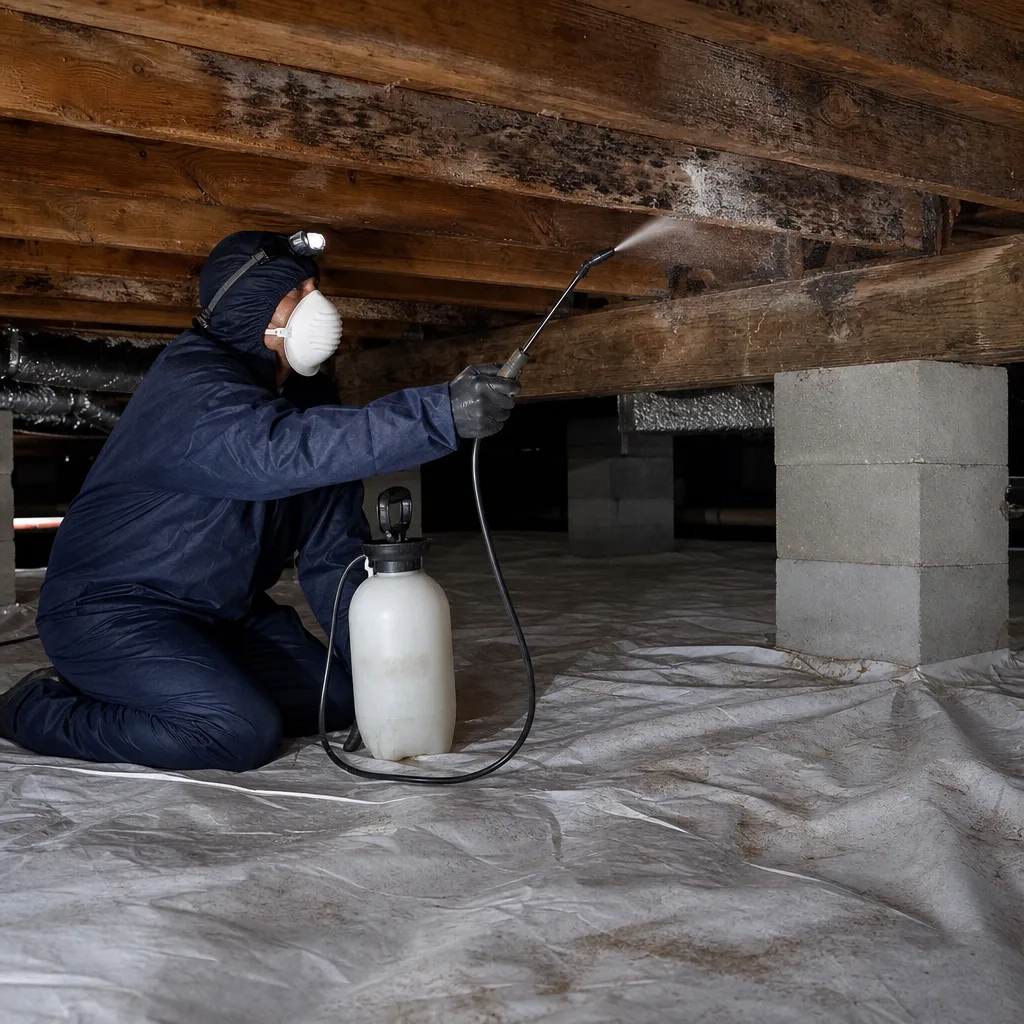
- Waiting for visible mold before calling. In Pompano Beach’s climate, mold colonization begins 48-72 hours after water intrusion. By the time you see staining, remediation costs have typically tripled from what emergency drying would have cost.
- Using bleach on mold. Bleach evaporates faster than it penetrates porous materials, leaving moisture that feeds deeper colonization. It also destroys the pigment without killing the mycelium, creating false confidence while the problem spreads inside walls.
- Documenting only damage, not pre-existing condition. Insurers routinely deny claims for “long-term deterioration” when the homeowner has no photos of the wall before it stained. Your January baseline folder exists precisely to prevent this.
- Accepting verbal scope and price. Haven Standard, Clause 1: a written price before work begins, every time, with no exceptions. Any contractor who won’t put scope and price in writing before starting is building in scope creep.
- Ignoring the A/C condensate line until it backs up. The line that runs through your attic or soffit is out of sight and out of mind - until 20 gallons of condensate soaks your ceiling. Annual flushing costs nothing; emergency restoration costs $2,800-$6,400 in typical Pompano Beach homes.
- Assuming “gradual” damage isn’t covered without testing the argument. Many insurers initially deny for gradual damage when the actual cause was a storm event with documented timing. Your seasonal folder provides the evidence to challenge these denials successfully.
- Choosing restoration contractors based on who arrives fastest without verifying documentation practices. Speed matters for mitigation, but the contractor who can’t produce daily drying logs to IICRC standards is leaving you with an invoice your insurer may dispute.
When to Call a Professional
Call for professional restoration when water has affected multiple rooms, when moisture is trapped in wall cavities or under flooring, when you smell mustiness without visible source, or when any fire, smoke, or sewage contamination is present. These conditions require controlled drying environments, containment barriers, and documented procedures that homeowner equipment cannot replicate.
DryMark Restoration Pompano Beach offers free estimates in Pompano Beach - call (754) 238-0219 - and publishes more guides & resources on seasonal maintenance and claim documentation. Every estimate includes a written scope and price before any work begins, documented to Haven Standard, Clause 1. We provide a Free Second Opinion on any competitor’s written estimate, and every job carries the 365-Day Done Right Promise under The Haven Standard. Live phone coverage is available 24 hours a day, 7 days a week with no voicemail on emergency lines.
Frequently Asked Questions
Professional baseline surveys with thermal imaging and written report typically range $180-$340 for a single-family home under 2,500 square feet. DIY documentation with a consumer moisture meter costs $250-$400 for equipment plus your time. The professional report carries stronger evidentiary weight with insurers. Call (754) 238-0219 for an exact quote - estimates are free.
Insurance covers sudden accidental damage, not maintenance failures. However, the absence of maintenance doesn’t automatically void coverage for a storm event. What matters is documentation: if you can prove the damage resulted from a specific storm with pre-existing good condition, your claim has a strong basis. The seasonal folder exists to provide that proof. If your insurer disputes causation, our documented photo records and drying logs provide counter-evidence.
Live phone coverage is available 24 hours a day, 7 days a week with no voicemail on emergency lines. Response time depends on storm severity and road conditions, but our dispatch protocol prioritizes active water intrusion and safety hazards. During major events, we maintain communication with scheduled arrival windows rather than abandoning customers to uncertainty. Call (754) 238-0219 for current status.
Visible mold on hard surfaces can sometimes be addressed with proper PPE and EPA-registered fungicides, but this addresses only the symptom. The source of moisture must be identified and eliminated, and hidden colonization in wall cavities requires professional assessment. In Pompano Beach’s climate, we’ve found that DIY surface cleaning without moisture source correction leads to recurrence in 80% of cases within 12 months. A professional assessment with moisture mapping and air sampling determines whether the problem is surface-only or systemic.
We coordinate directly with your adjuster, providing the documented photo records, daily drying logs, and written scopes that adjusters need to authorize payment. Our files are organized for claim review because the company was founded by a former adjuster who built the documentation system around what actually gets claims paid. You remain the policyholder and must authorize all work, but the administrative burden of documentation and negotiation falls to us.
Mitigation is emergency work to prevent further damage - water extraction, drying, stabilization. It’s urgent and often covered under policy provisions requiring prompt action. Reconstruction is the repair of damaged materials - drywall, flooring, cabinetry replacement. It’s scheduled, scoped, and priced in writing like a remodel, not dispatched for same-day arrival. Promising same-day reconstruction is a red flag; proper reconstruction requires material ordering, permit verification, and structured scheduling.
The Bottom Line
Pompano Beach’s climate doesn’t forgive deferred maintenance, and insurers don’t forgive undocumented claims. The homeowners who fare best are those who treat seasonal care as a documentation practice, not a chore list. Establish your January baselines. Seal your stucco before June. Inspect your attic within 24 hours of every storm. Keep a quarterly folder of dated photos and readings. When damage occurs, this evidence transforms a disputed claim into a payable one. The work takes perhaps 8 hours annually - less time than you’ll spend arguing with an adjuster over a denied claim.
Written by Alicia Brennan, Owner at DryMark Restoration Pompano Beach, serving Pompano Beach since 2011.