
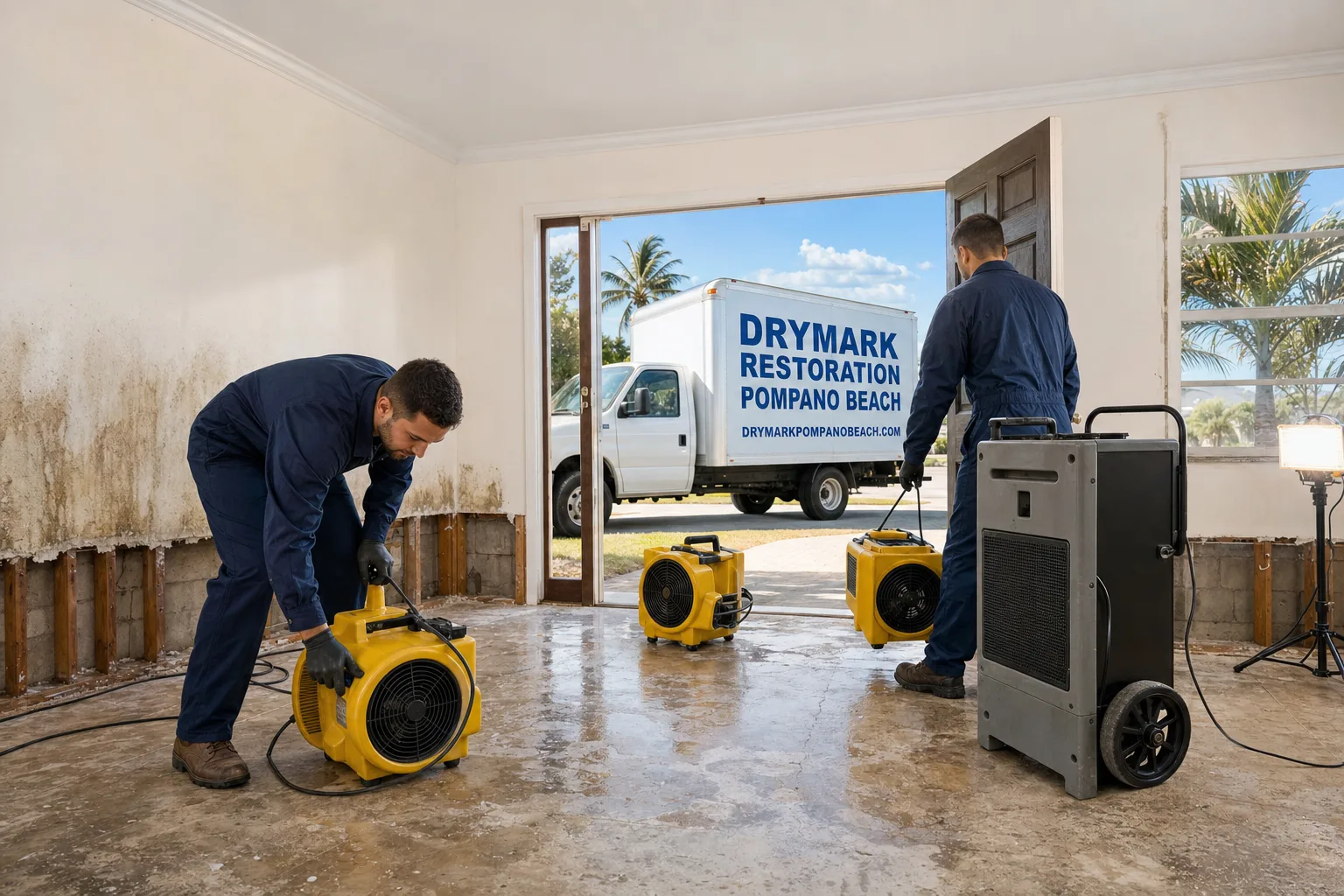
Free visual inspection and a written scope of work before any mitigation begins - photos, moisture readings, and drying logs go in your claim file
The scope we write is the scope we bill. Anything new gets shown to you, in writing, before we touch it.
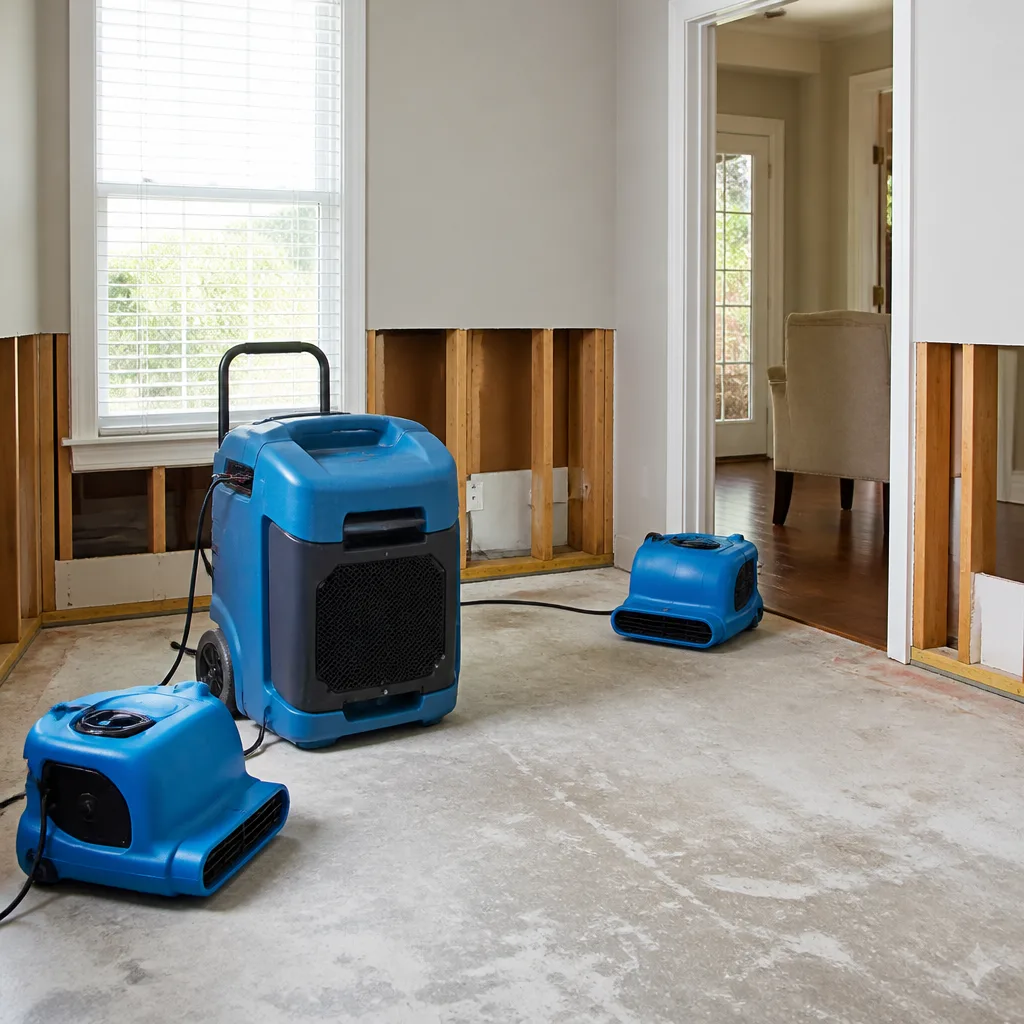
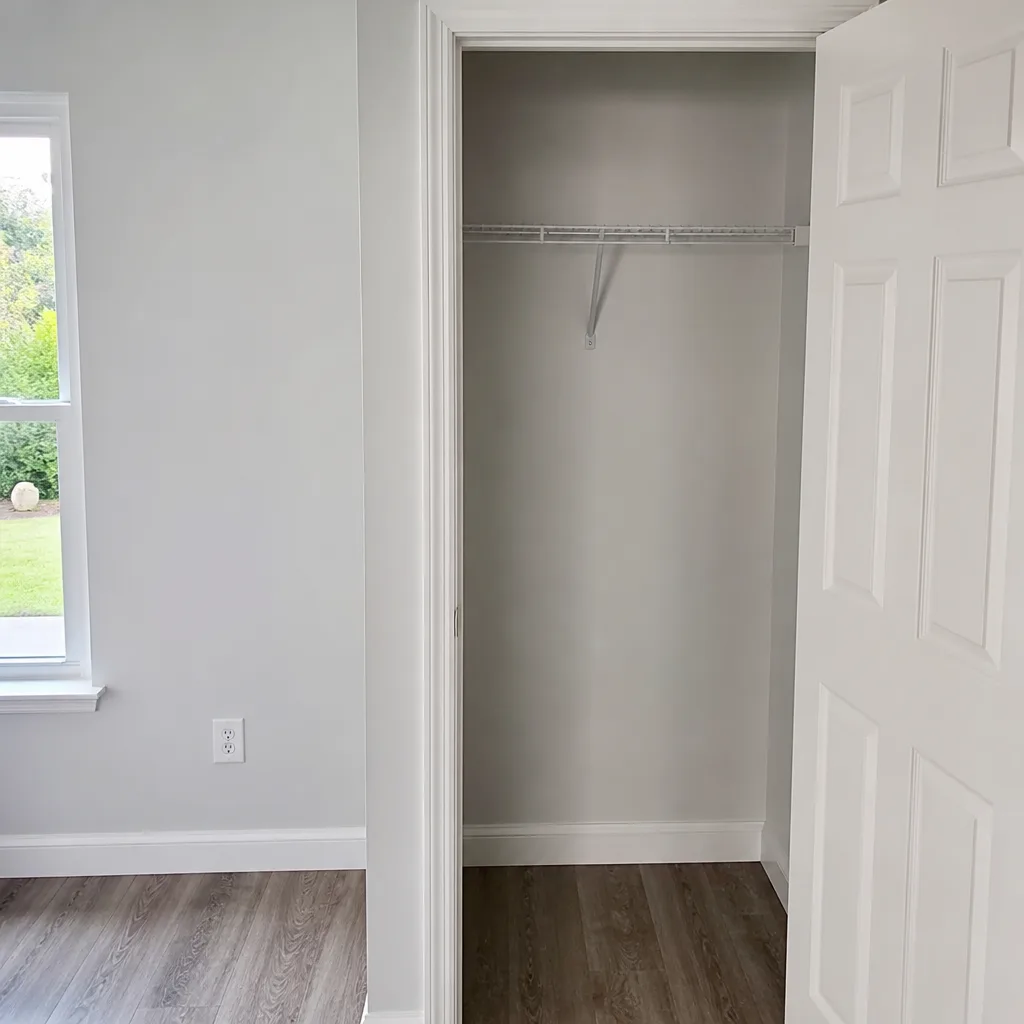
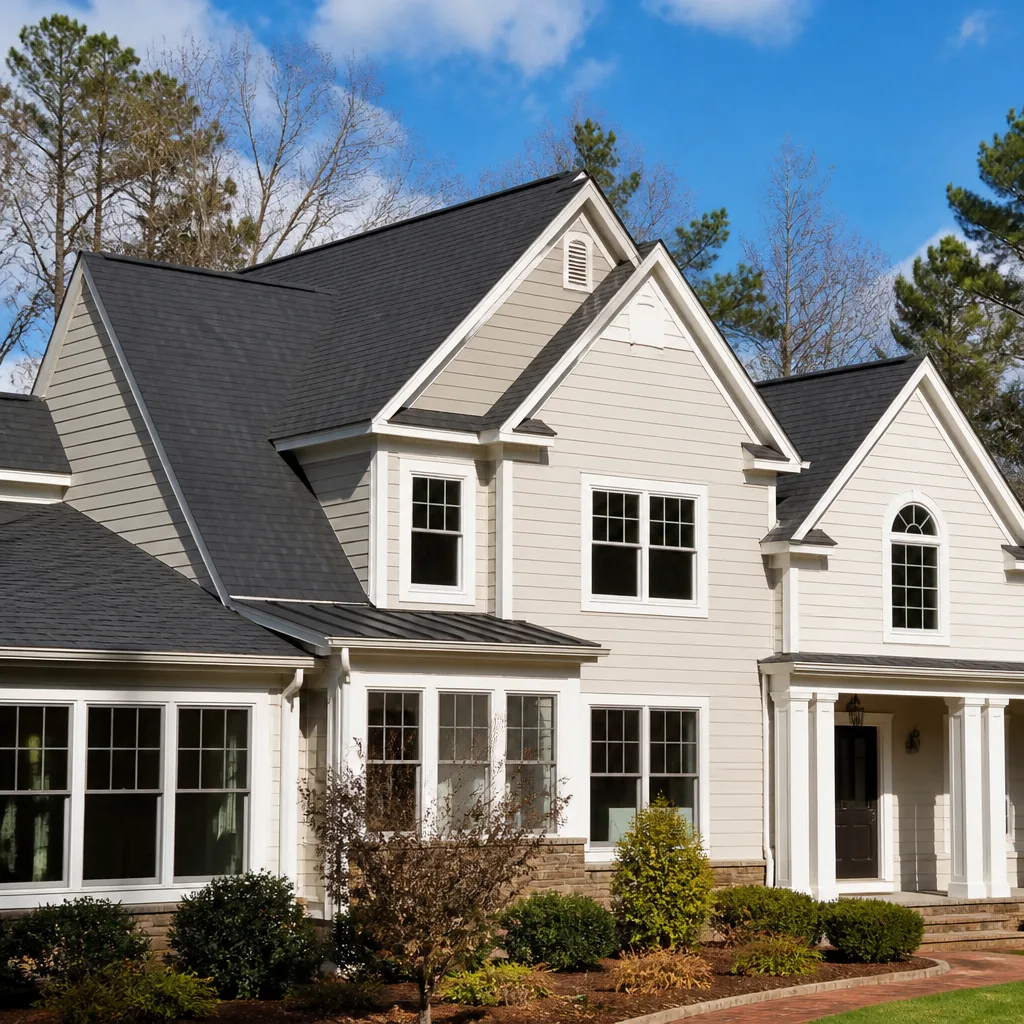
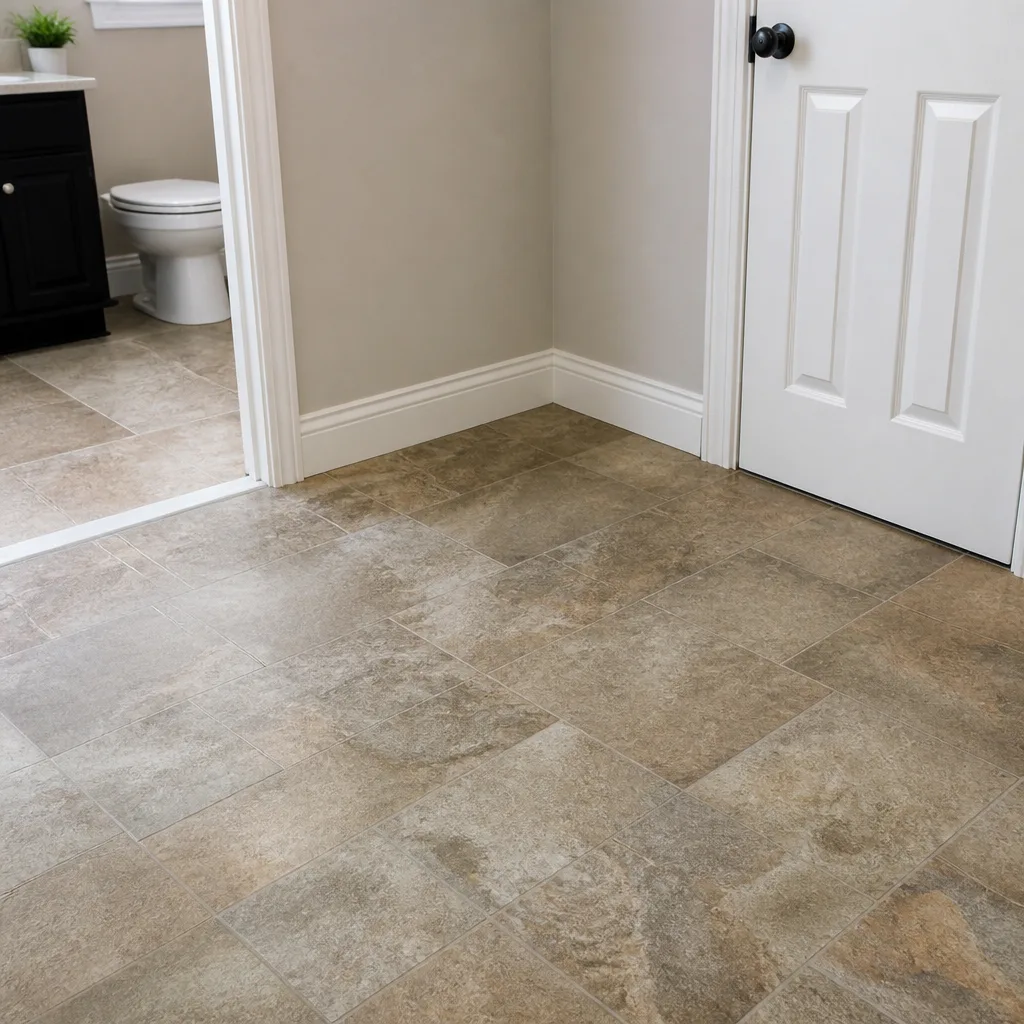
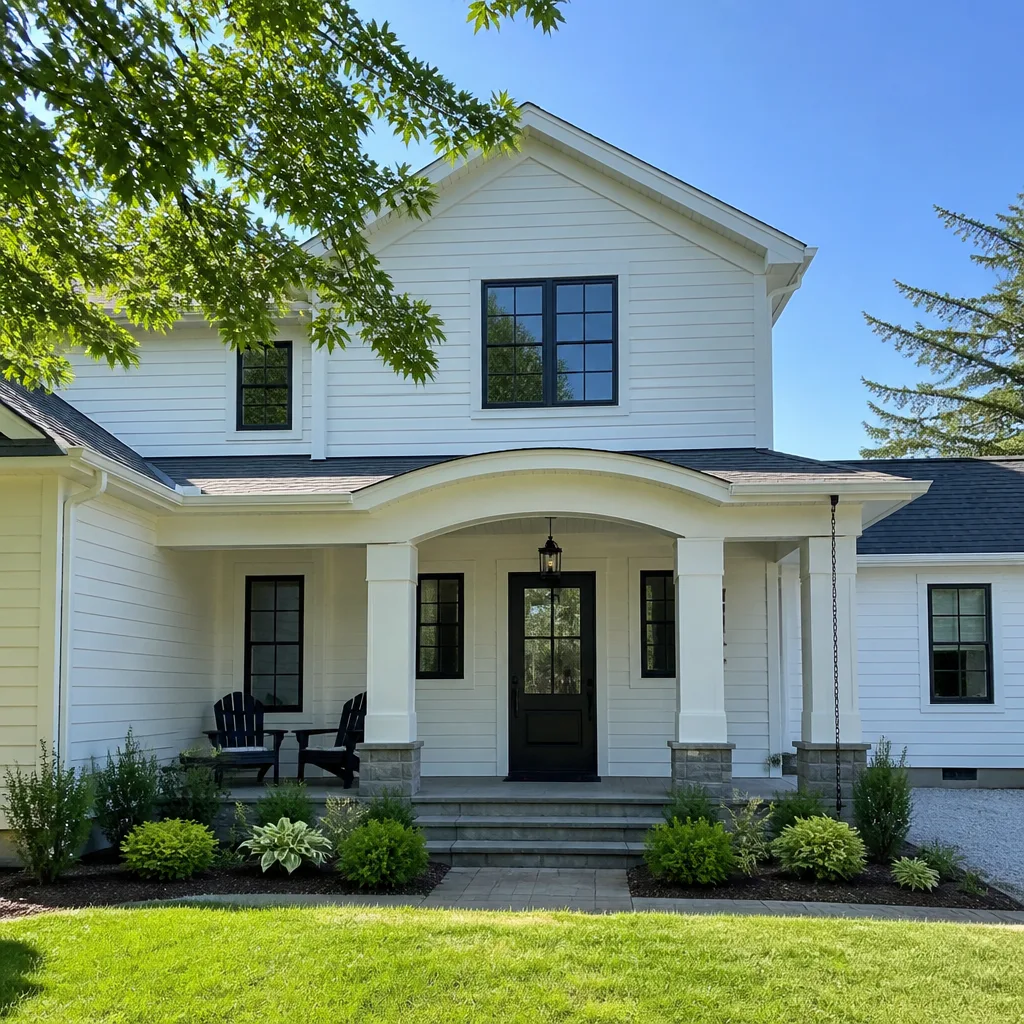
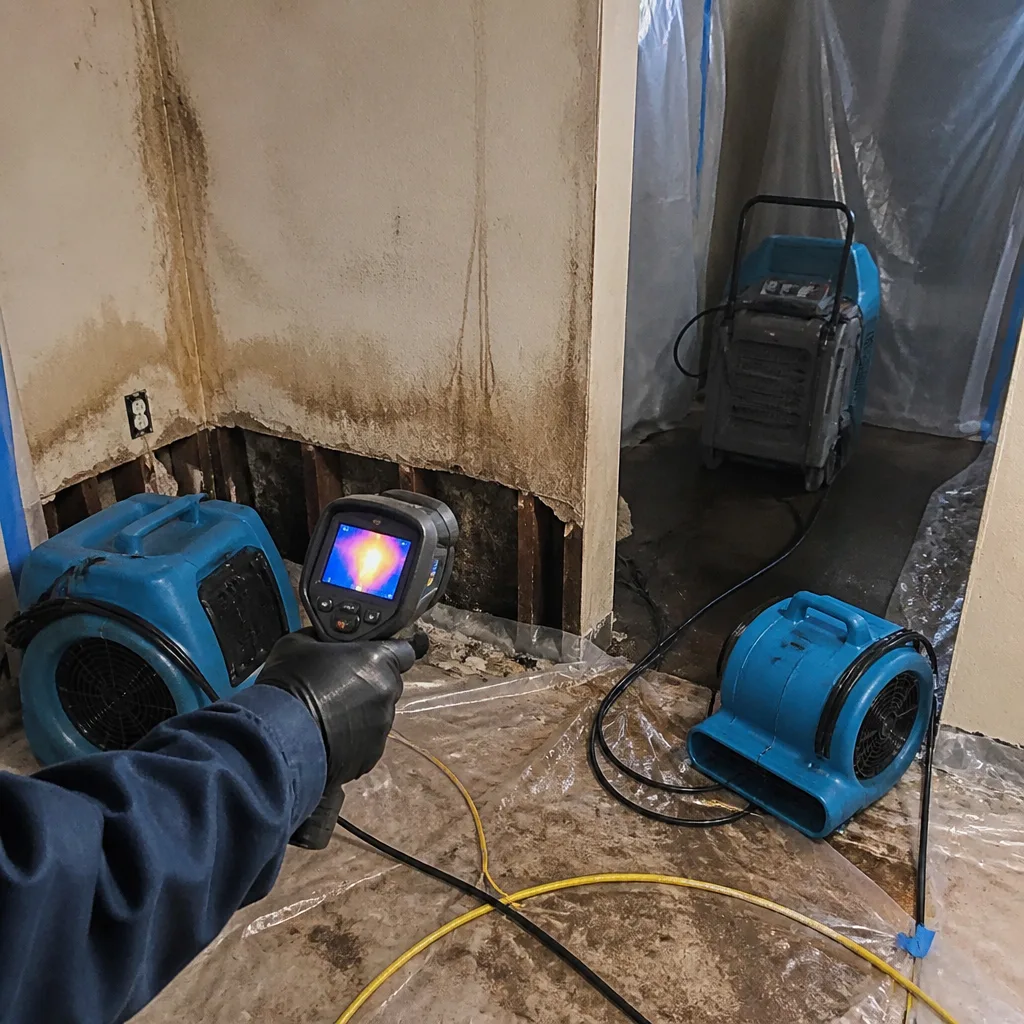 Before
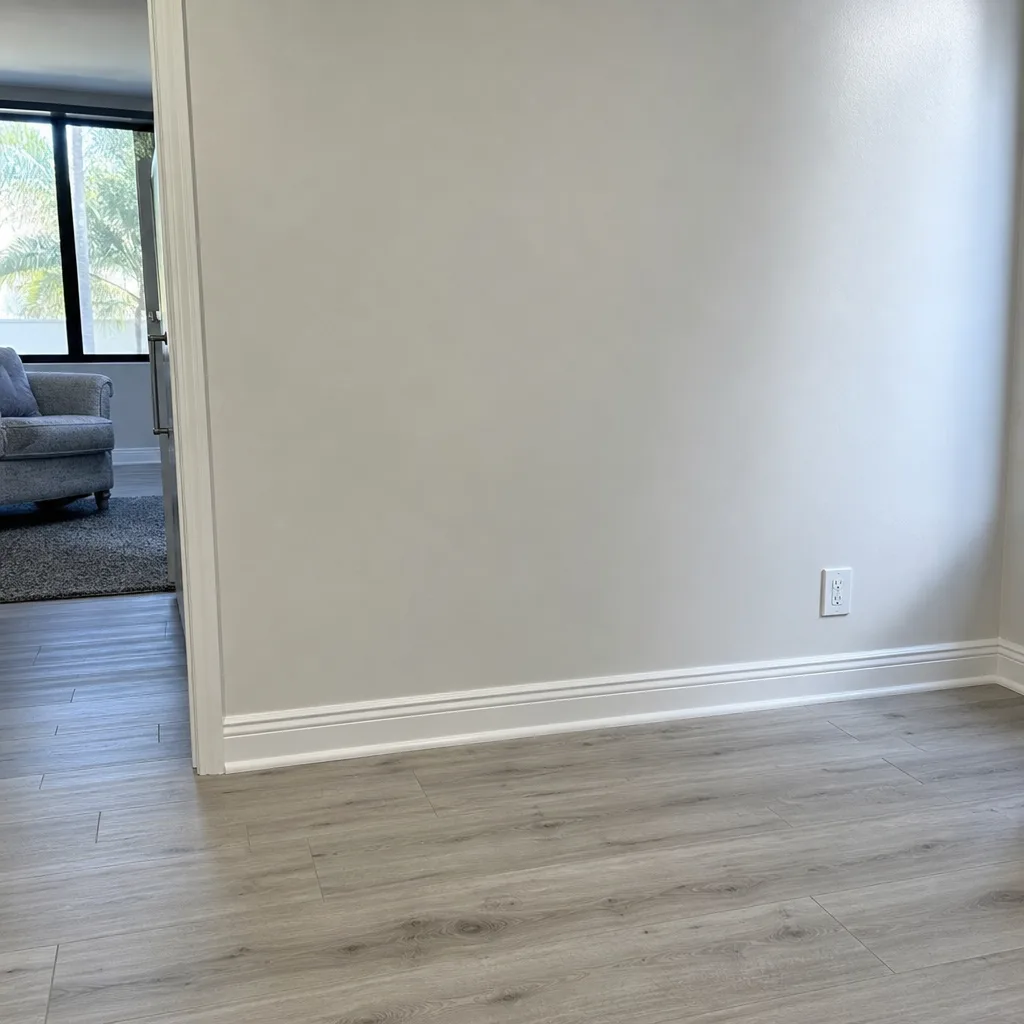 After
After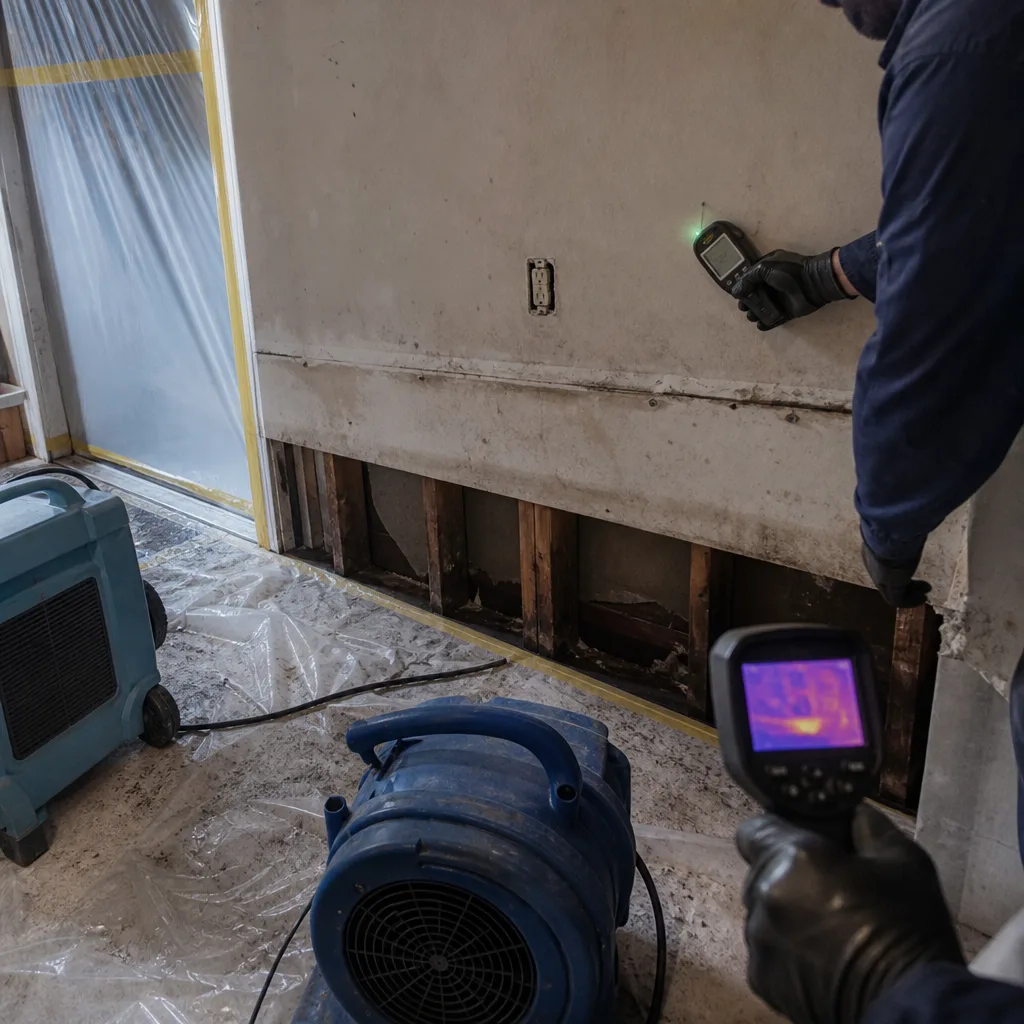 Before
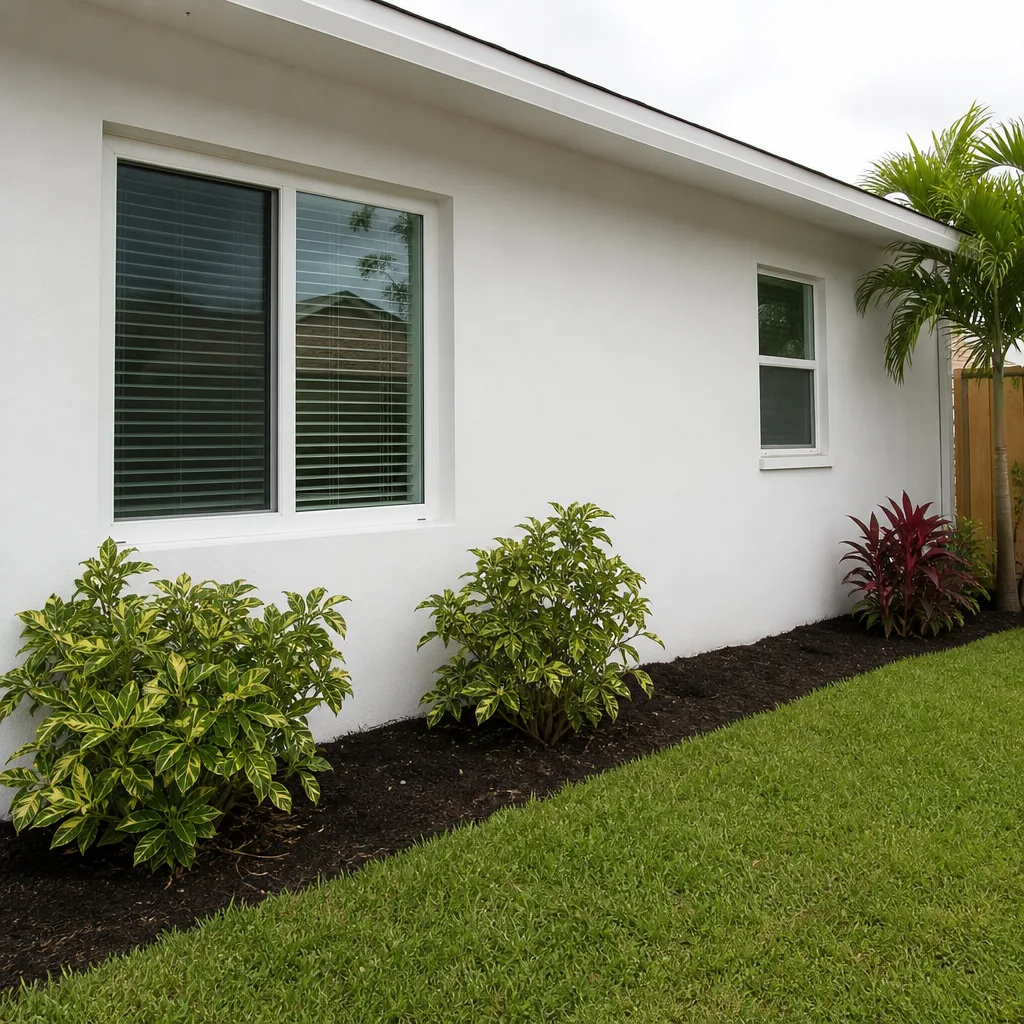 After
After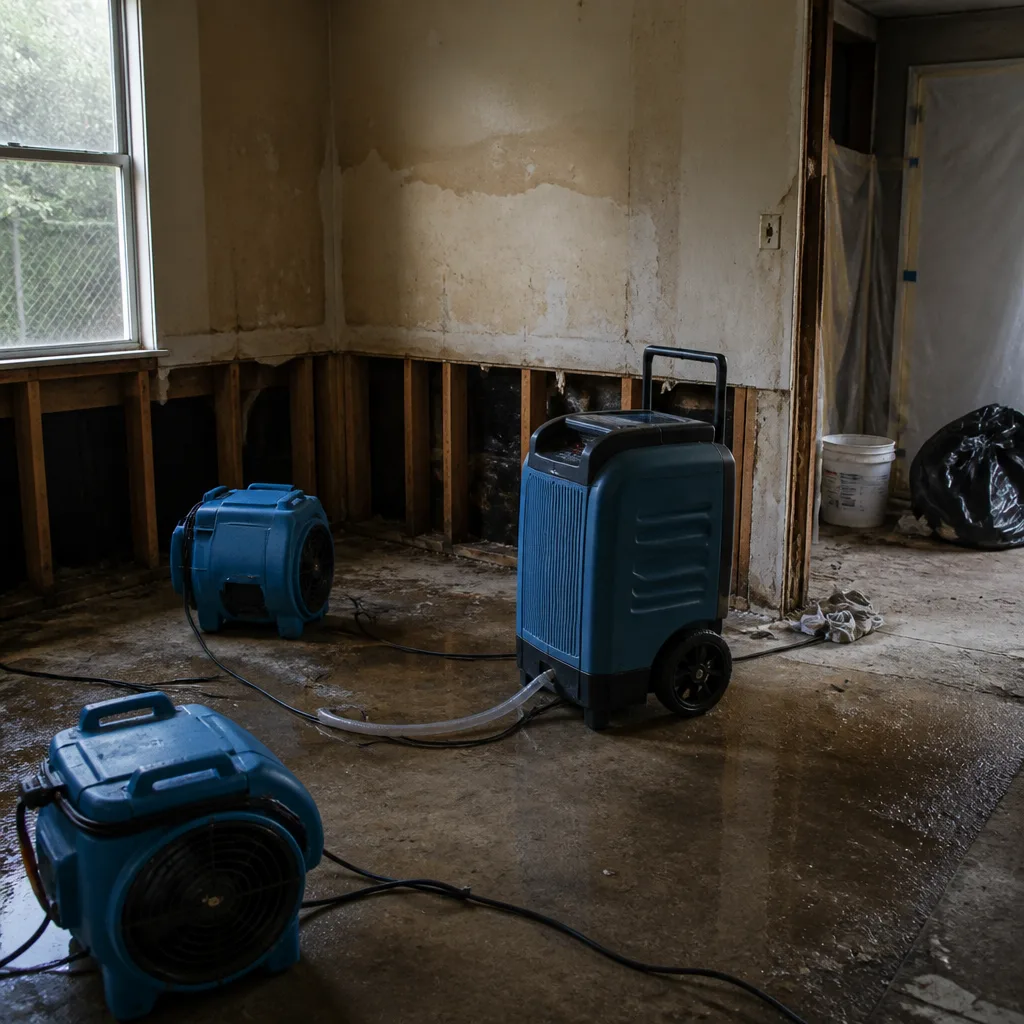 Before
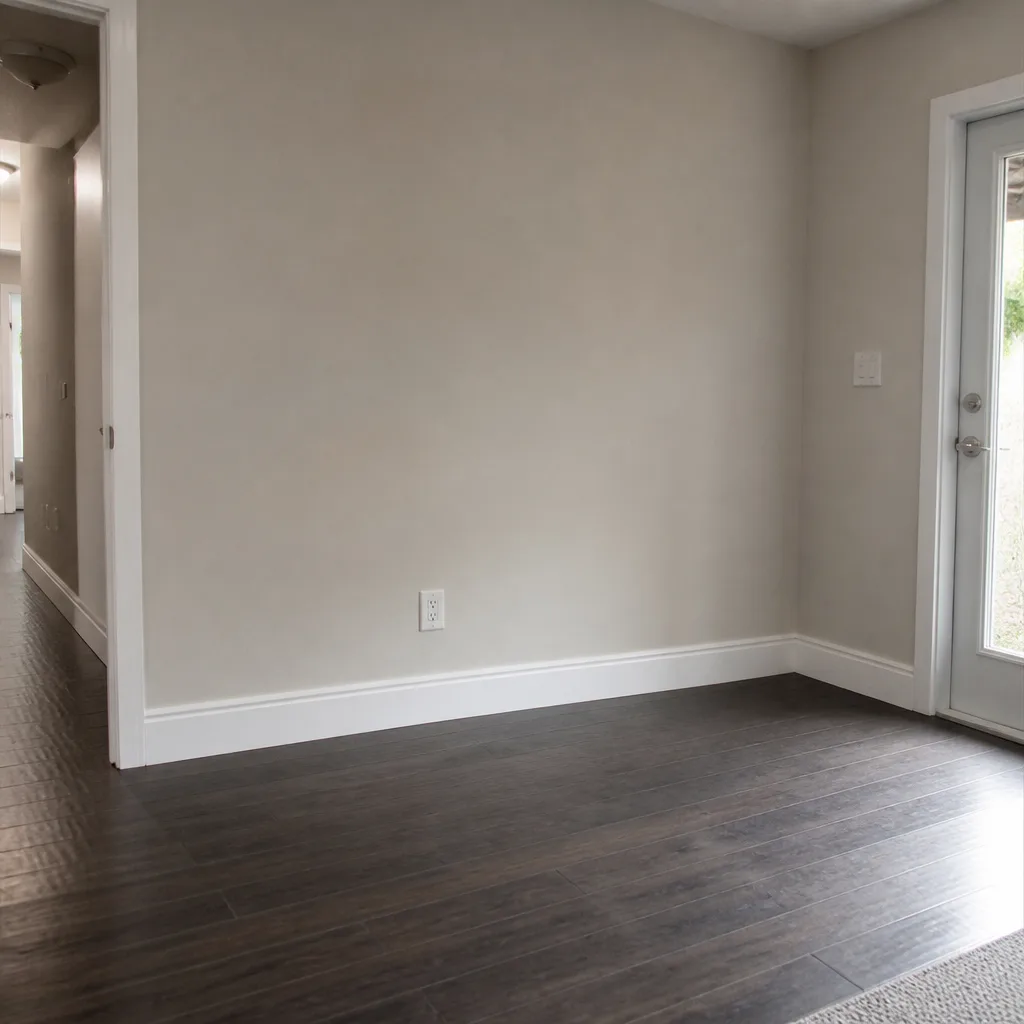 After
AfterFast, Reliable Water Damage Restoration Across Hollywood
Water damage restoration in Hollywood typically runs $1,800-$6,500 for residential jobs, with emergency extraction starting at $450 and full structural drying averaging $2,400-$4,200. Most Hollywood properties we see need same-day extraction to stay ahead of mold in our near-100% summer humidity. Call (754) 238-0219 and a live person will pick up, 24 hours a day, 7 days a week - no voicemail while water is still moving through your walls.
We’ve restored water damage in Hollywood since 2011, from the flat-roof concrete block homes in Hollywood Hills off Taft Street to the dense corridor of 1970s-1980s condo towers along A1A and the Intracoastal Waterway. Our crews dispatch from our Miami office and carry the documentation-first approach that turns restoration invoices into payable insurance claims: a written price before work starts, a photo record on every visit, and daily moisture logs that satisfy even the most detailed adjuster review. Hollywood’s building stock and snowbird vacancy patterns create water damage scenarios you won’t find in Fort Lauderdale or Miami Beach, and our protocols are built around them.
Why DryMark Restoration Pompano Beach Is Hollywood’s Preferred Water Damage Restoration Company
Our reputation in Hollywood is built on what we can show, not what we claim. We’ve restored 12,000+ homes since 2011, every one with a written price before work started and a documented record when the crew left. In Hollywood specifically, that documentation matters more than most places - the city’s dense concentration of aging condo towers with complex HOA-master-policy-versus-unit-owner disputes means adjusters scrutinize every line item, and incomplete photo records get claims denied.
Response time to Hollywood averages 45-90 minutes from dispatch, depending on traffic on I-95 or A1A. Our live dispatchers coordinate crew routing in real time; no next-business-day callbacks while standing water is degrading your subfloor. We know the difference between a Hollywood Hills slab-on-grade home with original 1960s cast-iron plumbing and an Intracoastal tower with corroding drain stacks - and we know which moisture meters and drying configurations each demands.
Every technician is background-checked, uniformed, and licensed, with license numbers documented on every job file. Our equipment inventory includes Dri-Eaz and Phoenix dehumidifiers, XPOWER air movers, and Injectidry cavity-drying systems - all documented to IICRC, RIA, and IFA standards. The drying logs these machines produce become part of your claim file, not an afterthought.
Our Water Damage Restoration Services in Hollywood
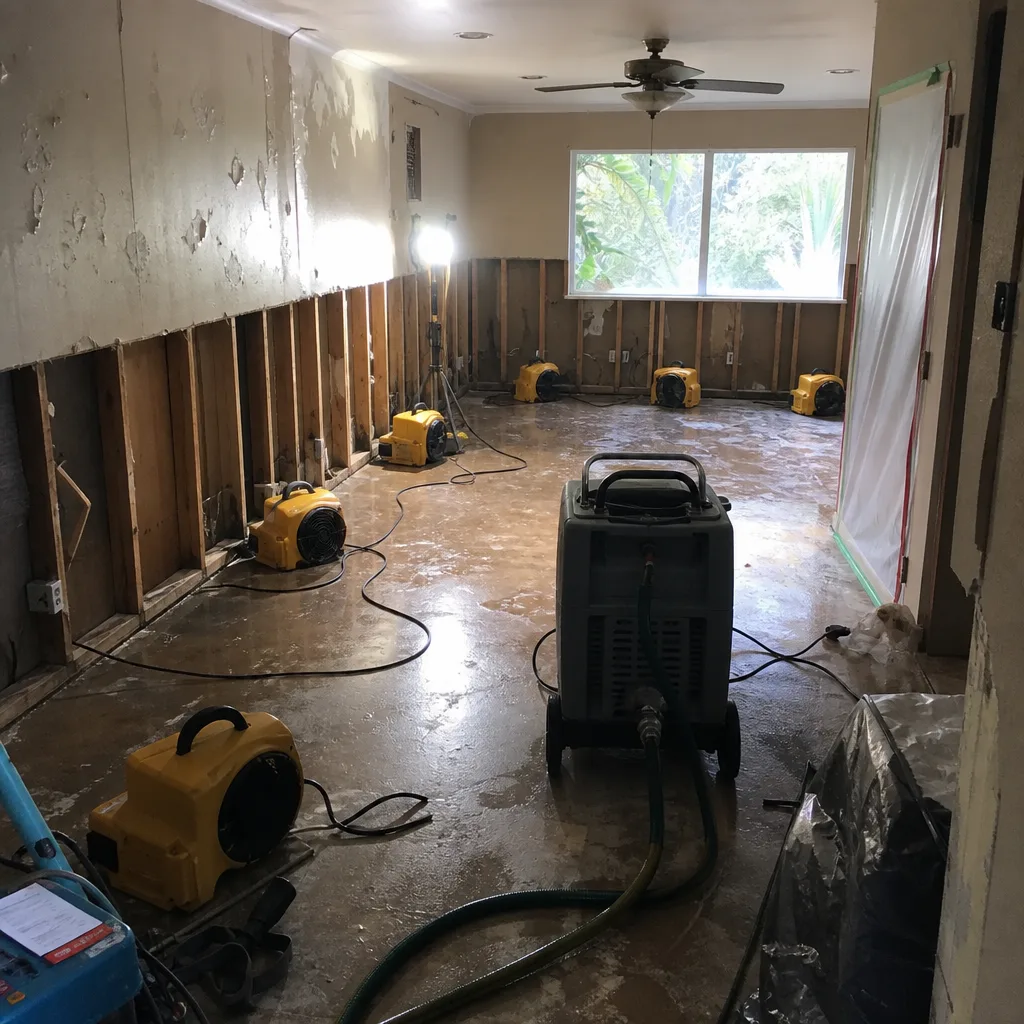
Emergency Water Extraction
Standing water in a Hollywood property needs extraction within hours, not days. In the condo corridor along A1A, we’ve extracted Category 2 water from fifth-floor units where a failed AC condensate float valve saturated four floors below - the kind of snowbird-cascade job where speed of extraction directly determines whether five units need drywall replacement or twenty. Our truck-mounted extraction systems handle 1,500+ gallons per hour, and we document pre-extraction moisture readings and standing-water depth in every room before a single gallon is removed. For ground-floor units in Hollywood’s slab-on-grade commercial spaces near Young Circle, where summer storms regularly push 3-5 inches of rain against building perimeters, we extract and immediately deploy perimeter drying to prevent wicking into block walls.
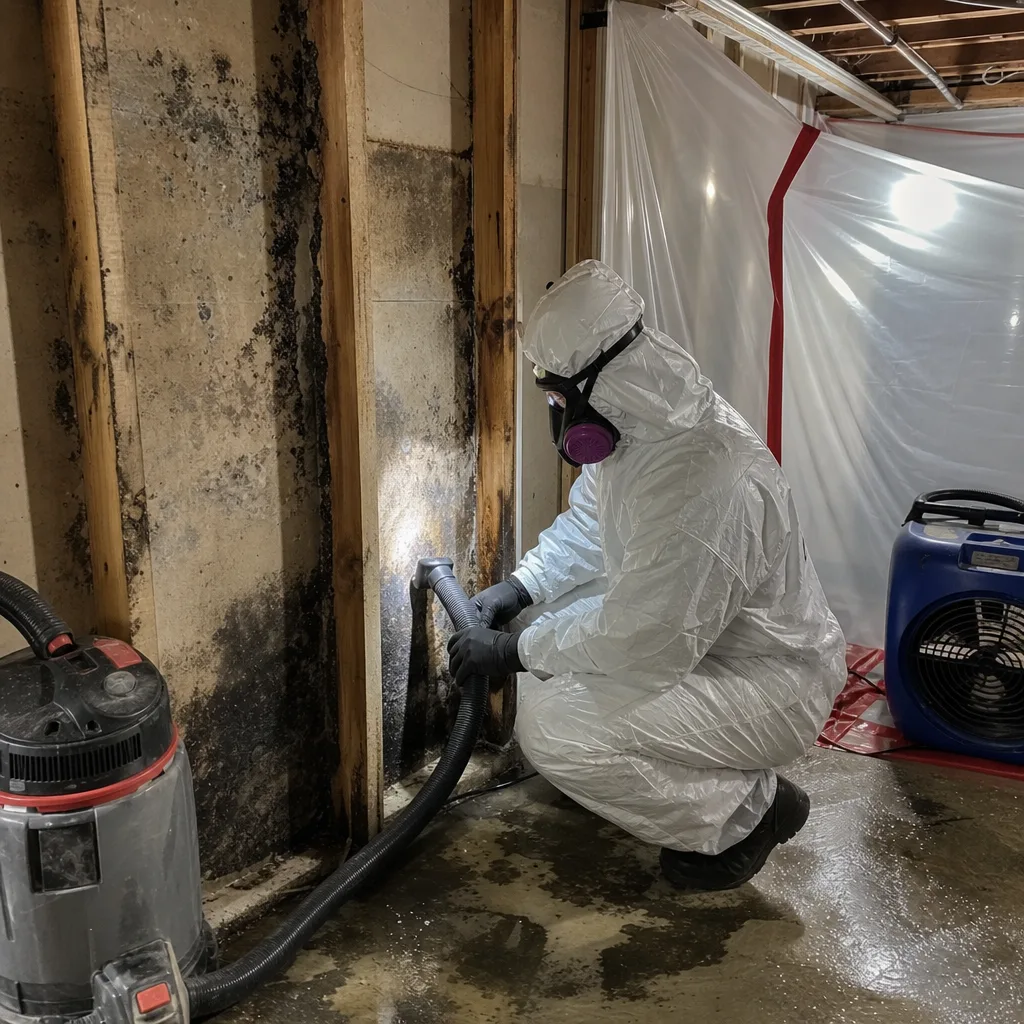
Structural Drying & Dehumidification
Structural drying in Hollywood’s 1970s-1980s condo towers demands containment strategies that standard open-air drying cannot provide. These buildings were constructed with sealed windows and sliding doors for security and hurricane protection, meaning natural air exchange is minimal and interior humidity sits near 100% much of the year. We establish contained drying chambers using polyethylene barriers and negative air pressure, then run Phoenix LGR dehumidifiers and Dri-Eaz desiccant units to drive vapor pressure differentials that pull moisture from concrete block, drywall, and insulation. In Hollywood Hills homes with flat or low-pitched roofs, we frequently find water trapped in ceiling cavities with no attic ventilation; our Injectidry systems deliver directed airflow through small access points without tearing out entire ceilings. Daily psychrometric data - temperature, relative humidity, and specific humidity readings - goes into your drying log, updated every 24 hours until materials reach their dry standard.
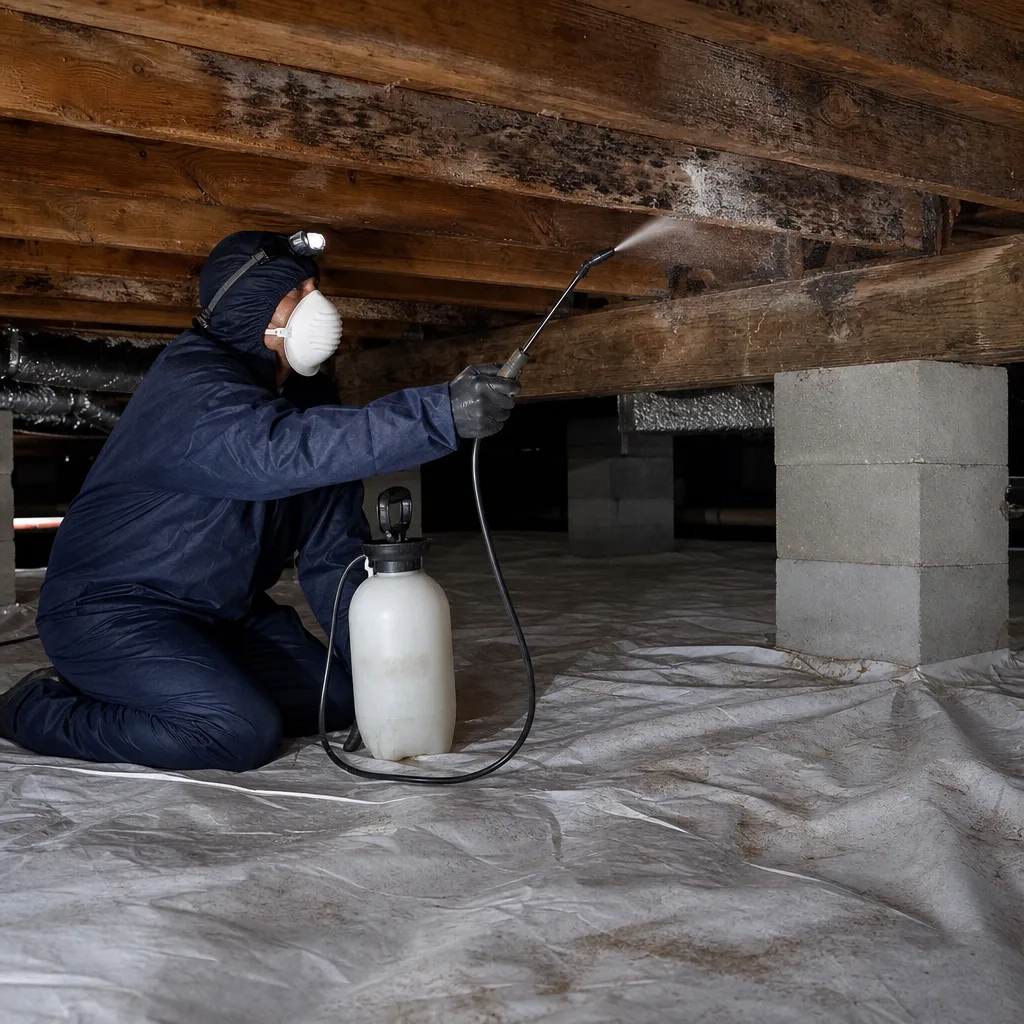
Flood Cleanup
Hollywood sits at or near sea level across some of the flattest terrain in Broward County. The routine summer thunderstorms from June through October don’t need to be named storms to inundate ground-floor residential and commercial spaces; restoration crews here treat seasonal flooding as nearly a monthly occurrence. Our flood cleanup protocol distinguishes between clean water (Category 1), gray water (Category 2), and black water (Category 3) intrusion - a critical classification in Hollywood’s mixed-use areas near Harrison Street where storm surge can back up through municipal drainage. We document the category determination with photo evidence, then proceed through extraction, antimicrobial treatment appropriate to the classification, and full structural drying with air-quality verification before clearance.
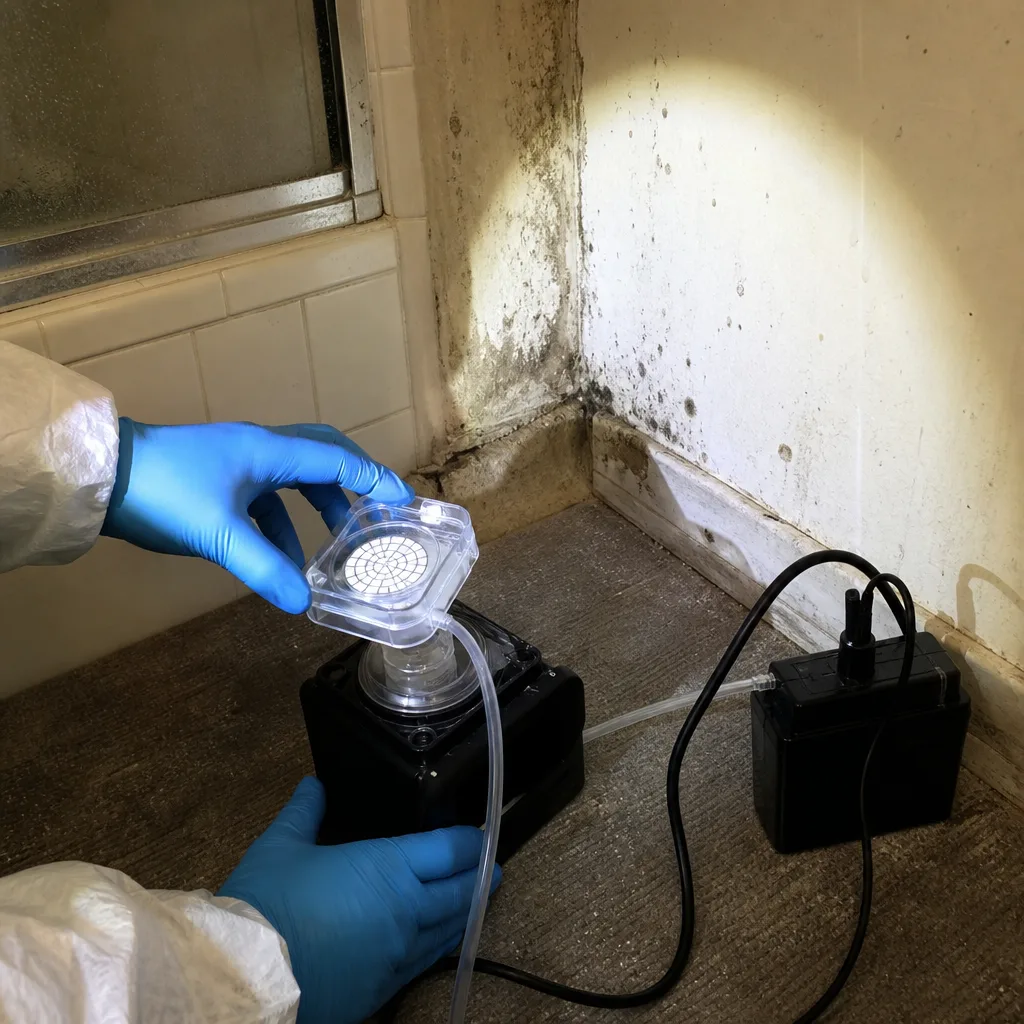
Burst Pipe Restoration
Burst pipe restoration in Hollywood means understanding two distinct building eras. In Hollywood Hills and inland neighborhoods, we encounter original copper supply lines and cast-iron drains in 1950s-1970s concrete block homes - the cast iron corrodes from the inside, and the copper degrades from salt-air exposure at exterior penetration points. In the A1A condo corridor, burst pipe jobs almost always involve multi-unit damage: a pinhole supply leak in a vacant snowbird unit feeds through concrete-block floor plates for weeks before detection. Our burst pipe protocol includes immediate water shutoff coordination with building management, moisture mapping of the affected unit and all units below, and documented photo records of the pipe failure cause for insurance subrogation. We do not begin drywall removal until the written scope is agreed and signed - Haven Standard, Clause 1.
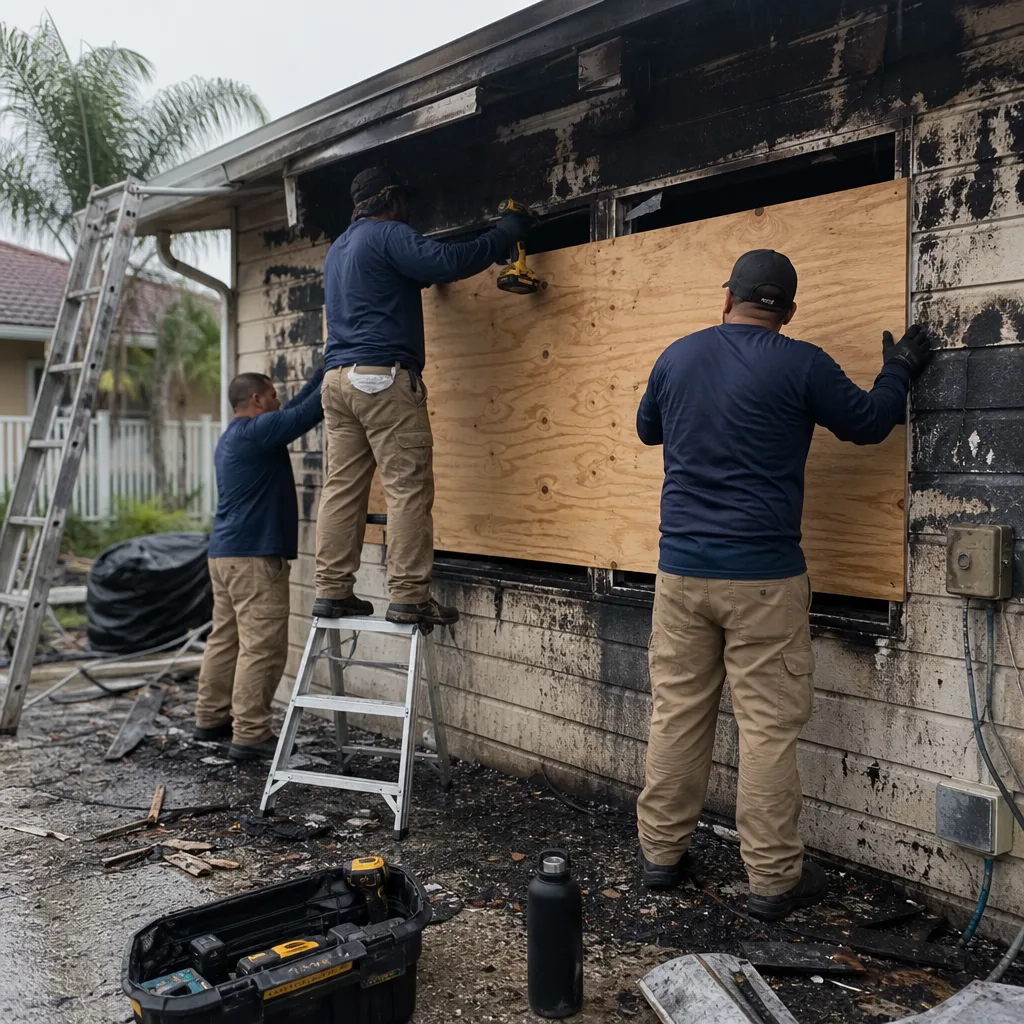
What happens when you call
- 1
A real person answersNo phone trees - you reach a local pro.
- 2
You get an upfront price rangeHonest numbers before anyone is dispatched.
- 3
A background-checked tech heads outLicensed & insured, dispatched right away.
- 4
You approve before work beginsNothing starts until you say go.
 Before
 After
AfterTrusted Brands We Service in Hollywood
We deploy professional-grade drying systems from Dri-Eaz, Phoenix, and XPOWER on every Hollywood job - equipment selected for the specific demands of South Florida’s humidity loads and the sealed construction of our local building stock. These aren’t brand names for marketing; they’re the machines that produce the daily moisture logs your adjuster will request. We maintain local inventory of replacement filters, hoses, and specialty drying attachments so equipment swaps don’t delay your drying schedule. For cavity drying in Hollywood’s concrete block towers, our Injectidry systems interface with standard wall penetration points without the destructive opening that HOA boards typically resist.
Common Water Damage Restoration Problems We See in Hollywood Homes
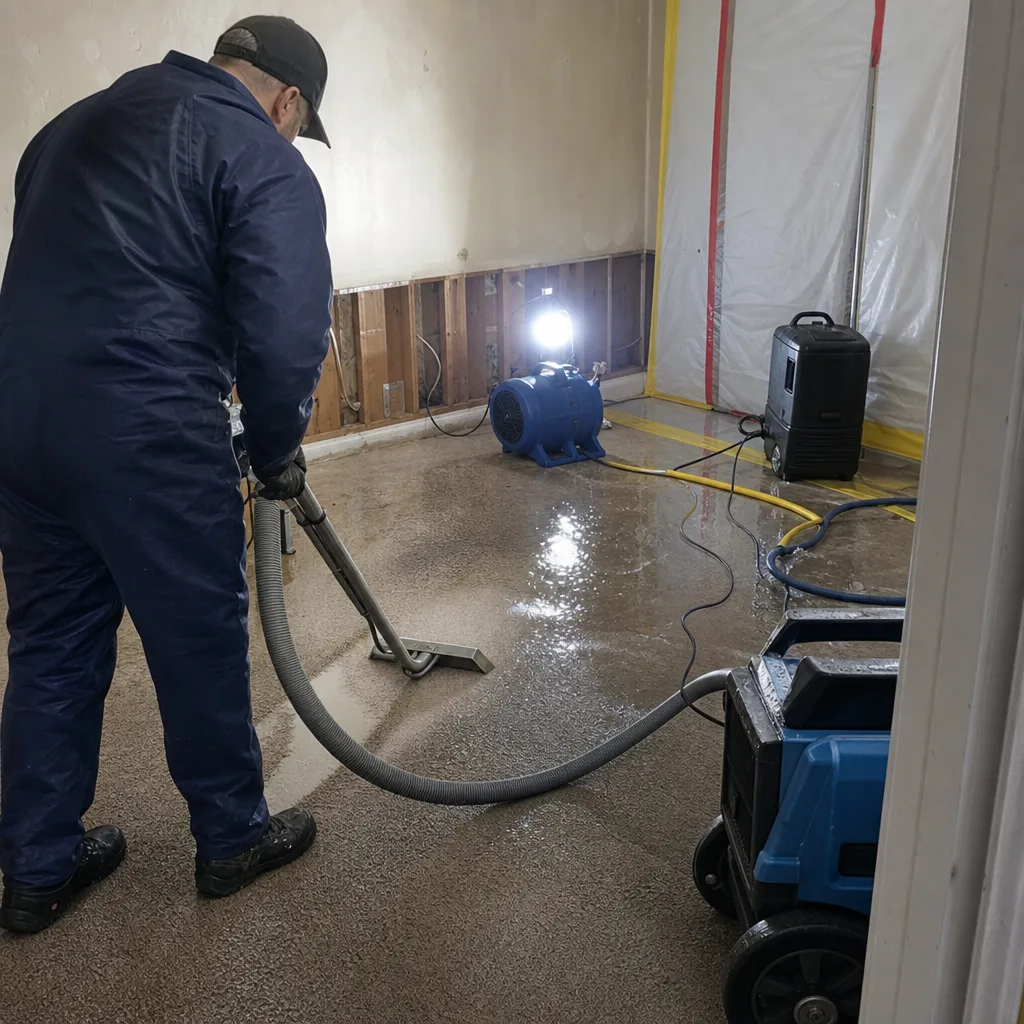
- Snowbird-cascade leaks in vacant condo units. A failed AC condensate valve or pinhole supply leak in a snowbird’s vacant Intracoastal tower unit saturates through 3-5 stacked floors over 6-8 weeks. By the time a year-round resident notices a ceiling stain, the job has escalated from a $150 hardware fix to a six-figure multi-unit remediation with four insurance carriers disputing coverage.
- Flat-roof drain failures in Hollywood Hills homes. The 1960s-1970s concrete block homes off Taft Street and surrounding streets carry flat or low-pitched roofs with original drainage systems. A single clogged drain during a summer downpour sends water through ceiling drywall in hours, and the minimal attic ventilation means trapped moisture lingers without aggressive structural drying.
- Ground-floor inundation from seasonal storms. Hollywood’s near-sea-level elevation and flat terrain mean 3-5 inch rain events regularly flood ground-floor units, parking garages, and slab-on-grade commercial spaces near Young Circle and downtown corridors. These aren’t catastrophic events; they’re routine occurrences that property owners underestimate.
- Corroded cast-iron drain stack failures in aging condo towers. The 1970s-1980s retirement-community boom produced dozens of mid-rise buildings along the Intracoastal with cast-iron drain stacks now reaching end of service life. Internal corrosion creates pinhole failures that spray inside wall cavities, invisible until water emerges through drywall or light fixtures multiple floors below the source.
Pricing for Water Damage Restoration in Hollywood, FL
We publish ranges because Haven Standard, Clause 1 requires a written price before work begins - and that price should never be a surprise.
| Service | Typical Range in Hollywood |
|---|---|
| Emergency water extraction (residential) | $450 - $1,200 |
| Structural drying & dehumidification | $2,400 - $4,200 |
| Full water damage restoration (single-family) | $1,800 - $6,500 |
| Condo snowbird-cascade (multi-unit, per unit) | $3,500 - $8,500 |
| Basement/crawl space water removal | $1,200 - $3,800 |
| Ceiling/roof leak damage repair | $1,500 - $5,200 |
What moves a job within these ranges: square footage affected, water category (clean vs. contaminated), whether materials can be dried in place or require removal, and whether mold colonization has begun - which in Hollywood’s humidity can happen in 24-48 hours. Condo tower jobs with HOA coordination delays or multi-insurer disputes typically run higher due to extended drying timelines and documentation requirements. Every estimate is free, and we provide a Free Second Opinion on any competitor’s written estimate at no charge. Call (754) 238-0219 for an exact quote - estimates are free, and the written price arrives before any work starts.
We Also Serve Cities Near Hollywood
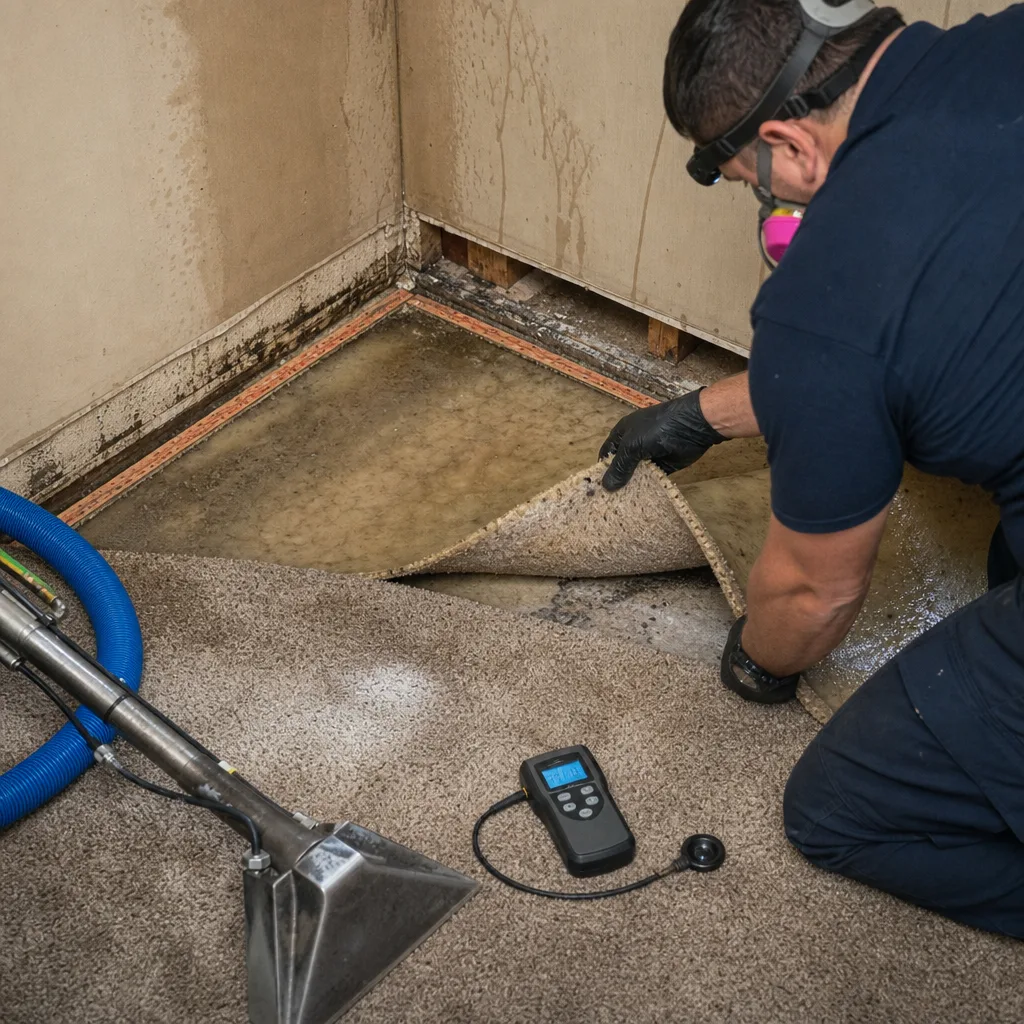
Our crews respond throughout Broward and northern Miami-Dade from our Miami office, with regular service to Hollywood neighbors including North Miami Beach, Fort Lauderdale, Miami Gardens, and Plantation. Each city’s building stock and water damage patterns differ - Fort Lauderdale’s newer high-rises present different challenges than Hollywood’s 1970s towers - and our protocols adapt accordingly. If you’re searching for Water Damage Restoration in any of these communities, the same documentation-first standards apply: written price before work, photo record on every visit, and drying logs that satisfy your adjuster.
Serving Hollywood, FL - Our Local Coverage Area
We’re based in the Hollywood area and know this community well. Use the map below to see our service coverage - if you’re nearby, we can almost certainly help.
FAQs - Water Damage Restoration in Hollywood
Mold colonizes wet drywall and insulation in Hollywood within 24-48 hours, faster than inland markets because our relative humidity sits near 100% between summer storms and salt air off the Atlantic accelerates spore germination. In sealed condo towers with minimal ventilation, that window compresses further - we’ve opened walls at 36 hours and found active colonization behind apparently dry surface drywall. Call (754) 238-0219 for an exact quote - estimates are free.
A snowbird cascade is a water damage pattern unique to Hollywood’s dense concentration of seasonal-vacancy condos: a pinhole leak or AC failure in an unoccupied unit saturates through 3-5 stacked concrete-block floors over weeks before any year-round resident detects it. Hollywood’s 1970s-1980s retirement-community boom produced more of these mid-rise towers per capita than Fort Lauderdale or Miami Beach, and the snowbird demographic means higher vacancy rates - so cascades are concentrated here. The result is almost always a multi-insurer dispute under an HOA master policy that disputes whether damaged walls are common elements or unit-owner responsibility. Our documentation protocols are built specifically for this scenario.
Yes, in many cases - but only with proper moisture mapping and cavity-drying equipment. We use Injectidry systems to deliver directed airflow through small wall penetration points, combined with contained dehumidification chambers that overcome the sealed-window construction of 1970s-1980s towers. The key is confirming dryness with meter readings, not visual inspection; we document specific humidity levels in wall cavities before declaring any surface restored. Not every wall can be saved - if mold colonization has advanced or materials are Category 3 contaminated, removal is necessary and we document why in your scope. Call (754) 238-0219 for an exact quote - estimates are free.
Payment depends on the source of the leak and the specific HOA declarations, which in Hollywood’s older towers are often ambiguous about whether drain stacks and supply lines behind walls are common elements or unit-owner responsibility. The master policy typically covers common elements; unit-owner policies cover improvements and contents. Our role is documentation: we photograph the failure point, trace the water path with moisture mapping, and produce a written scope that identifies which materials fall under which policy. This documentation is what allows your adjuster and the HOA’s carrier to resolve subrogation without you caught in the middle. We do not begin work until the written scope is signed - Haven Standard, Clause 1 - and we coordinate directly with adjusters when requested.
Yes - the failure mode, spread pattern, and drying approach all differ. Hollywood Hills flat-roof homes from the 1960s-1970s collect water at drain points; a single clogged drain or degraded flashing sends water straight through ceiling drywall with minimal warning, and the lack of attic ventilation means moisture gets trapped in ceiling cavities. Condo leaks, by contrast, typically travel vertically through concrete block floor plates and spread horizontally at each level through shared wall chases. Flat-roof jobs demand immediate drain clearance and ceiling cavity drying; condo jobs demand vertical moisture mapping and multi-unit coordination. Our field vignette from a Taft Street home - standing Category 2 water through a flat-roof drain clog, documented moisture mapping, and coordinated insurance scope before antimicrobial treatment - illustrates the flat-roof protocol in practice.
We got called to a Hollywood Hills single-family home off Taft Street after a flat-roof drain clog sent water through the ceiling of a 1960s concrete-block addition. Our tech started with moisture mapping and meter readings across the affected rooms, then set up water extraction for the standing Category 2 water, followed by air movers and dehumidification for structural drying. During the pack-out, we found the original cast-iron drain line was cracked at a joint, so we documented it in the drying logs and scope of work and coordinated with the homeowner’s insurance before any antimicrobial treatment.
Water damage in Hollywood doesn’t wait for business hours, and neither do we. Call (754) 238-0219 now and a live person will answer - no voicemail, no callback queue, no delay while water keeps moving through your walls. We’ll schedule your free estimate, deliver a written price before any work begins, and back every job with our 365-Day Done Right Promise under The Haven Standard. If it’s not done right, we make it right. That’s not a marketing line; it’s a signed guarantee on every job file.
Written by Alicia Brennan, Owner at Back to Dry Restoration, serving Hollywood since 2011.