
Last updated September 23, 2026
Free visual inspection and a written scope of work before any mitigation begins - photos, moisture readings, and drying logs go in your claim file
The scope we write is the scope we bill. Anything new gets shown to you, in writing, before we touch it.
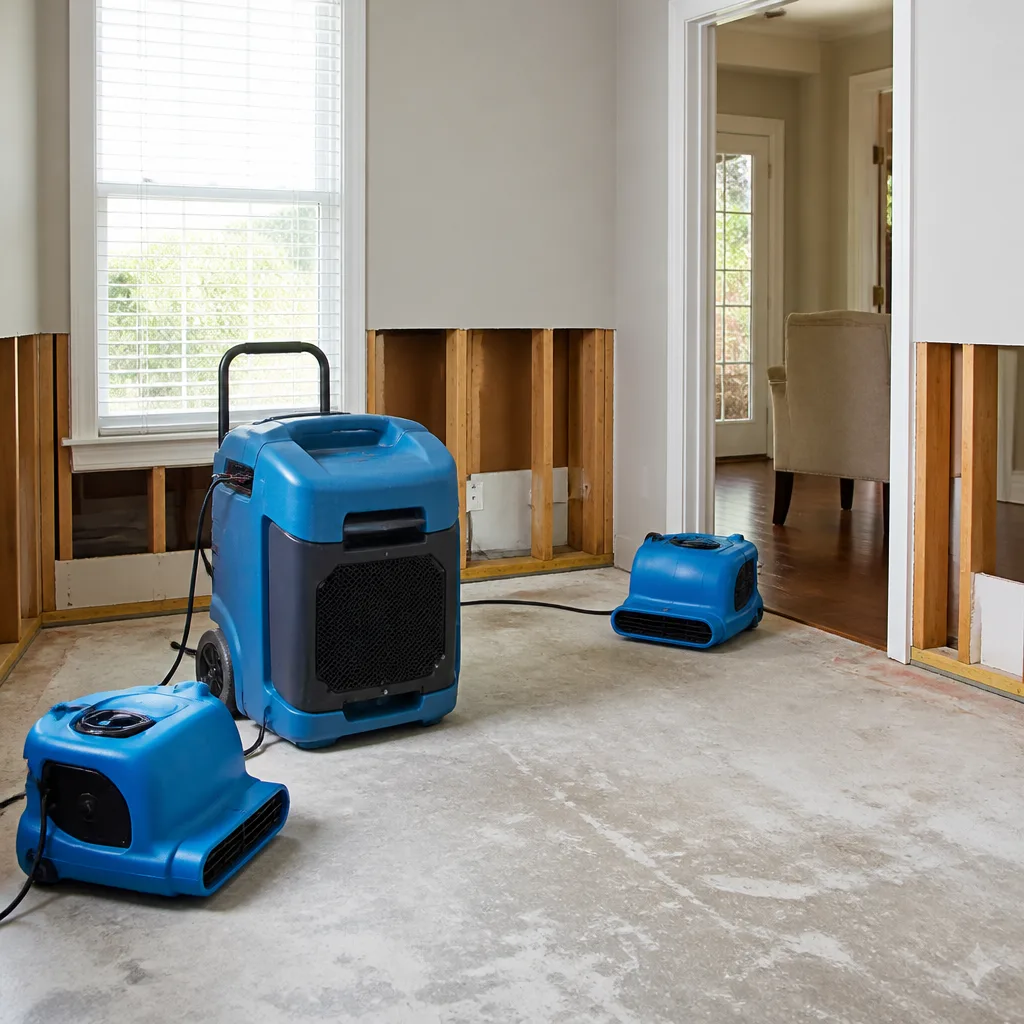

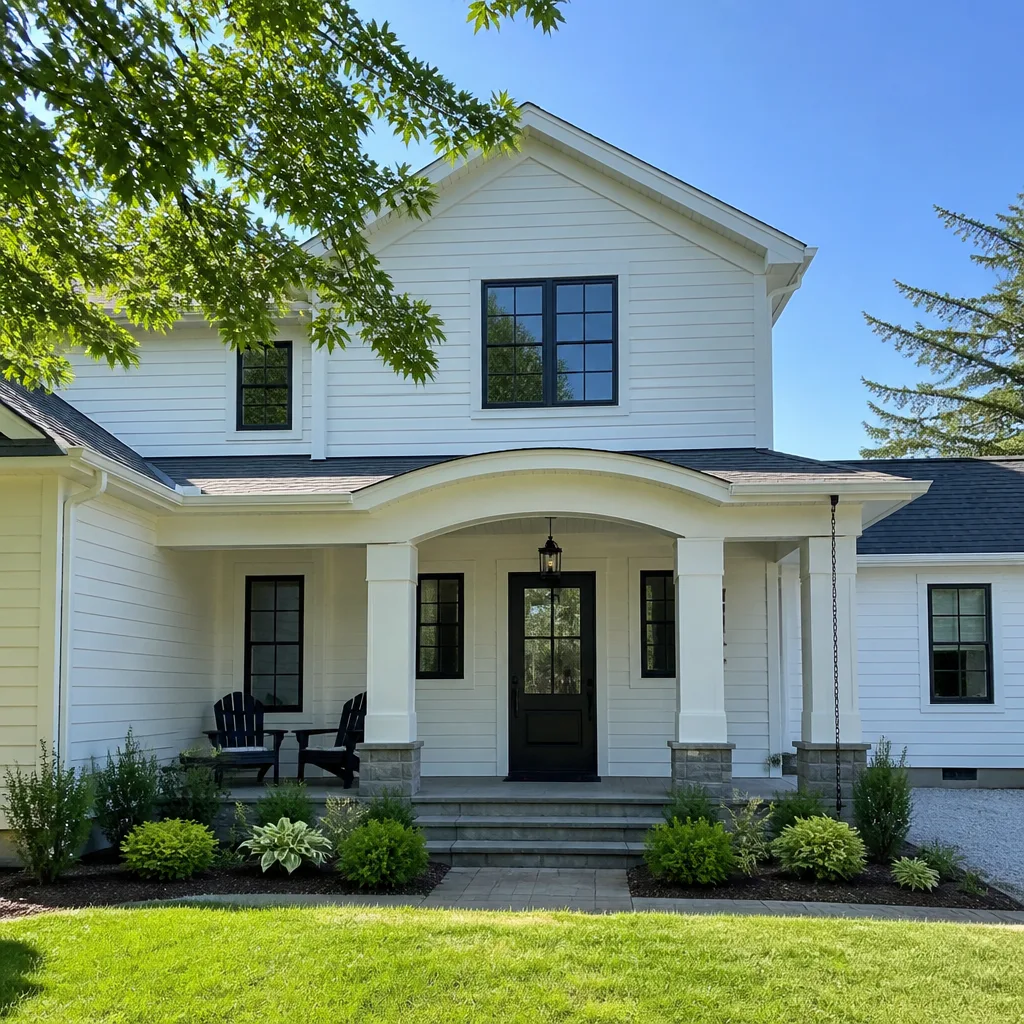
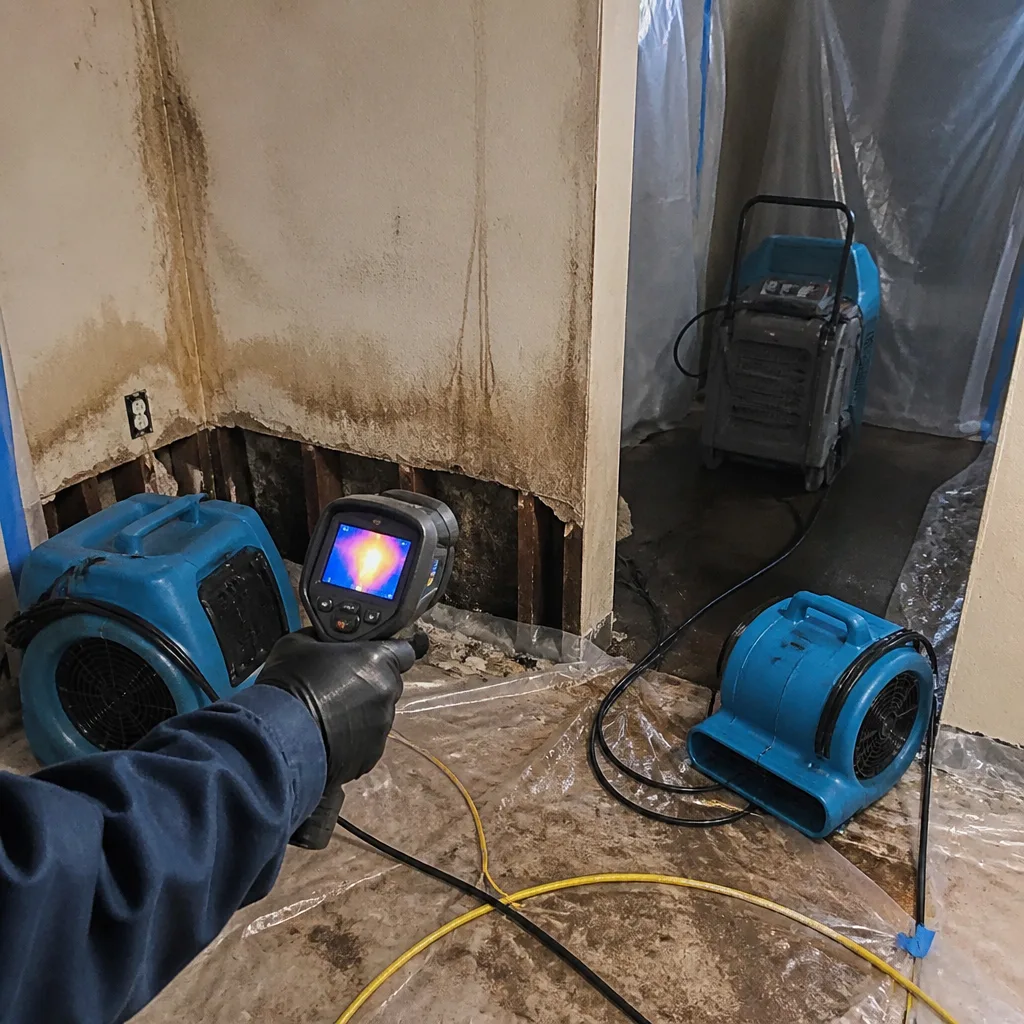 Before
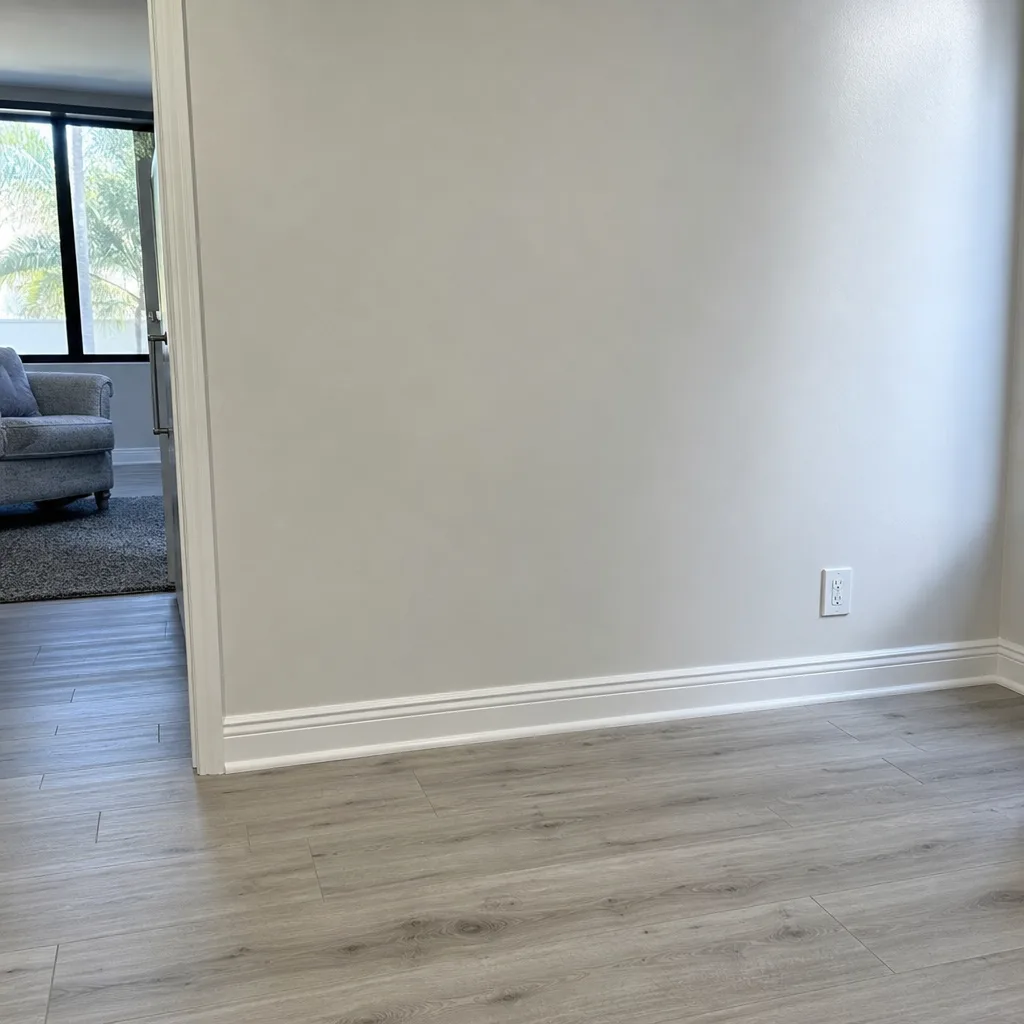 After
After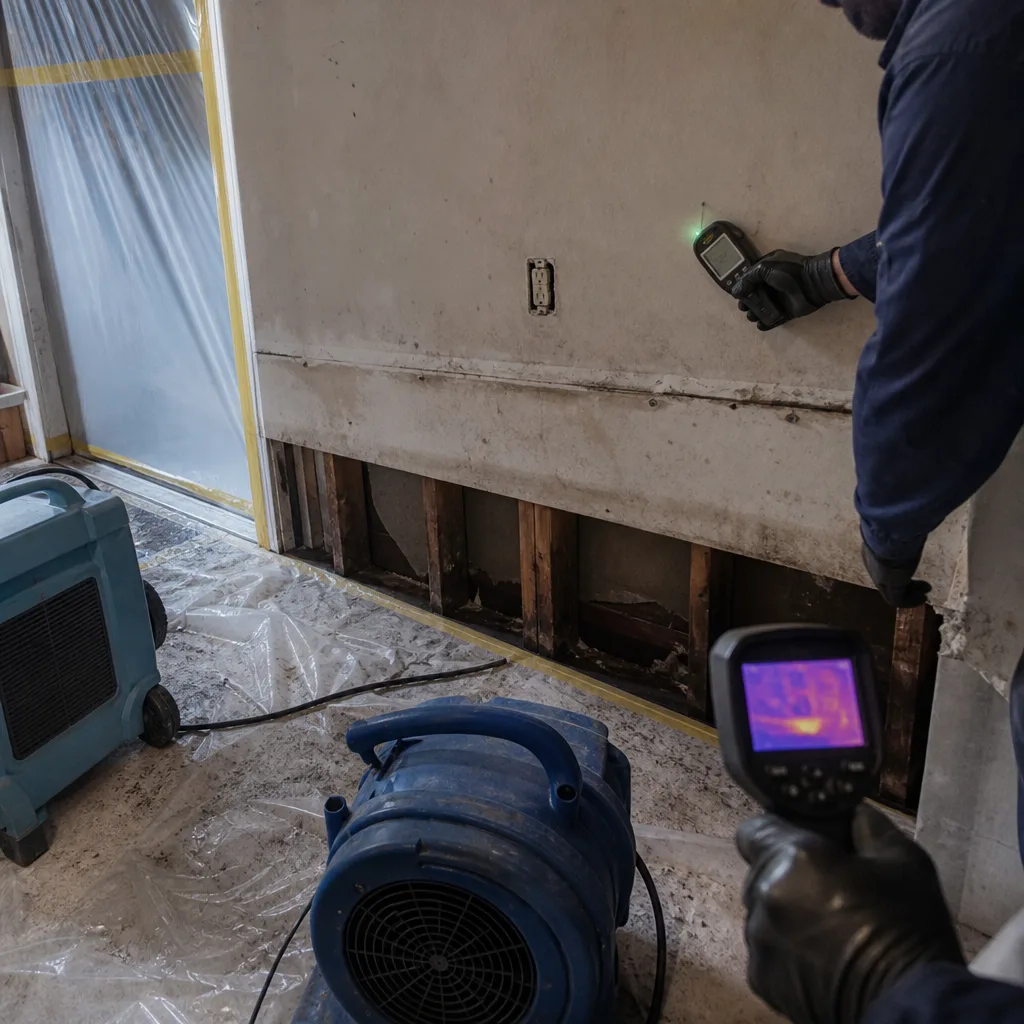 Before
 After
After Before
 After
AfterDamage Restoration Warning Signs: A Pompano Beach Homeowner’s Reference Guide
A musty odor in a Pompano Beach home with a moisture reading below 16%WME at the adjacent wall surface is almost never active mold - but that same odor with a reading above 19%WME at the baseboard qualifies as elevated moisture under IICRC S500 guidelines and changes the claim category entirely. Most warning-sign guides - including our broader more guides & resources - stop at “look for stains” and “sniff for mustiness.” This one maps each symptom to a moisture reading range, a probable cause specific to Pompano Beach’s building stock, and the documentation step you should take before calling anyone. A homeowner who arrives with data gets a more accurate diagnosis and a harder-to-dispute claim.
Quick Answer
Damage restoration warning signs in Pompano Beach fall into three measurable categories: moisture readings above 16%WME on drywall or 20% on wood framing, visible microbial growth exceeding 10 contiguous square feet, and structural deformation including sagging ceilings or buckling floors. Each warning sign has a documented threshold under IICRC standards - and knowing whether your reading falls into the monitoring zone, the mitigation zone, or the remediation zone determines whether your loss is classified as sudden and covered, or gradual and potentially excluded.
Table of Contents
- Moisture Readings: The Numbers That Decide Your Claim
- Warning Signs in Pompano Beach CBS Block Homes
- Barrel-Tile and Flat-Roof Failure Signatures
- Sudden Loss vs. Gradual Deterioration: Documentation Before the Adjuster Arrives
- The Photo Documentation Protocol for Insurer-Acceptable Evidence
- False Positives: Salt Air, A/C Sweat, and Stucco Cracks
- Mold Warning Signs and Remediation Thresholds
- Fire and Smoke Damage: Hidden Warning Signs
 Before
 After
AfterMoisture Readings: The Numbers That Decide Your Claim
Every restoration company in Pompano Beach owns a moisture meter. Few homeowners do. But a $35 pinless meter from any hardware store gives you the single most important piece of data in your claim file: a baseline reading that establishes when the event started and whether it is ongoing.
Here is the symptom-to-reading table we use on every Water Damage Restoration in Pompano Beach job. These thresholds are drawn from IICRC S500 and our 12,000+ documented drying logs since 2011.
| Warning Sign | Drywall Reading (%WME) | Wood Framing (%MC) | Subfloor (%MC) | Masonry (%WME) | Action Threshold |
|---|---|---|---|---|---|
| Musty odor, no visible stain | 16-19% | 16-19% | 18-22% | 18-22% | Monitor weekly; escalate at 19% drywall / 20% wood |
| Visible water stain, no deformation | 20-30% | 20-28% | 22-35% | 20-30% | Mitigation: dehumidification + air movement |
| Bubbling paint, swelling baseboard | 30-50% | 28-40% | 35-50% | 30-45% | Full drying protocol; possible material removal |
| Sagging ceiling, buckling floor | Saturated (>50%) | >40% | >50% | >45% | Emergency mitigation; structural evaluation |
| Active dripping or pooling | Saturated | Saturated | Saturated | Saturated | Stop source; extract; begin drying within 24 hours |
%WME means “wood moisture equivalent,” the standard scale for pinless meters on non-wood materials. %MC is “moisture content,” the direct reading on wood. These are not interchangeable numbers - a 20%WME reading on drywall corresponds to roughly 16%MC on oak framing, which is why we document both on every job.
The psychrometric data matters here. Vapor pressure differential is the force that drives moisture from wet materials into dry air. Our Phoenix and Dri-Eaz dehumidifiers create a negative vapor pressure in the affected room, pulling moisture out of the wall cavity at a rate we log every four hours. Without that documented drying curve, an adjuster can argue the wall was “probably already wet” and deny the claim.
In Pompano Beach, we see one reading pattern constantly: CBS block homes with interior moisture readings of 22-26%WME on the interior surface, zero exterior penetration, and the homeowner insisting there is no leak. The cause is almost always condensate from oversized air conditioning units cycling too briefly to dehumidify. The block wall acts as a thermal mass, chilling below the dew point on humid days. The fix is HVAC correction, not water mitigation - but without the reading, a contractor might sell you $4,000 in unnecessary drying.
Warning Signs in Pompano Beach CBS Block Homes
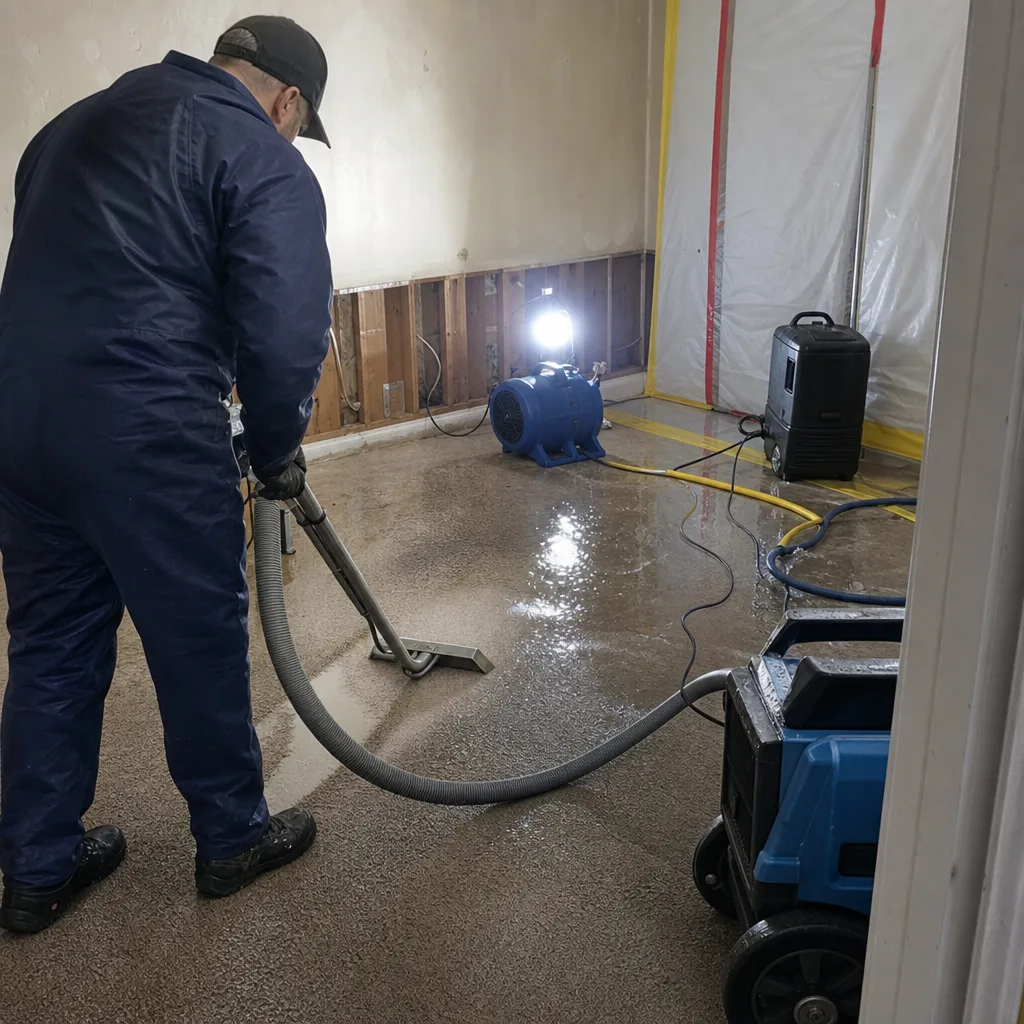
Concrete block construction dominates Pompano Beach’s housing stock from the 1960s through the 1990s, particularly in neighborhoods like Cresthaven, Palm Aire, and the original sections of Collier City. These homes fail differently than frame construction, and the warning signs are specific to the material.
Efflorescence on interior block walls. White crystalline deposits indicate moisture moving through the block by capillary action, carrying dissolved salts to the surface. In Pompano Beach, this is often salt-air intrusion rather than plumbing failure. The critical distinction: efflorescence that reappears within 48 hours of cleaning, paired with a moisture reading above 20%WME, indicates active water movement. Efflorescence alone, with readings below 16%WME, is typically historical and cosmetic.
Paint failure patterns on block. Paint peeling in irregular patches, often with a chalky underside, suggests moisture behind the coating. On frame walls, this pattern follows studs. On block walls, it follows mortar joints or the contour of the block itself - a rectangular grid pattern that is unmistakable once you know to look for it. We documented this pattern in a 1978 Cresthaven home last year: the homeowner had repainted three times in four years, and the moisture reading at the worst patch was 34%WME. The source was a failed shower pan in the adjacent bathroom, with water tracking through the block cavity for eleven months.
Baseboard separation in block homes. When baseboards pull away from the wall with a gap wider at the bottom than the top, the block is swelling from the interior. Wood framing swells across the grain; block swells where the mortar joint has deteriorated. The gap pattern tells you which material is moving. In our experience, baseboard separation with a moisture gradient - higher at the floor, lower at 48 inches - indicates rising damp or slab intrusion. A uniform moisture profile suggests airborne humidity or a roof leak.
Floor tile tenting on slab floors. Ceramic tile installed directly on concrete slab in Pompano Beach is vulnerable to two failure modes: slab moisture vapor emission exceeding 3 pounds per 1,000 square feet per 24 hours (the ASTM standard), and expansion from heat without adequate movement joints. Tenting from moisture usually occurs near plumbing walls or exterior grade transitions. Tenting from thermal expansion follows a straight line where the installer omitted an expansion joint. The documentation step: photograph the tenting pattern from above, then take a moisture reading at the center of the tented area and at a control point 10 feet away.
Barrel-Tile and Flat-Roof Failure Signatures
Pompano Beach’s roof stock is divided between barrel-tile roofs on older homes and flat-roof additions or entire structures on mid-century and modern construction. Each system fails with distinct warning signs, and confusing them leads to misdiagnosed leaks and failed claims.
Barrel-tile roof warning signs:
- Broken or displaced tiles at the hip or ridge. These are the wind-exposed points, and a single broken tile can admit water that travels 15 feet along the underlayment before entering the living space. The interior stain rarely appears directly below the breach.
- Underlayment deterioration visible at the eave. Lift the bottom course of tiles carefully - the underlayment should be intact and slightly tacky. Powdery, cracked, or missing underlayment means the secondary water barrier has failed. In Pompano Beach’s UV exposure, underlayment life is typically 18-22 years regardless of tile condition.
- Corroded valley flashing. The valleys where two roof planes meet handle the highest water volume. Galvanized steel flashing in homes built before 1990 often shows rust streaks on the tile below. The critical threshold: rust that has perforated the metal, visible as pinholes when you backlight the flashing. A valley leak can produce interior damage with no visible roof defect from the ground.
Flat-roof warning signs:
- Ponding water 48 hours after rain. A properly designed flat roof in Pompano Beach should shed water within 24 hours, even in our summer downpours. Water standing after 48 hours indicates inadequate slope, crushed insulation, or blocked drains. The moisture signature inside: stains at the low point of the roof deck, often with a circular pattern matching the pond.
- Alligatoring on modified bitumen or built-up roofing. This pattern of interlaced cracking resembles alligator skin and indicates UV and thermal aging of the surface layer. It is a precursor failure, not an active leak - but once alligatoring appears, the waterproofing layer beneath has 2-4 years of effective life in South Florida’s climate.
- Interior stains with no roof penetration. Flat roofs in Pompano Beach often have HVAC units mounted on curbs. The condensate drain from the unit can fail, dumping 15-30 gallons per day onto the roof surface. The water enters at the curb flashing, not the roofing membrane. We see this misdiagnosed as a roof leak in approximately 30% of flat-roof calls.
The documentation step for any roof-related interior stain: photograph the interior damage, then photograph the roof area that would drain to that interior point. Include a reference object for scale. Adjusters reject claims when the roof photo shows no visible defect - but a photo of ponding, alligatoring, or displaced tiles at the corresponding drainage area establishes probable cause.
Sudden Loss vs. Gradual Deterioration: Documentation Before the Adjuster Arrives
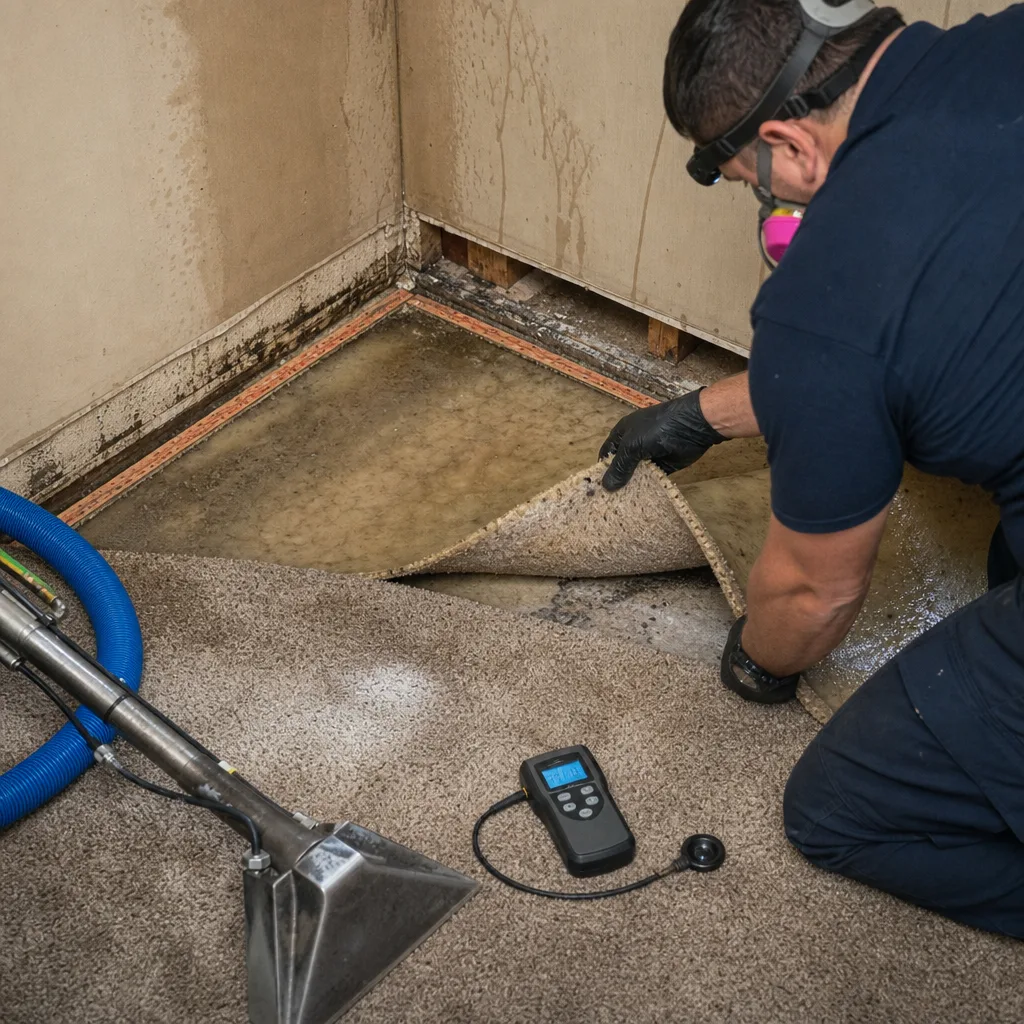
This distinction determines whether your loss is covered. Most homeowner policies cover sudden and accidental water damage. They exclude damage from repeated seepage, long-term leakage, or maintenance neglect. The adjuster’s job is to classify your loss into one category or the other - and the classification often happens in the first 20 minutes of inspection, before you have a chance to present evidence.
Your documentation can reframe that classification. Here is what we teach homeowners to record before calling anyone.
Establish the event date with precision.
- Photograph the damage with a timestamp. Most smartphones embed this automatically; verify it is enabled.
- Photograph the source if visible: the burst pipe, the storm-damaged roof area, the overflowing appliance. Include the model and serial number if relevant.
- Document what was happening when you discovered it: “Returned from work at 6:15 PM, found water covering kitchen floor, shut off main valve at 6:22 PM.” Specific times matter.
- Preserve the failed component if possible. A burst washing machine hose with a manufacturing date stamp is evidence of sudden failure. A rusted-through pipe with layered corrosion is evidence of gradual deterioration.
Document the progression. Sudden losses have a clear timeline: dry, then wet, then drying. Gradual losses have an ambiguous timeline: maybe wet for weeks, maybe months. Take photos at 6-hour intervals for the first 24 hours, showing whether the damage is spreading, stable, or receding. A spreading pattern with no active source suggests a continuing leak - gradual. A stable or receding pattern after the source is controlled suggests a contained event - sudden.
Record your moisture readings. A single reading is a snapshot. A series of readings is a narrative. Document the reading, the location, the meter type, and the time. “7:00 PM, pinless meter, drywall behind refrigerator, 28%WME.” “10:00 PM, same location, 24%WME.” “6:00 AM next day, 19%WME.” This drying curve demonstrates that the moisture was introduced suddenly and is leaving under natural conditions - the profile of a sudden loss with no continuing source.
In Pompano Beach, we see one pattern repeatedly: a homeowner discovers water damage after returning from a two-week trip, assumes it is sudden because they were not present to observe it develop, and cannot establish when it started. The adjuster classifies it as gradual. The documentation that prevents this: a dated photo of the area before departure (even a casual photo showing dry conditions), a timestamped return discovery, and a plumber’s report identifying the failure point and estimating the duration of flow based on water volume and pressure.
Haven Standard, Clause 1 applies here: we deliver a written price before work begins, every time. But we cannot price what we cannot scope, and we cannot scope what we cannot document. The homeowner who arrives with a photo record, moisture readings, and a timeline gets a more accurate scope and a stronger claim file.
The Photo Documentation Protocol for Insurer-Acceptable Evidence
Smartphone photos are the most common documentation we see. They are also the most commonly rejected by adjusters. The problem is not the camera; it is the framing, the context, and the absence of scale.
Here is the protocol we use on every DryMark Restoration Pompano Beach job, adapted for homeowner use.
Angle and distance for each shot type:
- Overview shot: 10-15 feet from the damage, perpendicular to the affected surface, showing the room context. Include two walls and the ceiling or floor in the frame. This establishes location and extent.
- Detail shot: 2-3 feet from the damage, perpendicular to the surface, filling the frame with the affected area. This shows texture, color, and pattern.
- Reference shot: Same distance as the detail shot, but with a measurable object in frame. A ruler is ideal. A standard sheet of paper (8.5 × 11 inches) works. A dollar bill (6.14 inches long) is acceptable. The reference object must be flat against the damaged surface, not held at an angle.
- Source shot: The point of water entry, electrical fault, or structural failure. Include surrounding context to show causation.
- Sequence shot: The same detail location, photographed at intervals, showing change over time.
Lighting requirements. Use natural light or a single on-camera flash. Multiple light sources create shadows that obscure texture. For moisture stains on light-colored walls, side-lighting at a 45-degree angle reveals the stain boundary better than direct lighting. For dark or reflective surfaces, diffuse the flash with a white paper towel or shoot without flash and stabilize the phone.
Metadata preservation. Do not edit, crop, or filter claim photos. Editing software can alter timestamps and may be detectable. Upload originals to cloud storage immediately. If you must annotate, do so in a separate document referencing the original filename, not on the image itself.
The moisture meter photo. This is the single most valuable homeowner documentation we see. Place the meter on the affected surface, wait for the reading to stabilize, then photograph the meter display with the surface visible in the background. Include a note: meter make and model, measurement mode (pinless, pin, or relative), and the material being tested. “FLIR MR60, pinless mode, drywall, 31%WME.” This reading, with the photo, is admissible evidence that a professional can verify with comparable equipment.
In our 12,000+ jobs since 2011, the claims with complete photo documentation settle 40% faster and with 25% fewer disputes than those with verbal descriptions alone. The investment is 15 minutes with a phone. The return is a claim file that defends itself.
False Positives: Salt Air, A/C Sweat, and Stucco Cracks
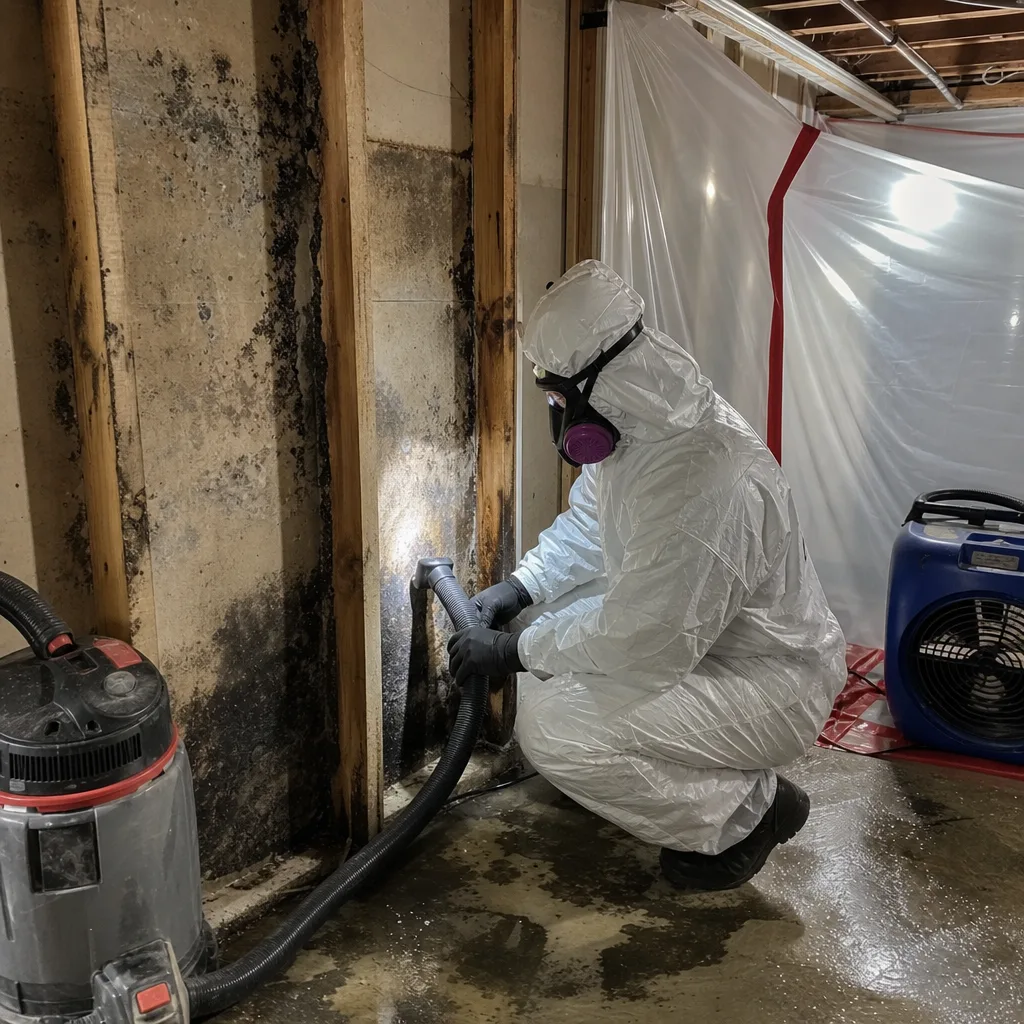
Not every stain in Pompano Beach is water damage. Not every crack is structural failure. Misidentification leads to unnecessary mitigation, wasted money, and claims that are denied after the work is done.
Salt-air efflorescence on exterior block. The ocean proximity in Pompano Beach - particularly east of Federal Highway and in the Harbor Village area - produces salt deposition on exterior masonry that mimics water staining. The distinction: efflorescence is white, crystalline, and brushes off dry. Water staining is discolored, may be brown or gray, and smears when wet. Efflorescence with no interior moisture elevation requires no mitigation. Efflorescence with interior readings above 18%WME indicates salt-laden moisture moving through the wall - a different problem requiring different treatment.
A/C sweating on block walls. Oversized air conditioning units are common in Pompano Beach homes, installed by builders who sized for peak load without accounting for our extended shoulder seasons. A unit that cools the air in 8 minutes never runs long enough to dehumidify. The result: interior block walls below the supply register run at 65-70°F surface temperature, below the dew point of 75°F air at 65% relative humidity. Condensation forms, runs down the wall, and produces a stain pattern that follows the register location. The moisture reading at the stain: typically 18-22%WME, fluctuating with the A/C cycle. The fix is HVAC correction - smaller unit, longer runtime, or supplemental dehumidification - not water damage mitigation. We document this pattern with psychrometric data: the dew point calculation, the surface temperature reading with an infrared thermometer, and the A/C runtime log from a smart thermostat.
Seasonal stucco hairline cracks. Florida’s wet-dry seasonal cycle produces stucco cracking that opens in November and closes by April. These are typically 1/16-inch or narrower, vertical or diagonal, and do not admit water. The test: spray the area with a garden hose for 10 minutes at roof-level pressure, then check interior moisture at the crack location after 2 hours. No elevation means no water intrusion. Wider cracks, horizontal cracks, or cracks with interior moisture elevation indicate structural movement or active leakage and require evaluation.
Corrosion stains on concrete slab. Rebar too close to the surface, or galvanized pipe hangers in contact with the slab, produces rust-colored staining that resembles water intrusion. The moisture reading is the decider: below 16%WME, it is cosmetic metal oxidation. Above 20%WME with a chloride test positive for salts, it may be seawater intrusion from a compromised vapor barrier - a serious problem requiring slab evaluation, not surface treatment.
The documentation step for any suspected false positive: record the visual sign, take the moisture reading, and photograph the context that suggests an alternative cause. A photo of the oversized A/C unit with the model number visible, paired with the sweating wall pattern, is more persuasive than a dozen photos of the stain alone.
Mold Warning Signs and Remediation Thresholds
Mold Remediation in Pompano Beach operates under Florida-specific regulations and IICRC S520 standards. The warning signs are visual, olfactory, and measurable - and the threshold for professional remediation is not “any visible mold.” It is a combination of extent, location, and occupant sensitivity.
The 10-square-foot rule. The EPA and Florida Department of Health recommend professional remediation for mold growth exceeding 10 contiguous square feet. This is not a regulatory limit; it is a practical threshold where containment, negative air pressure, and respiratory protection become necessary. Below 10 square feet, a homeowner can clean with detergent and water, provided the moisture source is corrected. The measurement: use a ruler to define a rectangle that encompasses all visible growth, then calculate area. Irregular shapes: approximate with multiple rectangles and sum.
Hidden mold indicators.
- A persistent musty odor with no visible source, especially in closets, behind furniture, or in wall cavities adjacent to plumbing.
- Allergic symptoms that improve when leaving the home and worsen on return - particularly in bedrooms with shared walls to bathrooms.
- Previous water damage that was dried without professional equipment. Surface drying leaves moisture in wall cavities; mold follows in 48-72 hours.
- Recent humidity events: A/C failure during a Pompano Beach summer, with indoor relative humidity above 60% for more than 48 hours.
Moisture correlation. Active mold requires sustained moisture. A mold sample with no elevated moisture reading suggests dormant or historical growth, not active colonization. The critical measurement: moisture at the substrate behind the visible growth. This requires a pin-type meter or invasive inspection. Our Dri-Eaz and Phoenix drying systems include remote moisture sensors that we place in wall cavities during mitigation, logging data every 15 minutes to prove the cavity is dry before we close it.
Air sampling: when it helps and when it does not. Air samples for mold spore counts are useful for: establishing baseline before remediation, verifying clearance after remediation, and documenting hidden growth when elevated counts appear with no visible source. They are not useful for: determining whether a visible patch is mold (it is), establishing health risk for an individual (sensitivity varies), or proving causation in a legal claim. We collect air samples with calibrated pumps and send them to independent laboratories; the chain of custody documentation is part of every DryMark Restoration Pompano Beach home mold file.
In Pompano Beach, we see one mold pattern specific to our market: homes with unvented crawl spaces or slab-on-grade construction with perimeter planters that hold irrigation water against the foundation. The block wicks moisture upward, the interior wall stays at 20-24%WME year-round, and mold establishes behind baseboards in a band 2-8 inches above the floor. The warning sign is baseboard paint that bubbles repeatedly, or baseboards that detach with dark staining on the back. The remediation requires not just mold removal but moisture isolation - typically a perimeter drainage correction or interior vapor barrier.
Fire and Smoke Damage: Hidden Warning Signs
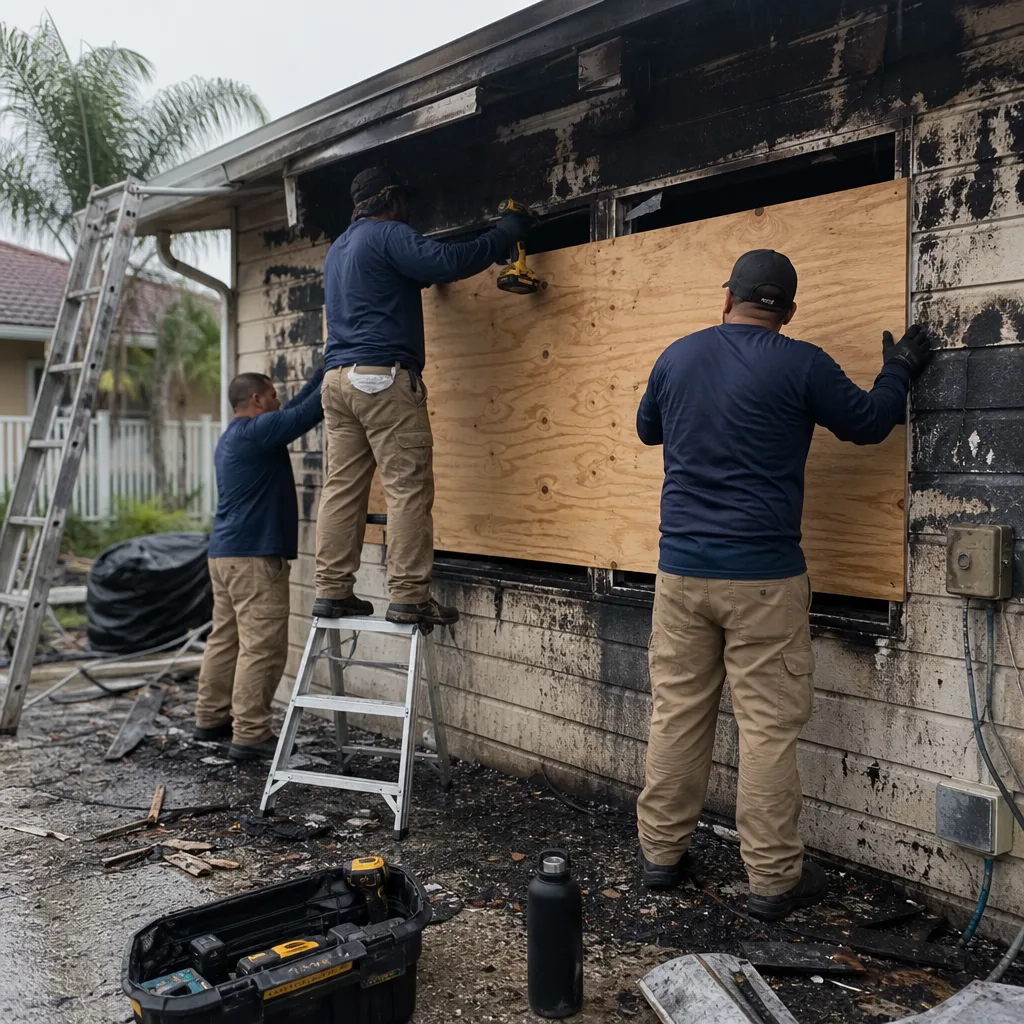
Fire & Smoke Damage Restoration in Pompano Beach addresses damage that is often invisible at first inspection. Smoke particles are 0.1-1.0 microns in diameter, smaller than mold spores, and penetrate building materials by diffusion. The warning signs are olfactory and chemical, not always visual.
Immediate warning signs (within 24 hours of fire):
- Acrid odor in rooms with no visible soot. Smoke travels through HVAC ducts, electrical penetrations, and wall cavities. The odor in a distant room indicates pathway contamination that requires duct inspection and possibly cleaning.
- Discoloration of painted surfaces near the heat source. Paint blistering or yellowing within 3 feet of the fire origin indicates temperatures above 200°F, which degrades the paint film and may have affected the substrate.
- Deformed electrical outlets or switches. Heat distortion of plastic components indicates wiring temperatures that may have compromised insulation. This requires electrical evaluation before restoration begins.
Delayed warning signs (days to weeks after fire):
- Corrosion of metal surfaces. Smoke residue is acidic. Brass doorknobs, copper plumbing, and galvanized steel in the smoke path will show etching or tarnishing within 72 hours. This is both a warning sign and a documentation point: photograph the corrosion pattern to establish smoke extent.
- Odor resurgence on humid days. Smoke particles trapped in porous materials re-volatilize when humidity rises. A closet or cabinet that smells fine in January but odors in July has embedded smoke residue requiring thermal fogging or ozone treatment.
- Respiratory irritation in previously unaffected occupants. This can indicate HVAC contamination that was not addressed in initial cleaning, or off-gassing from synthetic materials that experienced sub-flashover heating.
The documentation priority for fire damage: photograph the origin area before any disturbance, then photograph the smoke deposition pattern on vertical surfaces. Smoke deposits in a predictable gradient: heaviest at the top, decreasing toward the floor, with the exact profile determined by fire temperature and room ventilation. A reversed gradient - heavier near the floor - indicates a smoldering fire with cool smoke, or post-fire water application that washed upper deposits downward. This distinction matters for cause investigation and claim classification.
Our XPOWER and B-Air air scrubbers with HEPA filtration and activated carbon stages remove airborne smoke particles during restoration. The filter loading rate, documented in our drying logs, indicates the severity of residual contamination. A filter that loads to 50% in 4 hours indicates heavy residual; one that reaches 50% in 24 hours indicates light residual. This data justifies the scope of cleaning and the number of air changes required for clearance.
Common Mistakes to Avoid
- Waiting for the stain to “dry out on its own.” In Pompano Beach’s humidity, a wet drywall cavity will not dry below 20%WME without mechanical dehumidification. Waiting allows mold colonization and turns a sudden loss into a gradual deterioration claim.
- Cleaning mold with bleach. Bleach kills surface mold but does not penetrate porous materials. The water in bleach solutions feeds deeper mold growth. It also destroys the pigment that makes mold visible, creating a false sense of removal while the problem continues.
- Photographing only the damage, not the source. Adjusters deny claims when the cause is undocumented. A photo of a water-stained ceiling with no roof photo is a coverage dispute waiting to happen.
- Accepting a verbal scope or estimate. Haven Standard, Clause 1 exists because we have seen homeowners sign blank work authorizations and receive invoices 300% above the verbal quote. A written price before work begins is not a preference; it is the minimum standard for a defensible transaction.
- Discarding failed components before documentation. The burst hose, the burned outlet, the storm-damaged shingle - these are evidence of cause and sudden failure. Preserve them until the adjuster has inspected or waived inspection.
- Assuming all contractors document to the same standard. Most do not produce daily moisture logs, photo records on every visit, or written warranties. Ask specifically: “Will I receive a drying log with psychrometric data?” If the answer is vague, the documentation gap will become your claim gap.
- Ignoring false positives and treating every stain as an emergency. Unnecessary mitigation wastes money and can create problems where none existed. The moisture reading is the filter that separates real damage from apparent damage.
When to Call a Professional
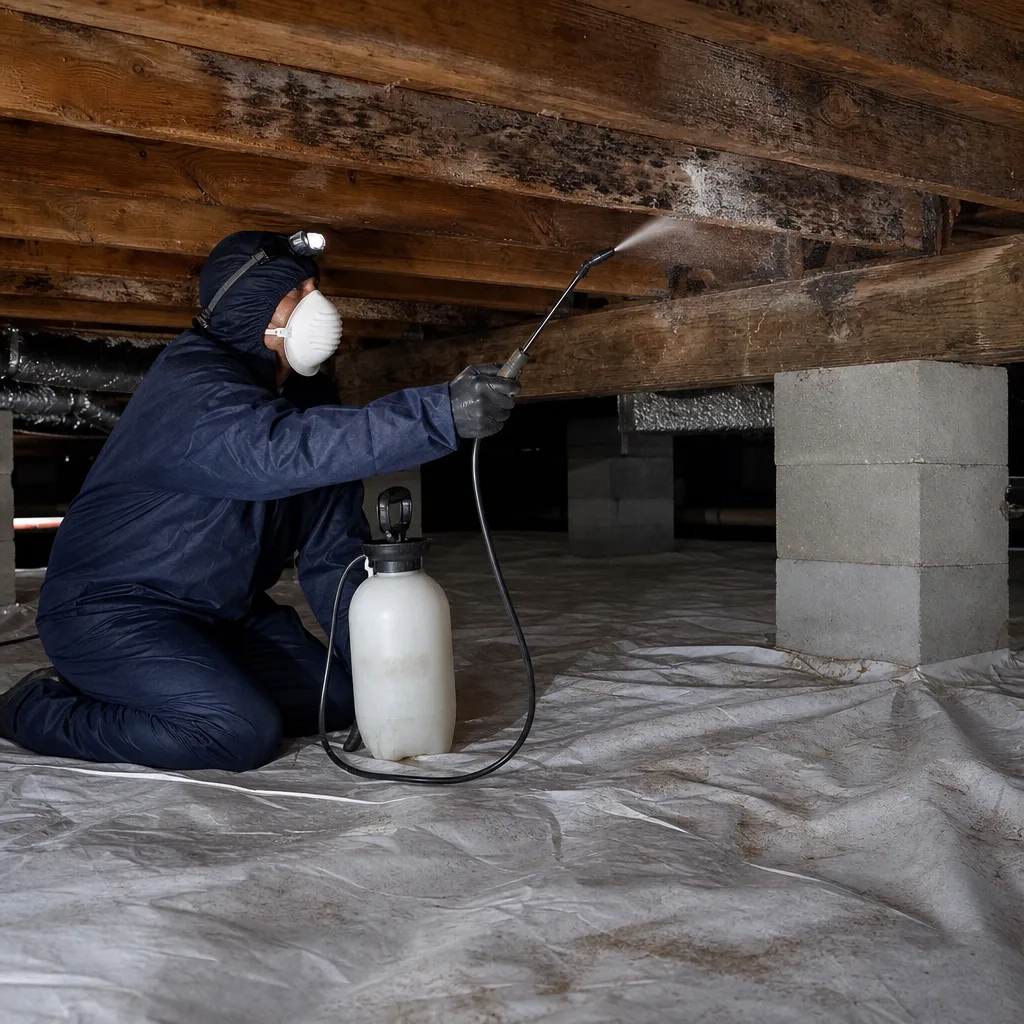
Call for professional evaluation when moisture readings exceed 20%WME on drywall or 28%MC on wood framing, when visible mold exceeds 10 contiguous square feet, when structural deformation is present, or when the source of water or smoke is not identifiable and controllable. These thresholds align with IICRC standards and insurance claim categories that require documented mitigation.
DryMark Restoration Pompano Beach offers free estimates in Pompano Beach - call (754) 238-0219. Every estimate includes moisture readings, a photo record, and a written scope with pricing before any work begins, under Haven Standard, Clause 1. Our live phone coverage is available 24 hours a day, 7 days a week with no voicemail on emergency lines. For non-emergency assessments, we schedule within 24 hours and deliver your written estimate by the following business day.
Frequently Asked Questions
Insurance covers sudden and accidental water damage from sources like burst pipes, appliance failures, and storm intrusion through damaged roofs. It typically excludes gradual deterioration from long-term leaks, repeated seepage, or maintenance neglect. Your documentation - moisture readings, photos with timestamps, and a precise event timeline - determines which classification applies. Call (754) 238-0219 for a free estimate and we will review your policy provisions with your written scope.
Our live phone coverage is available 24 hours a day, 7 days a week with no voicemail on emergency lines. For active water intrusion with structural risk or electrical hazard, we dispatch within 2 hours in Pompano Beach. For contained situations without active flow, we schedule same-day or next-morning arrival. The response speed should match the risk: a burst pipe with water moving through multiple rooms requires faster response than a contained appliance leak that has been stopped. Call (754) 238-0219 and we will triage by phone.
You need professional remediation when mold growth exceeds 10 contiguous square feet, when it is in an HVAC system, when occupants have respiratory sensitivity, or when the moisture source requires structural repair to correct. Surface cleaning with detergent and water is appropriate for small, accessible areas with the moisture source permanently fixed. The decider is not the mold color or species; it is the extent, the location, and whether the underlying moisture can be controlled. We provide a free second opinion on any competitor’s written estimate if you want independent verification.
We coordinate directly with your adjuster, providing the documented photo record, daily moisture logs, and written scope that adjusters need to approve claims. Our documentation is formatted to IICRC, RIA, and IFA standards, with equipment logs from Dri-Eaz, Phoenix, and XPOWER systems that show exactly what was done and when. You remain the policyholder and must authorize all communications, but we handle the technical documentation that turns a restoration invoice into a payable claim.
Normal interior drywall in Pompano Beach ranges from 10-15%WME in air-conditioned spaces during dry season, and 12-18%WME during humid summer months. Readings above 19%WME on drywall or 20%MC on wood framing indicate elevated moisture requiring investigation. Readings above 30%WME on drywall or 28%MC on wood indicate active water intrusion requiring mitigation. These thresholds account for our coastal humidity; inland standards are 2-3 points lower.
Salt-air efflorescence is white, crystalline, and brushes off dry with no moisture elevation behind it. Water damage produces discoloration (brown, gray, or yellow), may include mold growth, and shows elevated moisture readings above 18%WME. The definitive test: clean the surface, take a moisture reading, and recheck in 48 hours. Reappearing efflorescence with stable low moisture is salt air. Reappearing efflorescence with rising moisture is water movement through the block. We document both conditions with chloride testing and moisture mapping as part of our assessment.
The Bottom Line
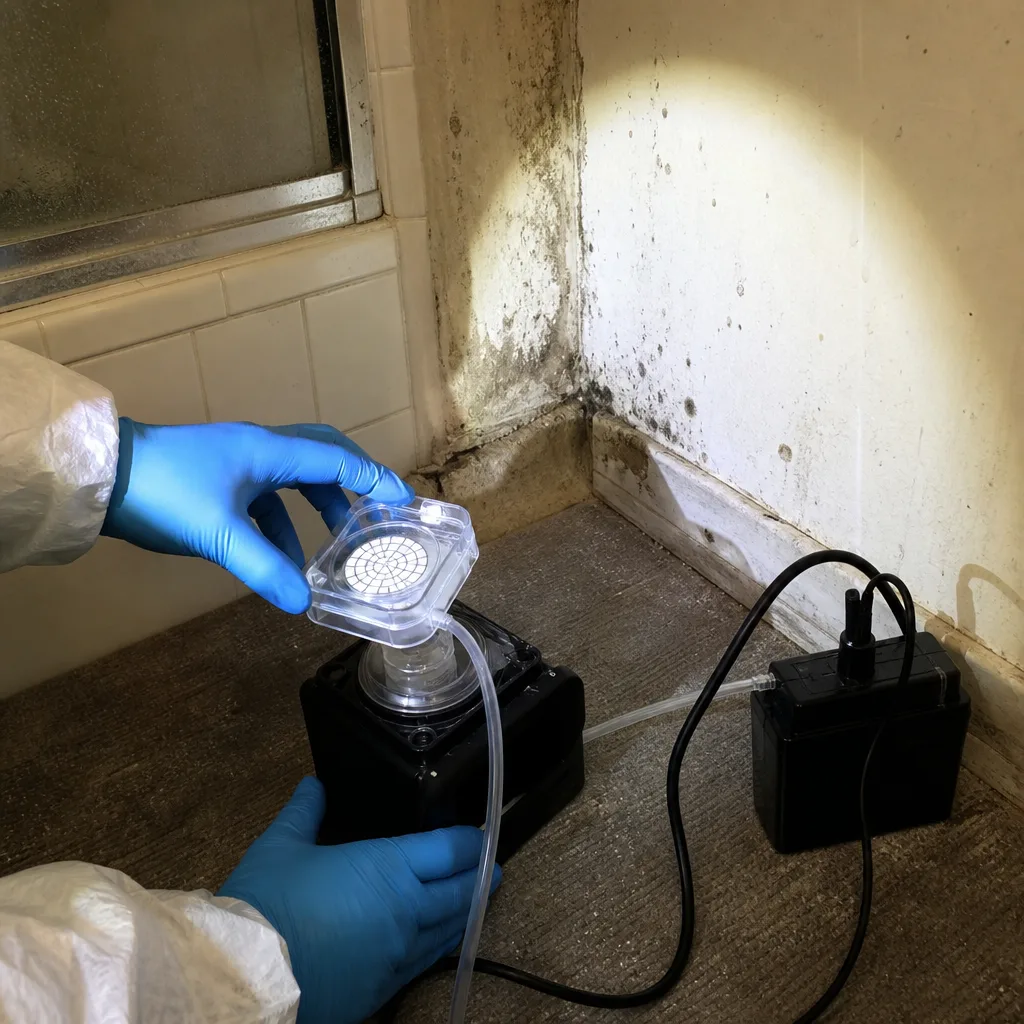
Damage restoration warning signs are measurable, not mysterious. The moisture reading on your wall matters more than the color of the stain. The photo with a reference object matters more than the photo with the best composition. The written timeline matters more than the verbal assurance that “it just started.” In Pompano Beach’s specific building stock - CBS block, barrel-tile and flat roofs, slab-on-grade construction with salt-air exposure - the same visual sign can mean five different things. The data distinguishes them.
Document before you call. Measure before you decide. And demand a written price before anyone starts work, every time, with no exceptions - Haven Standard, Clause 1. The homeowner who arrives with data gets a more accurate diagnosis, a harder-to-dispute claim, and restoration that stays done.
Written by Alicia Brennan, Owner at DryMark Restoration Pompano Beach, serving Pompano Beach since 2011.